
Table of contents
TL;DR
- AI-driven automation blends artificial intelligence with task automation.
- It enables dynamic, adaptable workflows beyond rule-based automation.
- Works best for data-rich, repetitive, or multi-step business processes.
- Mistakes include misjudging fit or ignoring human oversight.
You’ve dealt with spreadsheet headaches and slow manual workflows. Meanwhile, competitors are moving ahead using smarter tools. Whether you run a small brand or manage marketing for a busy agency, the pressure to work faster and smarter is real. Knowing when automation becomes essential, not just nice to have, is key.
AI-driven automation gives you an edge. It uses machine learning to handle complex, repeatable tasks like content creation, SEO monitoring, and data analysis. This works much better than old rule-based systems. In this guide, you’ll learn what AI-driven automation is, how it works, and where it beats classic automation. You’ll also find the most common mistakes to avoid and when AI makes sense to use—or when it doesn’t. If you want to know when to trust bots and when to stay hands-on, you’re in the right place.
What Is AI-Driven Automation?
AI-driven automation combines artificial intelligence with automated systems to enable technology that learns, adapts, and executes complex processes without constant human direction. This approach helps tackle tasks that are too variable or data-heavy for traditional automation tools.
Artificial Intelligence: Machine Learning and Decision-Making
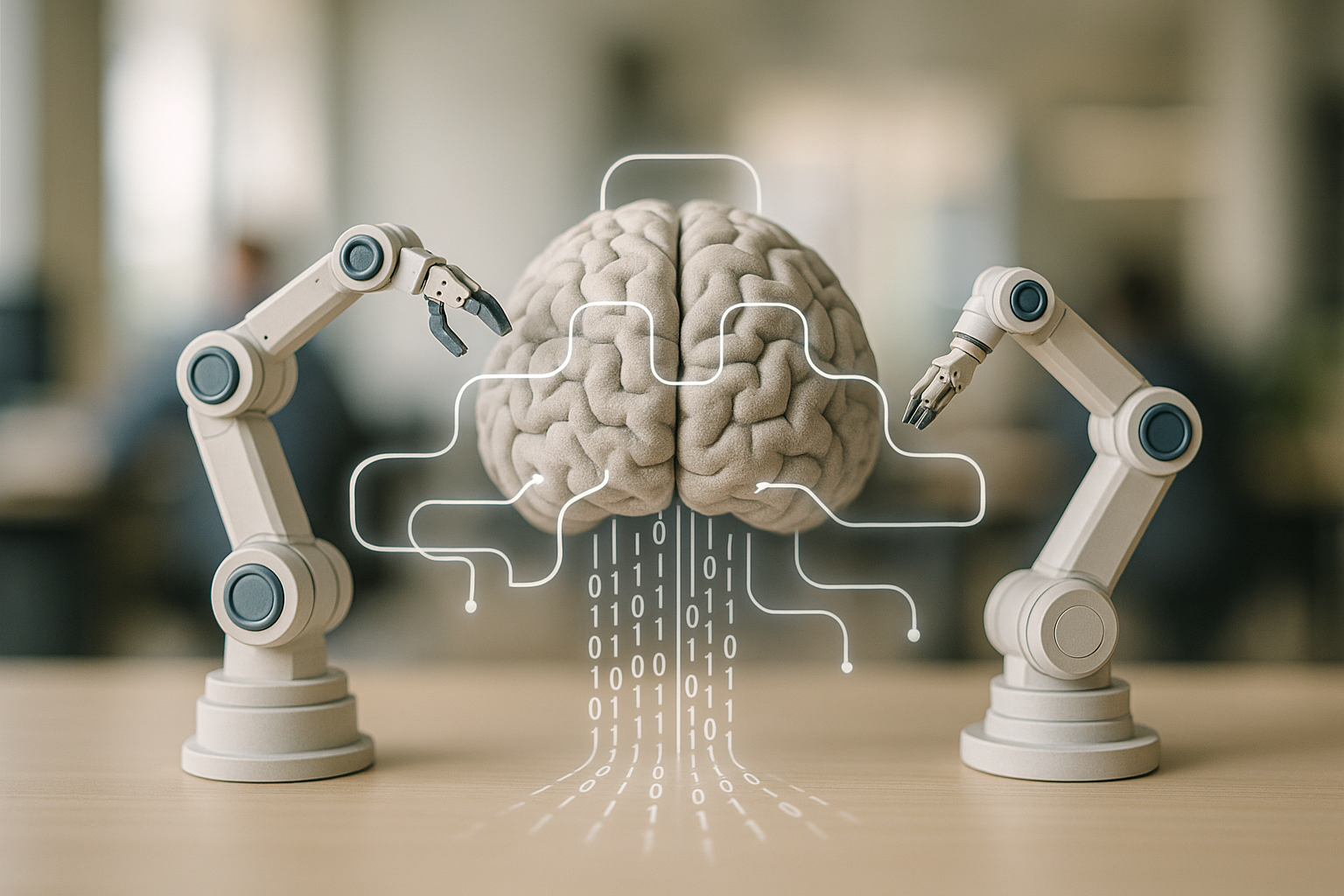
Artificial intelligence (AI) in automation uses machine learning models to make decisions based on patterns in large datasets. This allows systems to adapt and improve, not just follow preset instructions.
Key mechanisms include:
- Pattern recognition — AI identifies trends and anomalies in input data.
- Prediction — Machine learning models forecast likely outcomes, guiding automated actions.
- Automated optimization — The system tunes its approach based on results, improving performance over time. This means the AI continuously tests different strategies, measures their impact, and adjusts parameters to maximize effectiveness without human intervention.
In practice, teams see a shift from simple automation scripts to full AI-driven solutions that handle tasks such as resource allocation, budget recommendations, or content personalization. This adaptability sets AI-driven platforms apart from rules-based tools. For example, AI can optimize email marketing by analyzing engagement patterns and automatically scheduling sends at times when recipients are most likely to open and interact with messages, increasing campaign success.
Robotic Process Automation: Task Execution Foundations
Robotic process automation (RPA) is a technology that executes defined, repetitive digital tasks by mimicking human actions. RPA lays the groundwork for more advanced AI-driven workflows, connecting APIs, user interfaces, and legacy systems without code changes.
A typical RPA deployment automates steps like:
- Login and navigation through web or desktop applications.
- Data extraction, transformation, and entry.
- Routine validation using checklists or simple logic.
As platforms evolve, they're increasingly paired with AI to handle contextual decisions or trigger workflows. Many integrations now include both RPA task runners and machine learning modules, letting businesses scale from rule-based macros to adaptive, data-powered automation.
Natural Language Processing: Handling Unstructured Data
Natural language processing (NLP) is a field of AI focused on understanding and acting on human language. NLP unlocks automation in areas where information is unstructured, such as emails, support tickets, and documents.
Powerful NLP systems enable:
- Text classification — Sorting and routing requests automatically.
- Sentiment detection — Gauging meaning or urgency in customer messages.
- Content generation and extraction — Pulling key data or drafting responses in real time.
Modern automation suites often combine NLP with workflow orchestration—see how articles are written—to move beyond spreadsheets and rules, tackling complex communication and knowledge tasks that once needed human judgment.
Expert Insight: The success of AI-driven automation often depends on the quality and relevance of the data feeding your models. Outdated or inconsistent information can undermine even advanced systems.
How Does AI-Driven Automation Work?
AI-driven automation follows a clear sequence: machines collect data, analyze it with models, and carry out next steps through automated workflows. Each phase is distinct but tightly connected, turning raw input into intelligent, repeatable action.
1. Data Collection and Preparation
Data collection and preparation is the foundation of any ai-driven automation process.
Without clean, relevant data, automation models can't deliver useful outcomes. Enterprises invest significant effort in:
- Aggregating structured and unstructured inputs such as customer interactions, website traffic, or sensor readings
- Cleaning and validating data to ensure it's consistent and usable
- Labeling or categorizing samples when machine learning requires supervised learning
In practice, teams often underestimate the time required for these steps. Batch and real-time pipelines need careful design, especially where compliance or privacy issues shape what data is collected. For content-focused automation, systems like SEOLadders' content writing tools rely on continuous data inputs from search, analytics, and user engagement to stay relevant.
2. Model Application and Decision Engines
Model application and decision engines are where machine learning algorithms process data, make predictions, and trigger actions.
A core workflow looks like:
- Input data enters the model (e.g., a text classifier, anomaly detector, or ranking algorithm)
- The model scores or interprets the data based on prior training
- A decision engine uses the model's output to choose the most appropriate action
For example, Amazon employs AI-driven decision engines in its recommendation system. The model analyzes user behavior and purchase history to score product relevance, then the decision engine dynamically updates the product suggestions shown to each customer, driving higher engagement and sales. This workflow is supported by technologies such as Amazon Personalize, an AI service that simplifies building real-time recommendation systems. For SEO or marketing automation, these engines may trigger new content recommendations, website updates, or outreach suggestions, as seen in SEOLadders’ recommended actions system.
3. Workflow Orchestration and Integration
Workflow orchestration and integration connect AI-driven decisions to real-world results by coordinating tasks across software and services.
Automated systems must handle:
- Sequencing multiple actions (e.g., data enrichment, content generation, publishing)
- Triggering integrations with external platforms such as WordPress, Slack, or internal APIs
- Monitoring workflow outcomes and adjusting future steps based on results
A mature ai-driven automation stack links these pieces tightly. Platforms with robust integration options can push updates directly to content management systems or send alerts when thresholds are met. Your mileage may vary based on system complexity; highly integrated solutions reduce manual oversight but call for more careful setup upfront.
Expert Insight: Reliable data inputs and strong integration capabilities matter more for ai-driven automation than most guides suggest—a weak link in either leads to disappointing results.
When AI-Driven Automation Applies — And When It Doesn't
AI-driven automation delivers powerful results, but it's not a universal solution. Distinguishing when to deploy AI—and when to hold back—prevents costly mistakes and maximizes value across your workflows.
Ideal Use Cases: Where AI Automation Excels

AI-driven automation excels in scenarios with repetitive, high-volume, and data-rich tasks. These conditions enable machine learning models to find patterns, make decisions, and operate at scale with consistency. Common examples include:
- Data entry and processing — Structured data tasks see significant error reduction compared to manual input.
- SEO content generation — Platforms use AI to create, optimize, and refresh articles at volume. For more, see how articles are written.
- Predictive analytics — When large historical datasets are available, AI models forecast trends or detect anomalies with minimal supervision.
- Customer support automation — AI chatbots handle frequent queries instantly, improving response times for routine tasks.
A detailed example of AI automation’s real-world impact comes from a global e-commerce company that deployed AI-driven predictive analytics to optimize its inventory management. By analyzing millions of past sales transactions and external variables such as seasonality and promotions, the system accurately forecasted demand for thousands of products across multiple warehouses. This led to a 20% reduction in stockouts and a 15% decrease in overstock costs within six months, significantly improving customer satisfaction and operational efficiency.
In practice, teams often find that automation is especially impactful for scalable marketing operations. Integrations with CMS and analytics platforms can turn publishing, lead tracking, and reporting into hands-off processes. For technical functions like auditing large sites, tools such as SEO audit automation reduce both human review time and oversight risk.
High-Risk Areas: Where Caution Is Needed
AI automation requires careful handling in complex, ambiguous, or sensitive areas. These are situations where human judgment, regulatory oversight, or nuance is crucial. Caution applies to:
- Legal, compliance, and HR — Automated decision-making can cause major risk if not closely monitored.
- Creative strategy — Brand narratives and campaign direction often need human insight AI can't supply.
- Reputation management — Automatic engagement or content responses on public channels can spiral without oversight.
- Unstructured data with low context — When input is noisy or lacks clear patterns, AI predictions may fail or mislead.
A common pitfall is over-trusting AI in high-stakes communications. In practice, it's safer to keep humans in the loop for escalations or strategy-setting. Manual review should be the default for exceptions, especially when mistakes can have legal or financial consequences.
Tip: Begin with low-risk, high-volume tasks when exploring AI-driven automation. Expand usage only after validating results with frequent audits.
AI-Driven Automation vs Traditional Rule-Based Automation
Choosing between AI-driven automation and traditional rule-based automation affects both project outcomes and long-term scalability. Each approach brings distinct costs, technical demands, and strengths that suit different scenarios.
Cost, Effort, and Suitability
AI-driven and rule-based automation differ primarily in cost, effort, and suitability, summarized below:
| Area | AI-Driven Automation | Rule-Based Automation |
|---|---|---|
| Upfront Cost | High (data, setup) | Low (logic mapping) |
| Maintenance Effort | Lower after initial training | Requires ongoing manual updates |
| Adaptability | Learns from data changes | Relies on static, predefined rules |
| Complexity Handling | Effective with unpredictability | Best for structured, repeated tasks |
Rule-based systems perform well when tasks and inputs are consistent, while AI-based automation excels in evolving or ambiguous scenarios. Many platforms now combine both approaches or offer unified subscriptions—for example, see SEO automation pricing for bundled options.
Capabilities and Limitations
AI-driven automation can recognize patterns, interpret unstructured data, and continuously improve with more input. Rule-based systems operate strictly according to hard-coded conditions, so they only deliver predictable results.
Key contrasts:
- AI excels at exceptions: It can spot outliers, process natural language, and adapt as needs shift.
- Rule-based is rigid: It will only manage scenarios defined at setup.
- AI requires more data: Model performance depends on volume and quality of prior examples.
- Rules require maintenance: Every edge case must be explicitly mapped and updated over time.
For workflow orchestration, combining both approaches can minimize risks and maximize automation’s reach. Some organizations deploy AI to sort and flag data, then route tasks to rule-based scripts for structured processing (see how integration works).
Who Should Choose Which Approach?
The right method depends on business needs, pace of change, and available expertise.
Generally:
- Stable environments use rules: Repetitive, high-volume, and low-variance tasks are strong fits for rule-based automation.
- Evolving or complex businesses use AI: If decisions depend on messy, changing, or language-heavy inputs (such as customer support), AI-driven automation is more effective.
- Hybrid models: Many firms blend both for balance and future flexibility.
Teams exploring a switch often run a readiness test before retooling workflows.
Expert Insight: Even the best AI-driven automations need periodic human review to guard against silent errors or bias, especially as real-world data evolves.
Common AI-Driven Automation Mistakes
Adopting ai-driven automation is appealing, but it comes with pitfalls that can slow progress or create risks if not recognized early. The three issues below consistently trip up teams new to operationalizing AI in real business workflows.
Assuming AI Can Handle Every Task
AI-driven automation is not a universal solution—there are key categories of work that still demand human skill or context. Many organizations initially expect AI models to deliver flawless, hands-off results across any domain. In reality:
- Routine and repetitive processes are a good fit, like pulling structured data or updating content briefs.
- Subjective or high-stakes tasks—such as final content approval, strategy decisions, or creative direction—often suffer when handed over to an algorithm.
- Complex exceptions and edge cases still need judgment calls.
Teams exploring automated content writing soon find the limits of even advanced models. Using AI to supplement, not replace, critical human thinking brings better results.
Neglecting Human Oversight
AI-driven automation still depends on consistent human review for quality control and error management. In practice, skipping human involvement can lead to:
- Unnoticed AI errors: Output may look plausible but contain subtle mistakes, outdated data, or broken links.
- Loss of accountability: Without clear team ownership, missed issues compound over time.
- Regulatory gaps: Automated processes that touch user data or public channels require review against compliance standards.
Making use of a platform that tracks high-impact SEO moves and prompts for human input, such as recommended actions, helps balance speed with oversight. Many organizations build regular audits into their workflows to catch drift as AI systems evolve.
Underestimating Data and Governance Needs
Data quality, security, and governance are foundational for scaling ai-driven automation with confidence. A common pitfall is prioritizing tool selection over underlying data discipline. Typical governance gaps include:
- Outdated or incomplete datasets feeding inconsistent results
- Lack of clear permissions on who can change automations
- No audit trail for changes or AI-generated actions
Before integrating new AI-powered solutions, teams usually need to clean data sources, define permission structures, and document workflows. Organizations that skip this groundwork face setbacks like retraining models, untracked errors, or regulatory exposure. Tight controls and continuous monitoring protect both output quality and compliance.
Expert Insight: The fastest way to catch hidden issues in an AI automation process is to assign rotating human spot checks—don't trust performance metrics alone.
Frequently Asked Questions
What is the main difference between AI-driven and rule-based automation?
The main difference is that rule-based automation follows fixed, predefined rules, while AI-driven automation learns from data to handle complex, changing scenarios. AI-driven systems adapt and improve over time, unlike rigid rule-based ones. For SEO and marketing, AI-driven tools like SEOLadders can automate tasks with flexibility, optimizing continuously without manual rule updates.
Can any business process be automated with AI?
Not every business process can be automated with AI, but many repetitive, rule-based, and data-driven tasks can be. Complex tasks requiring human judgment or creativity still need human input. AI-driven automation suits processes like data analysis, customer support, and SEO content management, as SEOLadders demonstrates by automating SEO tasks from keyword research to publishing.
Does AI-driven automation replace human workers?
AI-driven automation can perform repetitive tasks but does not completely replace human workers. It often shifts human roles towards oversight, creativity, and complex decision-making. Businesses benefit by combining AI efficiency with human insight, such as using SEOLadders to automate SEO tasks while retaining control over strategy and content quality.
How secure is AI automation for sensitive data?
AI-driven automation can be secure for sensitive data if it implements strict encryption, access controls, and complies with data protection regulations. However, security depends on the system's design and ongoing monitoring. Businesses using platforms like SEOLadders benefit from automated SEO processes that maintain data confidentiality through secure integrations and user controls.
What is a common misconception about AI automation?
A common misconception about AI automation is that it can fully replace human jobs without oversight. In reality, AI often requires human input for guidance, ethical decisions, and to handle complex tasks beyond automation's current capabilities. Tools like SEOLadders balance automation with human review to optimize SEO while maintaining quality and control.
Conclusion
AI-driven automation frees you from repetitive, rigid processes by learning, adapting, and making decisions—giving you leverage where complexity or personalization matters most. Here’s how you can make it work for you right now:
- Map out your most time-consuming or error-prone workflows
- Identify tasks that require adaptability (not just fixed rules)
- Compare where traditional automation falls short, especially in SEO or data-heavy projects
- Watch for pitfalls like over-automation or lack of transparency, and plan for human review where it counts
The most successful teams blend AI-driven automation with clear oversight, so you always get smarter—not just faster—results. Take action today by prioritizing areas where AI can add real value, remain vigilant about quality, and commit to continuous learning. Doing so will transform your workflows and keep you ahead in an ever-evolving landscape.
Ready to see how AI can power your SEO content and audits, without losing control? See how articles are written and discover how you can automate smarter.
Want this done for you? SEOLadders finds the topics, writes the articles, and gets you cited by AI and ranking on Google, on autopilot.
7-day free trial · Cancel anytime