
Table of contents
TL;DR
- Fast overview of 8 top Semrush alternatives
- Directly compare SEO and AI search tools
- Find tools for tracking search visibility—including AI engines
- Get verified pricing, features, and best use cases
Tracking Your Brand’s Search Visibility
You’ve invested time and money into your website. Yet, getting a clear view of how your brand performs in search remains difficult. This is especially true with Google and the newest AI-powered search engines in the mix. If you’re a founder, marketer, or part of a small business team, you likely need SEO insights that are actionable and easy to access. You also want to avoid spending hours on manual tracking or switching between multiple tools.
Top Alternatives to Semrush for Search Tracking
This guide compares eight strong alternatives to Semrush for tracking search visibility. These tools offer more than basic keyword ranking reports. While Semrush provides excellent data, some affordable options like SEOLadders automate tracking across Google and major AI search platforms. They make it easy for non-technical teams to monitor and boost their search presence. After reading, you’ll understand each tool’s pricing, strengths, and trade-offs. This will help you pick the right search visibility tracking solution for your goals and budget.
Alternatives to Semrush for Tracking Search: At a Glance
Choosing the right search visibility tool requires focusing on specific tracking capabilities, automation, and support for traditional and AI-driven results. Below is a clear comparison of eight top Semrush alternatives, highlighting their key differences in search visibility features.
Master Comparison Table: Top Semrush Alternatives by Key Features
This table summarizes differences across core features, pricing, and standout capabilities so you can quickly identify which Semrush alternative fits your needs. SEOLadders leads by integrating both AI search engine visibility and automated content publishing in a single subscription, while other platforms specialize in keyword, backlink, or competitive intelligence.
| Tool | Entry Price | AI Visibility Tracking | Content Automation | Rank Tracking | Keyword/Backlink Data | Integrations/Publishing | Free Trial |
|---|---|---|---|---|---|---|---|
| SEOLadders | $97/mo (site) | Yes—6 AI engines monitored | Yes—30 articles/mo, auto-published | Yes | Yes—research + on-page/competitor | WordPress, Ghost, Webhook, Webflow (soon), Framer (soon) | 7-day |
| Ahrefs | $29/mo (Starter) | Brand Radar AI prompts | Not listed | Yes | Yes—extensive | Not listed | Free (limited) |
| Ubersuggest | $29/mo | AI Chat & prompt tracking | Not listed | Yes | Yes | Not listed | Not listed |
| SE Ranking | $50/mo (Wallet) | AI Search API | Not listed | Yes | Yes—API based | Not listed | Free trial |
| Serpstat | $50/mo | Not listed | Not listed | Yes | Yes | Not listed | Not listed |
| Moz Pro | $20/mo | Not listed | Not listed | Yes | Yes | Not listed | Free tier |
| SpyFu | $29/mo | Monthly AI credits | Not listed | Yes | Yes—competitor focus | Not listed | Not listed |
| Mangools | $37.70/mo | Not listed | Not listed | Yes | Yes | Not listed | Not listed |
Why it matters:
- Automated AI visibility tracking is a unique offering from SEOLadders, saving time for teams without SEO expertise.
- Content automation eliminates manual article writing, which most other tools don’t address natively.
- Transparent flat pricing in SEOLadders and clear tier structures in other platforms let you budget easily.
- Wide integration support is essential for seamless publishing and workflow.
For a deeper breakdown between SEOLadders and the original platform, read vs Semrush.
Expert Insight: Prioritize tools that monitor both traditional search rankings and AI-generated results—AI search visibility is now a key driver of brand discovery and should not be an afterthought in your SEO stack.
How We Selected These Search Visibility Tools
Choosing the right tools for tracking search visibility in 2026 means looking beyond legacy SEO metrics. This section explains the framework we used to pick the alternatives that matter most right now.
Selection criteria explained
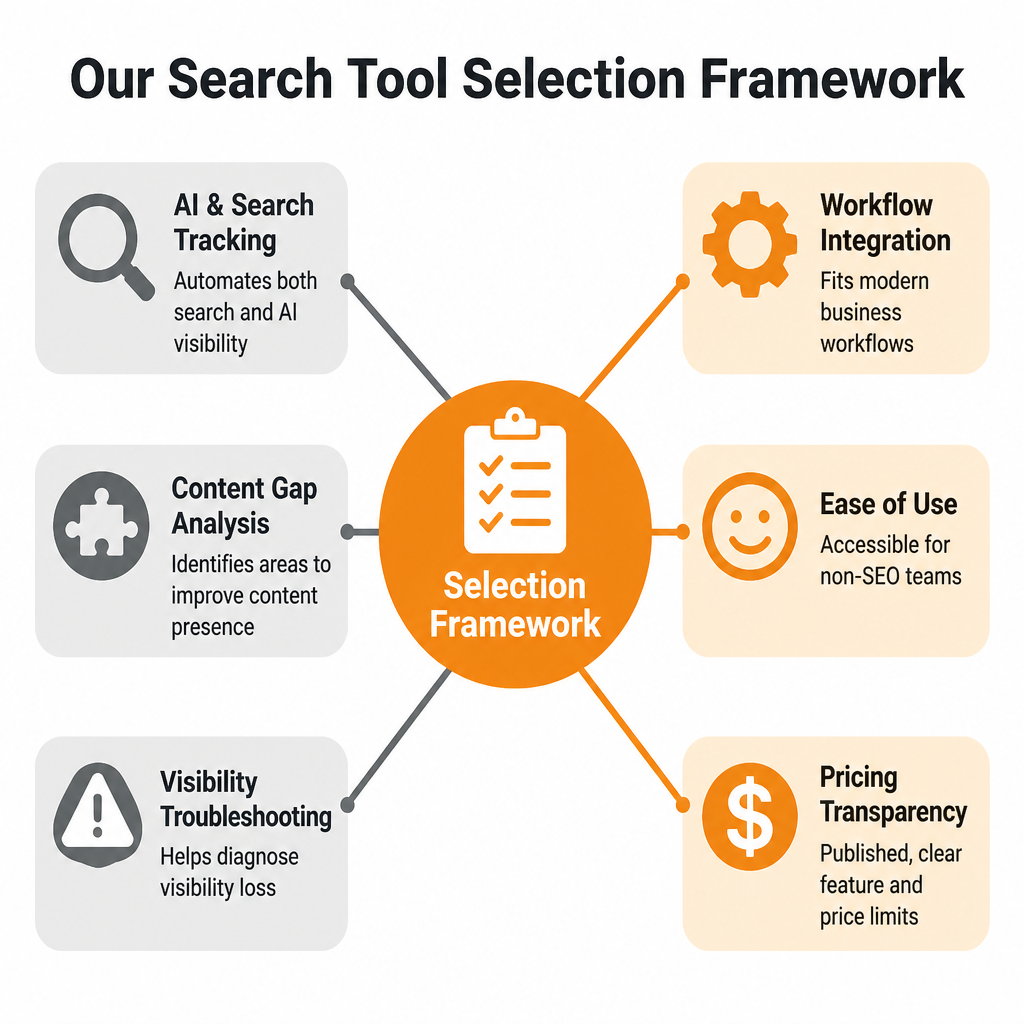
Tools made the list based on their ability to automate search and AI visibility tracking, content gap analysis, and integration with modern business workflows. Every solution here goes beyond basic keyword rank tracking, considering whether it monitors both Google results and AI-generated answers. Ease of use is critical, especially for teams without dedicated SEO staff. Pricing transparency and clear feature limits were required—if details aren’t published, the tool wasn’t eligible. Each tool’s focus on visibility troubleshooting, on-page optimization, and update cadence was reviewed.
Why the year matters in SEO tool choice
The search visibility landscape in 2026 demands tools that can keep up with generative AI and evolving algorithms. Search platforms like Google and Bing now blend organic rankings with AI-overviews and chat results, shifting what “visibility” means. Platforms that tracked only traditional SERPs no longer cover the full buyer journey—brands risk missing citations in AI answers if their tools can’t monitor those sources. Many businesses have seen their traffic shift from predictable rankings toward mentions within AI-generated summaries.
Limitations of this comparison
No comparison is perfectly complete—some platforms evolve quickly, and published feature lists don’t always match real-world workflows. Our research relied solely on verified, published data as of 2026, so hidden features or unlisted plan specifics are not reflected. Pricing and usage limits can change; always check vendor sites for the latest terms. This list focuses on tools with transparent, documented support for both traditional and AI search visibility—niche or experimental platforms without wide adoption aren’t included.
Expert Insight: Not all feature claims are equal—if a vendor doesn’t publish specifics, consider reaching out directly for clarifications before committing.
1. SEOLadders — Automated AI & SEO Tracking
SEOLadders is a done-for-you SEO and AI search visibility platform that automates research, writing, publishing, and tracking for teams without full-time SEO staff. Here’s how its features and performance compare for buyers seeking the best alternatives to Semrush.
What it is
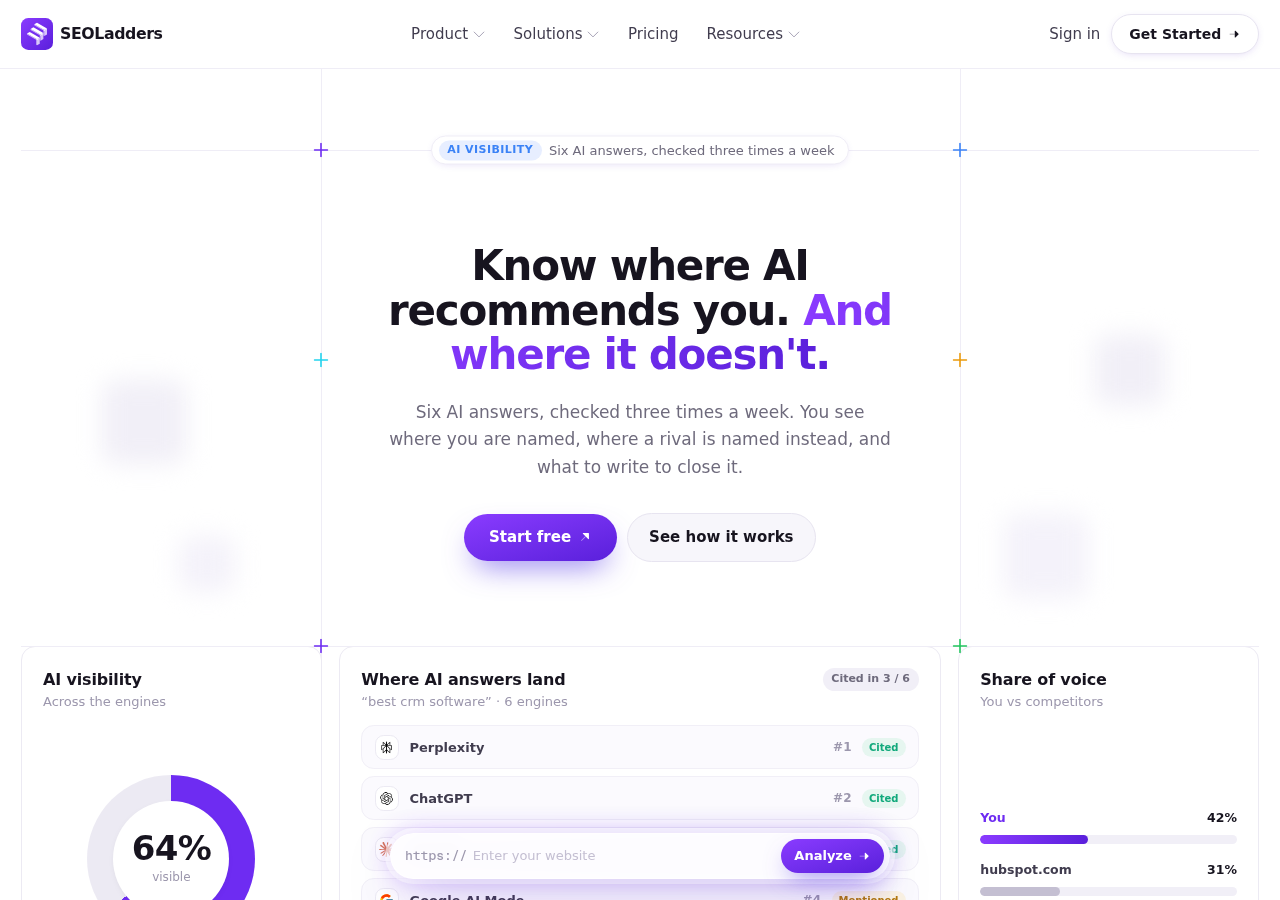
SEOLadders is an AI-powered platform that automates all major SEO and search visibility tasks, including tracking in both Google and major AI search engines. The platform connects to your site, scans your product and content pages, then autonomously handles keyword research, topic mapping, article creation, publishing, backlink outreach, and weekly site audits.
Best for
SEOLadders is best for founders, non-technical marketers, and small teams that want a hands-off solution for SEO and AI search without hiring dedicated SEO staff. It is especially useful for businesses that want to ensure they are visible not only in Google’s rankings but also in AI-generated answers across leading engines. Typical use cases include:
Key features
SEOLadders’ automated workflow covers every major step of modern SEO and AI search optimization:
Pricing
SEOLadders charges a flat $97 per month per website, with a 7-day free trial and $48 for the first month. This single plan includes all features: topic mapping, 30 articles per month (with images and citations), up to 5 users per site, and automated tracking across Google plus 6 AI engines. There are no upsells, seat fees, or usage-based add-ons.
Pros and cons
Pros:
- Fully automated: Content research, writing, publishing, and tracking all run autonomously
- AI visibility tracking across 6 engines: Not just Google, but ChatGPT, Gemini, Claude, Perplexity, and Google AI
- Simple pricing: Flat $97/month plan without extras, includes 5 seats per site
- No SEO staff required: Designed for non-experts
Verdict
SEOLadders stands out as the top Semrush alternative for businesses needing search tracking across both traditional search and leading AI platforms, with minimal manual effort required. Unlike Semrush, which focuses primarily on tracking keyword rankings and organic visibility on Google, SEOLadders extends its search tracking capabilities to include AI-generated search results, providing a broader view of online presence. This means users can monitor sample SERP outcomes and AI-generated content visibility, tracking not only traditional positions and mentions but also how their brand and content appear within AI answer boxes and suggestions. Its entire workflow is optimized for teams wanting reliable visibility, content, and technical updates — without weekly spreadsheet or agency wrangling.
Expert Insight: SEOLadders automatically covers both gaps in Google rankings and missing citations in AI-generated answers, so brands can track and improve search visibility everywhere buyers are looking in 2026.
2. Ahrefs — Unmatched Backlink and Keyword Data
Ahrefs is recognized for its deep backlink and keyword analytics, making it a prominent choice among SEO professionals who require detailed data. This section explores why Ahrefs appears on lists of the best alternatives to Semrush for tracking search visibility.
What it is
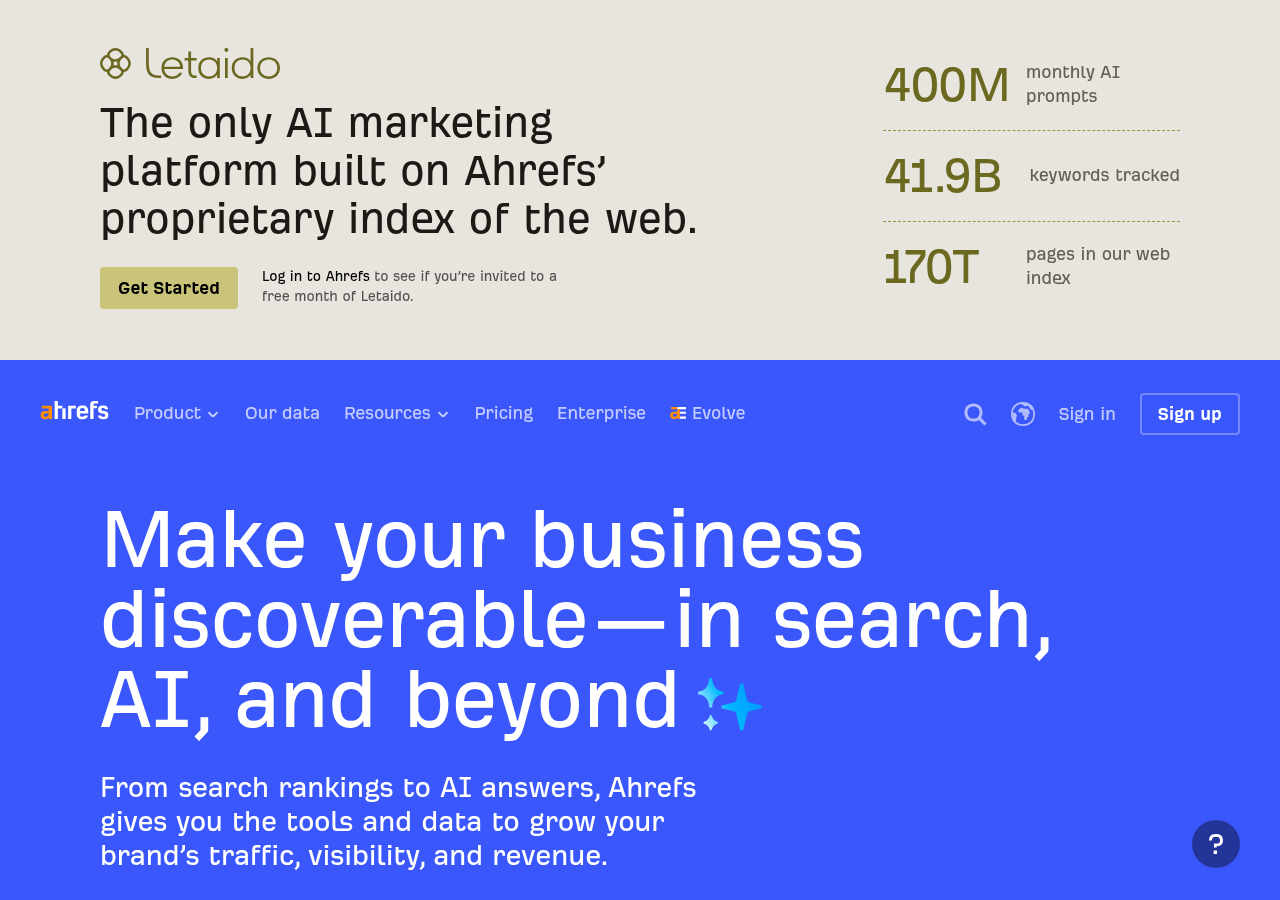
Ahrefs is a marketing platform built for search and AI that provides extensive tools for analyzing backlink profiles, monitoring keyword performance, and researching competitors. Its large database and historical indexing allow users to explore trends and track site health over time.
Best for
Ahrefs is best for marketing teams and professionals who need in-depth backlink and keyword intelligence to support large-scale SEO campaigns. Agencies or advanced users managing multiple sites or prioritizing competitor and historical link analysis typically benefit most from these capabilities.
Key features
Ahrefs provides a comprehensive suite of tools for SEO research, with a primary emphasis on backlink and keyword analytics. While it offers strong traditional search visibility tracking through its robust keyword rank tracking and backlink monitoring features, Ahrefs does not currently provide specific tools for tracking visibility in AI-driven search environments. This limits its capability as a full replacement for Semrush if your primary need includes AI search visibility tracking in 2026.
Pricing
Ahrefs offers tiered monthly plans with increasing features and data limits.
- Lite — $129/month
- Standard — $249/month
- Advanced — $449/month
- Enterprise — $1,499/month
- Brand Radar AI — From $199/month
- Free plan available
Each plan expands access to tracked keywords, projects, and reporting, but advanced AI reporting and large datasets require higher tiers.
Pros and cons
Ahrefs excels in backlink analytics and competitive research for agencies and experts but may be excessive for simple workflows or smaller budgets.
Pros:
- Industry-leading link index — Depth and freshness for backlink tracking
- Powerful competitor tools — Includes unique features like Brand Radar
- Frequent updates — Reliable data recency
Verdict
Ahrefs is a top alternative to Semrush for users who prioritize link and keyword intelligence above automation. Its granular data and versatile research tools can power complex SEO strategies, though those seeking automated visibility tracking or all-in-one workflow automation may find it less comprehensive than platforms like SEOLadders.
Expert Insight: Ahrefs’ deep backlink database can reveal trends and opportunities missed by lighter tools, but its value is maximized when teams have the expertise and resources to act on detailed insights.
3. Ubersuggest — Simple SEO and AI Tools
Ubersuggest appeals to businesses seeking an easy-to-use SEO solution that covers core keyword research, reporting, and emerging AI integrations. This section looks at how its toolset meets simpler tracking and optimization needs for those moving beyond Semrush.
What it is
Ubersuggest is an SEO and digital marketing tool designed to simplify keyword tracking, site audits, and AI-driven insights for teams without technical expertise. The platform aims to help e-commerce sites and SaaS brands grow by surfacing search opportunities and site recommendations in a streamlined dashboard.
Its feature set is intentionally light compared to more complex suites.
Best for
Ubersuggest is best for founders, small marketing teams, and solo entrepreneurs who want basic SEO analytics and light AI features at a low monthly price. The platform fits users who need:
- Clear, step-by-step training instead of a deep learning curve
- Quick keyword and site analysis with minimal configuration
- Affordable reporting for brands without full-time SEO staff
Key features
Key features of Ubersuggest include actionable keyword reports, basic AI chat insights, and site audit tools. Feature highlights, based on its plan structure, include:
Pricing
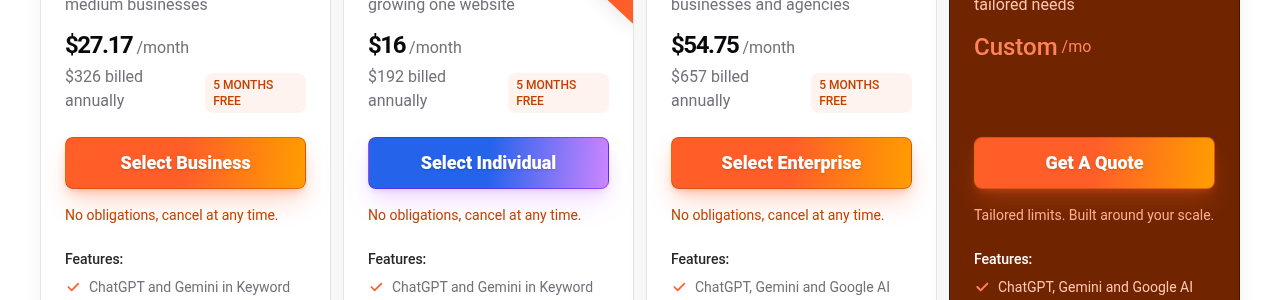
Ubersuggest pricing starts at $29/month for individuals, $49/month for business users, and $99/month for enterprise plans (as of 2026). Each plan increases access to daily reports, tracked projects, and AI chat credits. There is no free tier, but all options are positioned below the typical entry points of bigger tools.
Pros and cons
Ubersuggest delivers a balance of simplicity and affordability but lacks some depth in data compared to larger suites.
Pros:
- Low cost for core SEO and AI tools
- Straightforward onboarding with step-by-step guides
- Quick keyword and site audits for fast insights
Verdict
Ubersuggest is a practical entry option for basic SEO monitoring and light AI search guidance, best suited for newcomers or resource-strapped teams. The platform removes complexity but isn’t a fit for those needing enterprise-level analytics or automated multi-channel publishing. As a Semrush alternative, it's a leaner option that covers fundamentals without demanding expertise or a high budget.
Expert Insight: While Ubersuggest streamlines daily SEO tasks, teams needing detailed AI citation tracking or large-scale automation should consider platforms with deeper integration and reporting.
4. SE Ranking — Flexible Search Visibility Suite
SE Ranking provides a flexible, integrated platform focused on search visibility for agencies and diverse businesses. This section covers what sets SE Ranking apart and where its strengths and limitations lie for those seeking alternatives to Semrush.
What it is
SE Ranking is an integrated SEO platform offering tools to monitor and improve organic and AI search performance across multiple channels. It combines features for keyword tracking, domain and backlink research, and API-driven data workflows to help agencies and brands assess and grow their online footprint.
Best for
SE Ranking best fits agencies and businesses prioritizing flexible integration and API access for advanced SEO tracking. Teams wanting to connect organic search, AI answers, and social performance in one workspace will find it especially useful. It's also attractive for users ready to manage several channels through customizable dashboards and domain research APIs.
Key features
SE Ranking offers APIs for backlinks, keyword research, website audits, and AI search, providing automated ways to collect and monitor SEO data. Its search visibility tracking covers Google by monitoring keyword rankings across regional and language-specific Google search engines, allowing users to see position changes and SERP features for target keywords. For example, it can track a keyword's rank fluctuations in Google US and Google UK, helping users optimize for different markets. However, its AI search monitoring is more limited; unlike Semrush and SEOLadders, which analyze AI-generated content appearances and how AI-driven answers affect search visibility, SE Ranking does not provide detailed monitoring of AI platform rankings or featured snippet performance in AI responses, which may be a gap for those focusing heavily on emerging AI search channels. Notable capabilities include:
Pricing
SE Ranking uses tiered pricing with a free trial and pay-as-you-go or fixed monthly options, including Wallet at $50/mo and Standalone at $179 to $200/mo. Custom enterprise plans are available for higher needs. Features and limits scale with plan choice. For details on each option, visit SE Ranking’s own pricing resources, as current plan structures sometimes adjust.
Pros and cons
Strengths:
- Flexible API suite — ideal for technical teams and agencies
- Covers organic, AI, and social — integrated monitoring across key channels
- Supports scale — custom plans for enterprise or multi-client needs
Verdict
SE Ranking is a flexible, API-driven platform well suited to agencies managing high volumes or seeking advanced integration for search visibility tracking. It offers strong multi-channel analytics but does not automate content creation or outreach.
Expert Insight: SE Ranking's robust API access appeals to agencies with dedicated technical resources, but non-technical teams may prefer platforms that automate content workflow and require less manual integration.
5. Serpstat — All-in-One SEO Platform for Growth Analysis
Serpstat is an established option for businesses needing a unified toolkit to manage and analyze their organic growth. Here, we break down where it fits among the best alternatives to Semrush for tracking search performance.
What it is
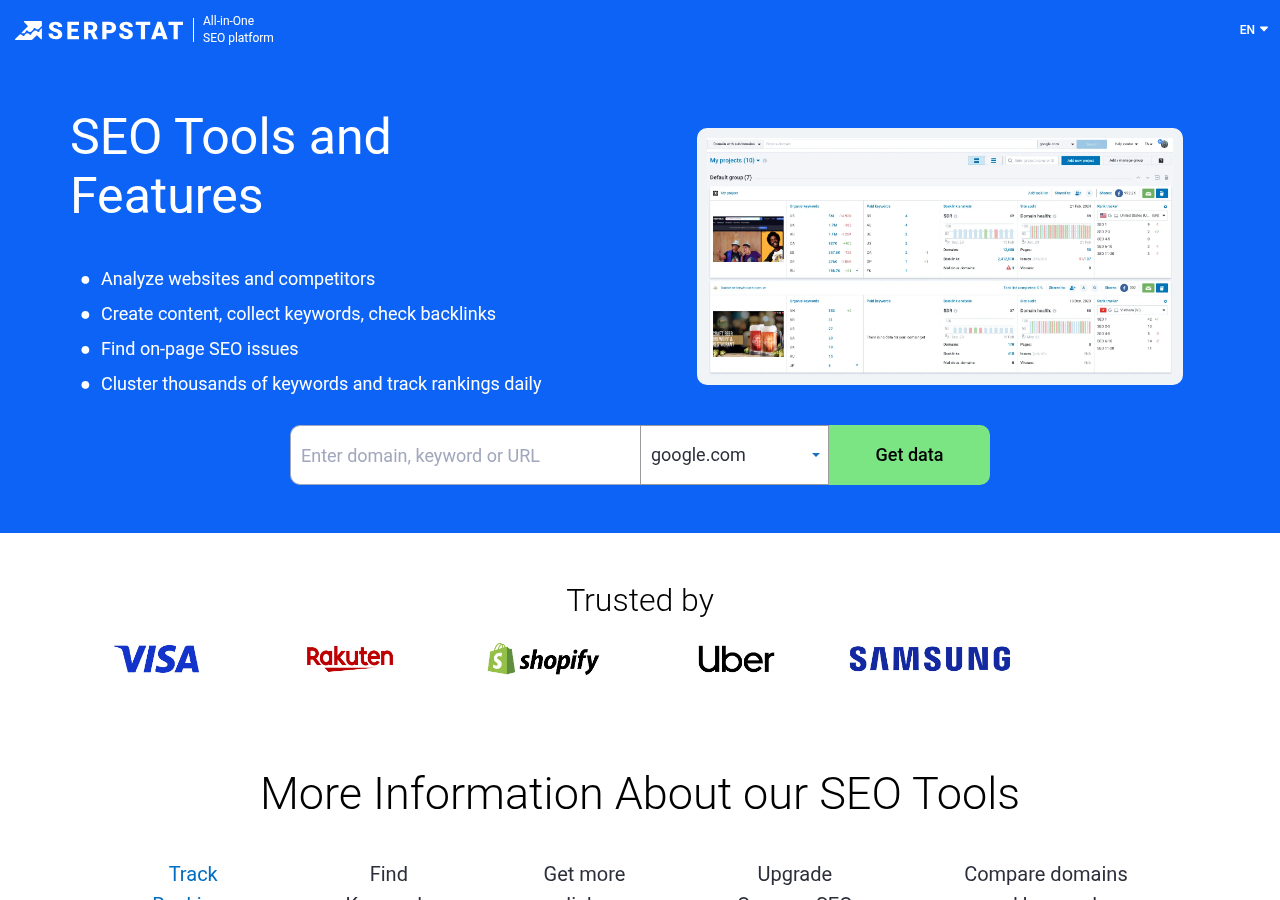
Serpstat is an all-in-one SEO platform combining site audit, rank tracking, competitor analysis, and keyword research in a single dashboard. Teams use Serpstat to oversee SEO campaigns at scale, assess website health, and uncover improvement opportunities. Its toolset provides visibility into both organic rankings and technical performance, supporting SaaS companies and growing businesses in particular.
Best for
Serpstat is best suited for SaaS companies and digital marketing teams focused on finding areas for growth and scaling their search visibility processes. Agencies managing several brands under one roof value its workspace structure and breadth of features. Companies prioritizing competitor tracking and keyword research for expansion typically see fit with Serpstat’s core offering.
Key features
Serpstat’s key features include automatic keyword research, rank tracking, backlink analysis, site auditing, and team-friendly reporting dashboards. Users get access to:
- Keyword Research — shows profitable keywords and content gaps
- Site Analysis — health checks and technical audits
- Rank Tracker — ongoing SERP monitoring
- Backlink Analysis — discover link profile trends
Pricing
Serpstat’s current pricing (verified as of 2026) starts at $50/month for Individual, $100/month for Team, $169/month for Team x2, and $410/month for Agency plans. All plans grant full-feature access, scaling up usage limits and collaboration options at higher tiers. There’s no permanent free tier on record, and feature limits are mainly set by plan level and quotas.
Pros and cons
Serpstat delivers strong value for mid-market teams, but may not fully replace specialist tools for advanced needs.
Pros:
- Unified toolkit — keywords, rankings, audits, and backlinks all in one
- Competitive pricing — more affordable than most all-in-one rivals
- Scalable for agencies
Verdict
Serpstat is a practical choice for businesses that want consolidation and simple workflows over tool sprawl. Its value lies in exposing actionable growth opportunities across organic channels, but those seeking deep AI search tracking or daily fresh backlink indexes may need to supplement with other solutions.
Expert Insight: Serpstat’s biggest advantage is workflow consolidation — it’s ideal for teams tired of toggling between multiple single-purpose tools.
6. Moz Pro — Authority Building & AI-Ready Analysis
Moz Pro combines authority tracking with tools to prepare sites for changes in AI-driven search visibility. It’s designed for businesses looking to analyze, optimize, and build lasting search presence beyond just ranking reports.
What it is
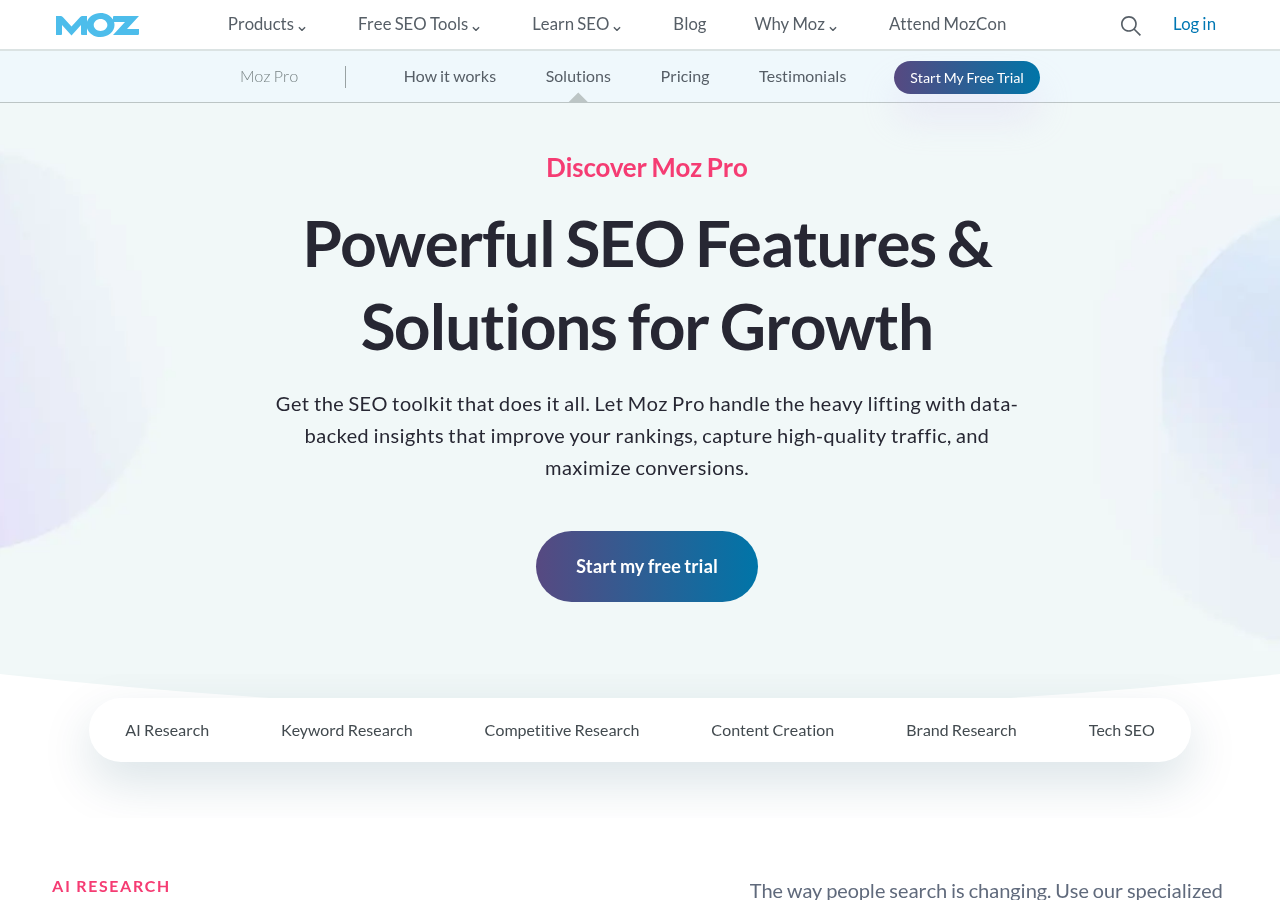
Moz Pro is a subscription-based SEO platform focused on building site authority and adapting to search algorithm shifts, particularly as AI changes the search landscape. It features specialized tools for keyword research, competitor analysis, site audits, and authority scoring, positioning Moz Pro as a reliable all-in-one solution for digital marketers who want a data-rich environment to guide decision-making.
Best for
Moz Pro is best for small to large marketing teams, agencies, and brand marketers who prioritize building domain authority and need AI-adaptable SEO workflows. It’s especially useful for those requiring:
Key features
Moz Pro’s core features include:
Pricing
Moz Pro offers a range of plans with tiered pricing as of 2026:
- Free — $0
- Starter Medium — $20/month
- Starter Large — $75/month
- Growth Small — $125/month
- Growth Medium — $250/month
- Growth Large — $500/month
- Enterprise — Custom pricing
Pros and cons
Moz Pro provides a blend of historical authority metrics and new tools for AI-adapted SEO, but it’s not as automated as platforms like SEOLadders.
Pros:
- Wide plan range — accessible for beginners to enterprises.
- Strong authority/trust metrics.
- Continuous updates for AI search changes.
Verdict
Moz Pro stands out among the best alternatives to Semrush for tracking search visibility, especially for teams focused on authority and adapting to AI-related search changes. Its evolving toolkit aims to help brands remain visible as search dynamics shift, especially for those who want ownership of their SEO process with trusted industry metrics.
Expert Insight: Moz Pro’s brand authority metrics remain an industry benchmark, but teams moving from Semrush should plan for some manual management unless upgrading to higher-tier plans.
7. SpyFu — Deep Competitor and PPC Insights
SpyFu focuses on surfacing deep insights into competitors’ paid and organic search strategies, built for marketers who need data-driven PPC and SEO intelligence. Its emphasis on historical data and competitive analysis sets it apart among the best alternatives to Semrush for tracking search.
What it is
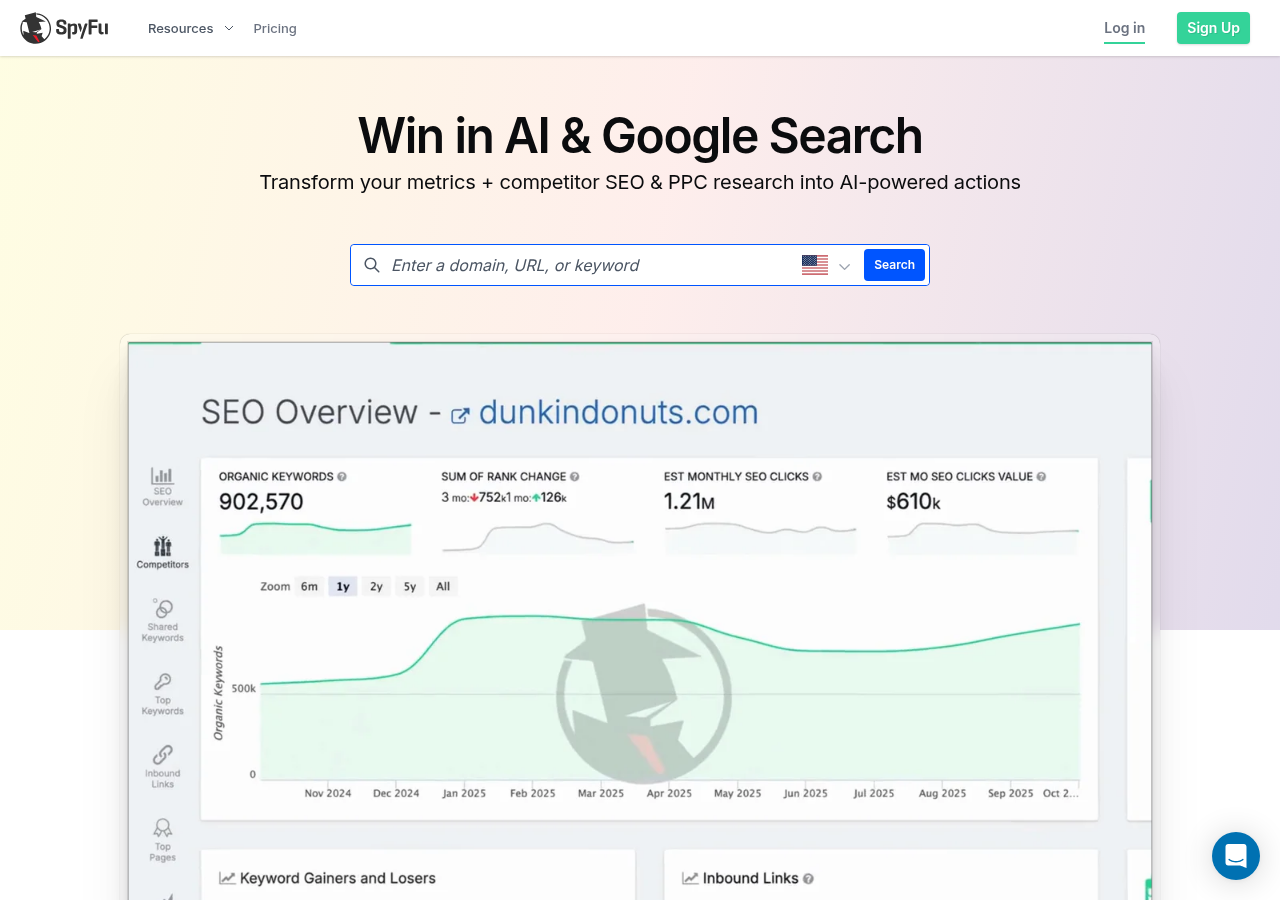
SpyFu is an AI-powered competitive intelligence platform that transforms detailed search and competitor data into actionable strategies for SEO and PPC. Unlike simple rank trackers, SpyFu digs into historical keyword performance and uncovers gaps in your rivals’ paid and organic tactics.
Best for
SpyFu is best suited for digital marketers focused on digging deep into the competitive landscape of search and PPC. Agencies and in-house teams needing visibility into historical keywords, competitor spending, and ad performance will get the most value.
Key features
Key SpyFu features center around competitive analytics and historical PPC/SEO research.
| Feature | Details |
|---|---|
| Competitive Analysis | Deep dive into rivals’ spend and keywords |
| AI Insights | Actionable recommendations |
| Historical Data | 10+ years for trends |
| Rank Tracking | Track keywords and domains |
| Site Audit | Evaluate site health |
| Unlimited Search Data | Access full datasets |
| Monthly AI Credits | Power AI-driven research features |
- 10+ years of results — review long-term competitive movement.
- Unlimited search data — no hard caps on the results you can analyze.
Pricing
SpyFu offers a range of paid plans built around data volume and seat count.
- Basic: $29–$39 per month (one user, search and export limits)
- Pro + AI: $59 for first month, then $89/month (AI features, more exports)
- Team/Agency: $187–$249/month (multiple seats, broader data access)
Pros and cons
SpyFu excels at historical competitive insights but isn’t a full traditional SEO suite.
Pros:
- Deep PPC and competitor data — rare among alternatives
- Long historical lookback — unique for analyzing trends
- Unlimited search access — view all results, not truncated lists
Verdict
SpyFu is a strong alternative when advanced competitor and PPC research outweighs the need for native content or technical SEO tools. Marketers looking to benchmark against rivals and strategize paid search will find exceptional depth. However, for automated SEO content creation or AI search engine visibility, options like SEOLadders or all-in-one suites may cover more ground.
Expert Insight: If you rely on historical trends to shape competitive campaigns or need unlimited search exports, SpyFu stands out, but it may require pairing with another tool for complete technical or on-page SEO automation.
8. Mangools — User-Friendly Keyword and SERP Research
Mangools stands out for its approachable design and practical keyword research features. For those seeking straightforward SERP and keyword tracking without overwhelming extras, it’s a contender worth considering.
What it is
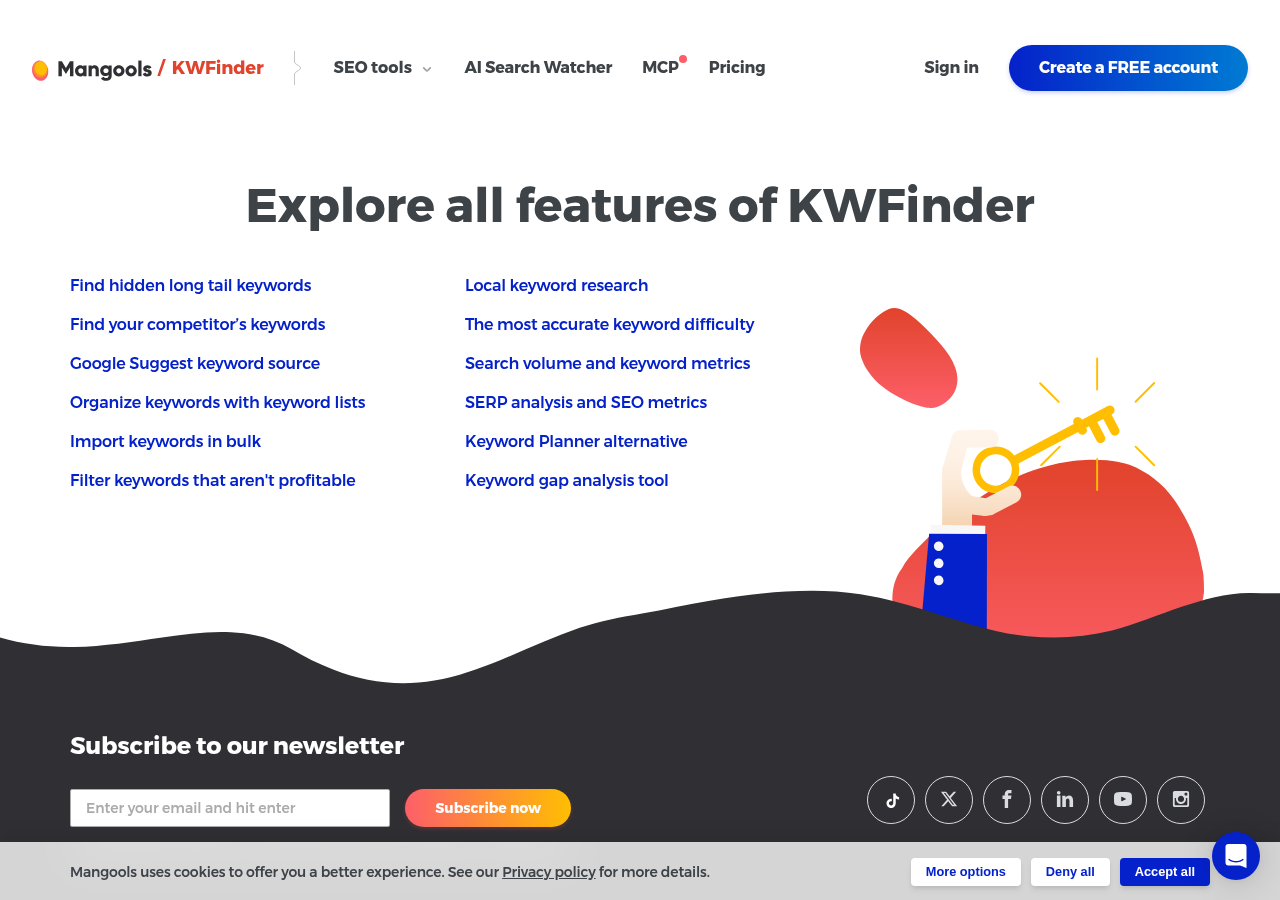
Mangools is an online marketing tool built for intuitive keyword research and SERP analysis. Its suite is geared toward both solo practitioners and marketing teams, consolidating core research needs into a single interface. Emphasis is placed on user experience, so even those newer to SEO can run in-depth queries and track ranking changes with minimal setup.
Best for
Mangools is best for users who prioritize simplicity in keyword research and ongoing rank tracking. It caters to independent marketers and small teams that need actionable SERP and keyword visibility data without the steeper learning curve or depth required by high-end enterprise suites. For benchmarking progress or kicking off campaigns without a steep price, it’s consistently popular.
Key features
- Keyword research and SERP analysis with daily quotas per plan
- Rank tracking for multiple domains and an unlimited number of tracked keywords (depending on the tier)
- Team management with sub-user accounts for secure collaboration
- API and MCP access for automated data workflows
- Easy-to-interpret dashboard streamlining competitive and keyword visibility research
Pricing
Mangools’ pricing starts at $37.70/month for the Basic plan, $52.70/month for Premium, and $97.70/month for Agency (all verified from vendor). Yearly prepay discounts are available. Each plan scales quotas for keyword research, SERP checks, and tracked keywords. There’s no free plan, so prospective users should consider if the tiered access fits their needs.
Pros and cons
- Pros:
- Straightforward interface that shortens onboarding time for new users
- Affordable entry-level pricing compared to many Semrush alternatives
- Decent quota flexibility for growing small teams and solo marketers
- Cons:
- Limited to core SEO research: lacks content publishing, backlink outreach, or AI SERP tracking found in SEOLadders
- No free tier and some features (like daily keyword quotas) are capped per plan
Verdict
Mangools is a user-friendly alternative for those primarily focused on keyword and SERP research, but it falls short for users wanting built-in automation or AI search tracking. For businesses that just need efficient rank tracking and keyword discovery, it’s a suitable, budget-conscious option, though those seeking end-to-end automation or AI-focused features should consider broader alternatives.
Expert Insight: Mangools is a practical tool for small businesses that want to launch effective keyword campaigns quickly, but its lack of automated publishing or AI tracking limits its value for more advanced or hands-off SEO workflows.
Frequently Asked Questions
What are the best alternatives to Semrush for tracking search visibility in 2026?
Top alternatives to Semrush for tracking search visibility in 2026 include SEOLadders, which uniquely combines traditional SEO tracking with AI search engine visibility across six AI models, automated content creation, publishing, and backlink outreach. It offers a flat $97/month plan per site with AI and Google tracking, designed for users without dedicated SEO experts. Other tools may focus on AI monitoring or traditional SEO but often lack SEOLadders' integrated automation and AI citation tracking.
Which SEO tools track both traditional and AI search engines?
SEOLadders uniquely tracks visibility across traditional search engines like Google and six major AI platforms, including ChatGPT, Gemini, and Google AI. It automates content creation, ranking monitoring, and AI citations with real-time audits and link outreach, making it a comprehensive tool for monitoring both SEO and AI-driven search presence.
Is Ahrefs or SE Ranking better for AI visibility tracking?
Neither Ahrefs nor SE Ranking explicitly offers dedicated AI visibility tracking across multiple AI engines like SEOLadders does. SEOLadders tracks AI visibility on six AI platforms, monitoring brand citations and competitor mentions automatically, a feature not specified for Ahrefs or SE Ranking. For AI-driven search visibility, SEOLadders is the stronger choice due to its focused and automated AI monitoring capabilities.
Do any Semrush alternatives fully automate content creation?
Yes, SEOLadders fully automates content creation by researching topics, writing articles with brand voice and citations, and publishing them automatically to platforms like WordPress. It delivers 30 AI-generated articles monthly, covering content gaps without manual drafting. This automation suits businesses lacking dedicated SEO resources seeking seamless content generation alongside SEO and AI visibility tracking.
What should you avoid when switching from Semrush?
Avoid assuming your new SEO tool will replicate Semrush's extensive backlink index and broad manual data reports. Unlike Semrush, which requires SEO expertise to act on data, some alternatives like SEOLadders automate content creation and AI visibility tracking but do not provide full backlink indexes. Also, avoid tools lacking integration with your CMS or limited AI search engine tracking if you want comprehensive coverage.
Conclusion
Finding the right platform to replace Semrush depends on your specific needs—whether it’s automated AI and search tracking, deep backlink data, or user-friendly content tools. This article covered eight of the top alternatives, each with their own strengths. SEOLadders stands out as the solution for teams who need end-to-end automation: it’s the only option here that fully automates everything from keyword mapping and content writing to real-time Google and AI search visibility monitoring. If you want to track not just where you rank on Google but also how often your brand is cited by ChatGPT, Gemini, Claude, Perplexity, and more—without lifting a finger—SEOLadders is made for you.
Here’s how to take the next step:
- Identify which features matter most—traditional rank tracking, AI brand citations, automated content, or backlink outreach.
- Sign up for a free trial with a tool or two that match your needs.
- Connect your site and try setting up a visibility report to check coverage and gaps.
- Compare the level of automation and reporting detail—especially around AI visibility—to see what fits your workflow best. With so many choices, the best alternative is the one aligned with both today’s search realities and your team’s actual bandwidth.
Curious how SEOLadders could elevate your search visibility and automate your SEO workflow? Learn what makes SEOLadders different in our full Semrush comparison and see if it’s the right fit for your business.
Want this done for you? SEOLadders finds the topics, writes the articles, and gets you cited by AI and ranking on Google, on autopilot.
7-day free trial · Cancel anytime