
Table of contents
TL;DR
- Compare 6 leading AI search analytics platforms
- See verified pricing and standout features at a glance
- Learn what sets SEOLadders apart for organic and AI rankings
- Get practical selection criteria tailored to 2026 search challenges
You spent hours optimizing your website and publishing new content. But when you ask ChatGPT or Google Gemini about your brand, your pages don’t appear—or worse, your competitors do. For founders, marketers, and anyone focused on organic growth, being left out of AI-generated answers can feel like traditional SEO, but with different rules.
This guide explains what "AI search analytics" means in 2026 and how it works. It shows which tools can help you track and improve your presence in both regular and generative search engines. You’ll get a quick look at six top platforms—including SEOLadders—and learn what makes each unique for monitoring brand visibility, AI citations, and SEO performance in the age of AI-driven search. If you want AI models to actually recommend your business, these are the tools designed for that purpose.
AI Search Analytics Tools at a Glance
Choosing an AI search analytics platform starts with understanding key differences in features, focus, and pricing. This section offers an instant, side-by-side summary of the leaders in AI-driven SEO analytics for 2026.
Comparison Table: 6 Best AI Search Analytics Tools
| Tool | Best For | Starting Price | Users/Seats | Usage Limit | AI Engines Tracked | Standout Difference | Integrations / Publishing | Free Trial |
|---|---|---|---|---|---|---|---|---|
| SEOLadders | Unified SEO + AI search tracking | $97/mo/site | 1 per site | 30 articles/mo, 30 prompts | ChatGPT, Gemini, Perplexity, Claude, Google AI | Publishes content, runs site audits, local plan | WordPress, Ghost, Webhook, Notion | 7 days |
| Peec AI | AI prompt-based analytics | $95/mo (Starter) | Unlimited | Prompt-based (tracked prompts) | Multiple AI models (customizable) | Custom prompt tracking across models | Not listed | Not listed |
| LLMrefs | Generative Engine Optimization | $79/mo | Not listed | 500 prompts/mo | All major AI engines | Source citation tracking with geo/language | Not listed | Not listed |
| Scrunch AI | AI agent behavior optimization | $250/mo (Core) | Not listed | Unique prompts; responses | Not listed | Analyzes agent behavior for revenue impact | Not listed | Not listed |
| AthenaHQ | Large teams & autonomous SEO | Free > $295/mo | Unlimited | Credits-based (1 credit/response) | ChatGPT, Perplexity, Gemini, Copilot, AI Overviews | Autonomous content optimization | API (paid add-on) | Free |
| Otterly AI | Content intelligence/citation | $29/mo (Lite) | Not listed | Not listed | Not listed | Prompt research & citation optimization | MCP, API | Not listed |
Expert Insight: Not all tools automatically publish new content to your website; some only track or report, so clarify what each platform can actually do before committing.
How We Selected These AI Analytics Platforms
Choosing the right AI search analytics platforms for 2026 meant looking beyond flashy features and focusing on what truly impacts SEO visibility and business results. Our selection process balanced data accuracy, transparency, and relevance to real-world SEO needs.
AI search analytics differs from classic SEO analytics by focusing not only on keyword rankings and traffic volume but also on user intent, semantic search trends, and predictive insights driven by machine learning. This shift introduces new metrics like intent-based query classification, engagement quality scoring, and anomaly detection in search patterns. As a result, marketers must adapt their daily workflows to monitor evolving search behaviors more dynamically, prioritize content aligned with user intent, and anticipate changes before they impact rankings.
Criteria: What Actually Matters
Effective AI search analytics tools must deliver actionable visibility insights, track both human and AI search performance, and support SEO workflows with reliable automation. We evaluated each platform based on how well it helps teams understand their brand’s presence in both traditional and AI-driven search engines.
Data Sources and Verification
AI analytics platforms must use verified, transparent data sources to ensure accuracy and actionable insights. We prioritized tools that cite where their visibility data comes from (e.g., Search Console, live SERPs, direct AI engine queries). Reliable platforms show:
- Source-level reporting—naming the queries, engines, and references used
- Audit trails—letting users backtrack from dashboard numbers to underlying data
- Regular updates—timely refreshes so AI mention trends and rankings reflect current conditions
This level of verification guards against inaccurate reporting and helps users defend recommendations to stakeholders.
Why Feature Transparency Counts
Feature transparency is critical because it enables marketers to trust, validate, and operationalize AI search metrics in their own workflows. Platforms that clearly document what’s included (e.g., number of tracked prompts, frequency of checks, data refresh limits) allow teams to plan around real tool capabilities without surprises.
Expert Insight: Scrutinizing both the data and limitations disclosed by AI search analytics platforms will save you from picking tools whose real capabilities don’t match their marketing.
1. SEOLadders — Unified SEO and AI Visibility
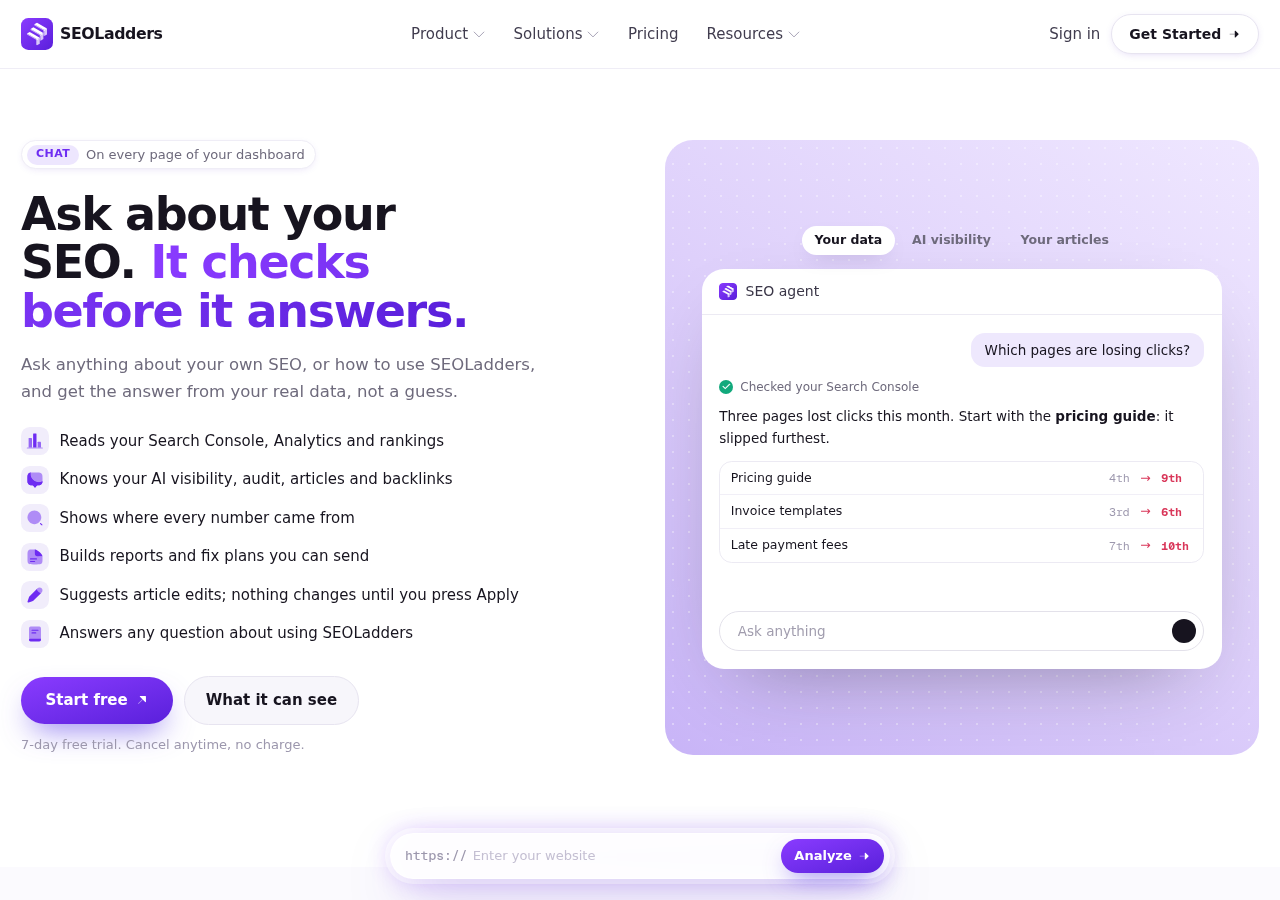
SEOLadders combines automated SEO with AI search analytics in a single platform, designed to keep your brand visible across both Google and major AI answer engines. It’s made for teams who want their product cited by search and generative models, without piecing together multiple tools.
What it is
SEOLadders is an all-in-one AI SEO and visibility platform that manages research, content writing, backlinks, and organic and AI search tracking after you connect your website. It builds a knowledge base from your live site and uses it to automate daily publishing, audit your site, and monitor if and how brands (yours and competitors') are named in Google, ChatGPT, Gemini, Claude, Perplexity, and more.
Best for
SEOLadders is best for founders, marketers, and small business teams wanting end-to-end automation for both SEO and AI search visibility without running multiple tools. Agencies managing several sites can also benefit from the per-site subscription, separate dashboards, and ability to invite up to five teammates at no extra cost.
Key features
SEOLadders automates SEO and generative engine optimization from research to execution, with these main features:
- Pre-built automation workflows that connect keyword research, content generation, and performance tracking into a continuous cycle, reducing manual tasks.
- Detailed reporting dashboards that provide insights on organic traffic changes, keyword ranking movements, and content engagement metrics, updated in real time.
- Integration with concrete AI engines such as OpenAI's GPT-4 for content creation, Google's BERT for search intent analysis, and proprietary semantic analysis tools to refine keyword targeting.
- Customized alert systems that notify users of sudden ranking drops or competitor gains, allowing for swift strategic adjustments.
- Support for collaborative team environments with role-based access and workflow approvals to maintain quality across SEO campaigns.
Pricing
SEOLadders offers a single all-in-one plan at $97/month per site, with the first month half off and a 7-day free trial. You get the whole platform—content, audits, AI tracking, and outreach—with no paywalled limits or per-seat charges. Extra sites are $97/month each, each with its own content and analytics. Users can cancel anytime and there are no upsells.
Pros and cons
SEOLadders automates the entire SEO and AI search workflow but doesn’t support some advanced manual controls.
Pros:
- End-to-end automation—From keyword research to publishing
- Tracks both Google and AI assistant mentions
- No seat/feature upcharges—5 users included
- Real articles cited in AI engine answers
Verdict
SEOLadders is the only platform in 2026 that automates SEO, content, AI-mention tracking, and publication in one subscription—no piecemeal upgrades or add-ons required. For lean teams aiming for Google rankings and AI citation, its integration of visibility dashboards, audit tools, and real article publishing fills the execution gap left by reporting-only suites.
Expert Insight: The monthly content plan in SEOLadders is fixed, so any new gap articles identified will be scheduled for the next month—not immediately.
2. Peec AI — Flexible AI Prompt Tracking
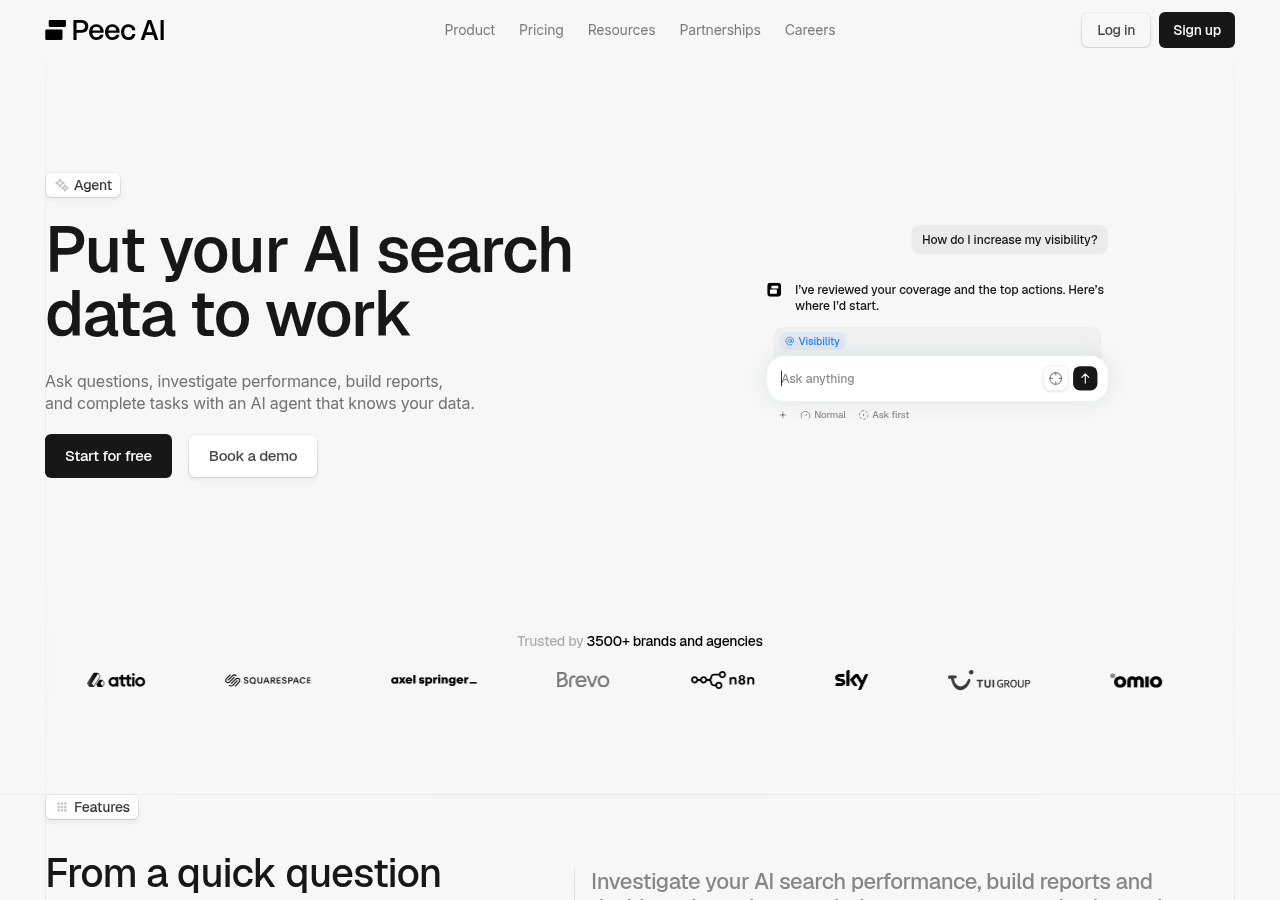
Peec AI offers a prompt-based approach to AI search analytics, letting marketing teams track brand visibility across multiple AI models. Its flexible user model and monitoring options make it a notable pick for organizations prioritizing prompt-level tracking.
What it is
Peec AI is an AI search analytics platform that enables teams to monitor their brand performance across a variety of generative AI models. It focuses on tracking the specific prompts users care about, aggregating data on how brands are referenced by different AI engines. Organizations can select models to monitor and adjust tracking frequency to meet their needs.
Best for
Peec AI is best for marketing teams and larger businesses that require customizable, prompt-level visibility across multiple AI and search models. It's especially well-suited to agencies and enterprises that need flexible seat access and an ability to track many queries or prompts without worrying about per-user fees.
Key features
Peec AI’s top features are prompt-based tracking, multi-model support, and unlimited user seats. It offers detailed prompt management, allowing teams to organize, compare, and analyze prompts across different AI models. The platform supports a wide range of models, enabling users to track performance variations and choose the best fit for their needs. API access is included at the enterprise level, supporting use cases such as automating campaign analysis and integrating AI insights with other marketing tools. For example, a marketing team running a multi-channel campaign can track how different AI-generated ad copy performs across models, adjust prompts for higher engagement based on analytics, and seamlessly update creatives via API—all within Peec AI’s dashboard.
Pricing
Peec AI offers tiered, prompt-based pricing starting at $95 per month for the Starter plan. Plans include access for unlimited users, with tracking volume tied to the number of prompts monitored rather than user count. The Pro plan is $245 per month, and Advanced is $495 per month; Enterprise pricing is available custom. Pricing is Euro-denominated in some markets.
Pros and cons
Peec AI’s strengths include unlimited user access and customizable prompt tracking, while its main tradeoff is per-prompt pricing that may increase costs for very high tracking volumes.
Pros:
- Unlimited users on all plans
- Flexibility with prompt and model selection
- **Simple collaboration across teams
Verdict
Peec AI is a strong choice for organizations needing user flexibility and granular prompt tracking in their AI search analytics. It's best used by teams ready to manage their tracked prompts strategically and comfortable balancing per-prompt costs against breadth of coverage. For teams prioritizing all-in-one automation or integrated publishing, alternative AI search analytics platforms may be a better fit.
Expert Insight: Peec AI’s unlimited seats may appeal most to agencies or distributed marketing teams, but per-prompt billing means high-volume use cases should budget accordingly.
3. LLMrefs — Specialized Generative Engine Tracking
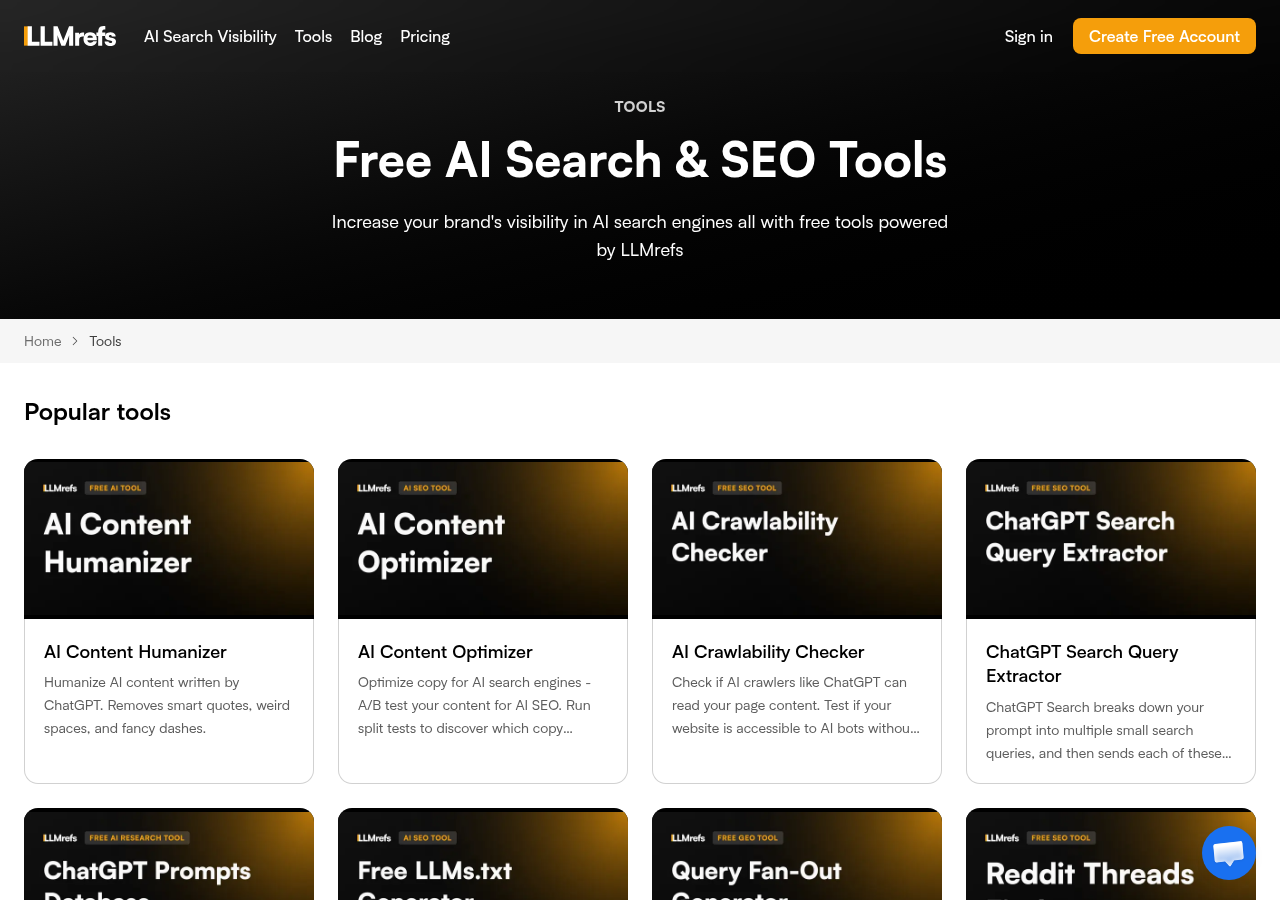
LLMrefs offers a focused approach to measuring brand visibility within generative AI search engines. Its tools help marketers understand and improve how often their brand is mentioned and cited by leading AI models.
What it is
LLMrefs is a dedicated AI search visibility solution designed specifically for Generative Engine Optimization (GEO). LLMrefs was built to help SEO teams, agencies, and enterprise marketers track, analyze, and boost their presence across leading AI-driven search engines, sometimes referred to as answer engines. Unlike conventional SEO tools, it captures brand mentions, citations, and the sources that influence AI-generated responses.
Best for
LLMrefs is best for SEO teams and agencies focused on maximizing brand presence in generative AI search results. It is particularly useful for organizations wanting to understand citation patterns and monitor their status across a wide set of AI-driven engines, especially those operating internationally.
Key features
LLMrefs stands out with targeted tools for AI visibility and citation tracking. Notable capabilities include:
Pricing
LLMrefs offers a single 'All in One' plan priced at $79 per month. This subscription covers up to 500 prompts tracked across all supported engines, weekly reporting, and access to full citation analytics. Pricing is transparent and inclusive of all AI engine coverage, with no additional upcharges for individual platforms.
Pros and cons
LLMrefs delivers broad AI engine coverage but prioritizes depth over breadth in workflow integration.
Pros:
- Flat $79/mo price with access to all supported AI engines
- Geo and language targeting make it useful for global teams
- Detailed citation and brand mention analysis
Verdict
LLMrefs is a strong fit for brands prioritizing AI search analytics over all-in-one SEO automation. Its value is in detailed, international tracking of generative search appearances and AI citation trends, making it a strategic monitoring solution rather than a publishing or optimization platform. It likely works best when paired with tools that handle content creation and technical SEO tasks.
Expert Insight: LLMrefs provides automatic weekly brand and citation reports for over 50 countries, making it useful for multi-location or multilingual SEO campaigns.
4. Scrunch AI — Brand Experience for AI Agents
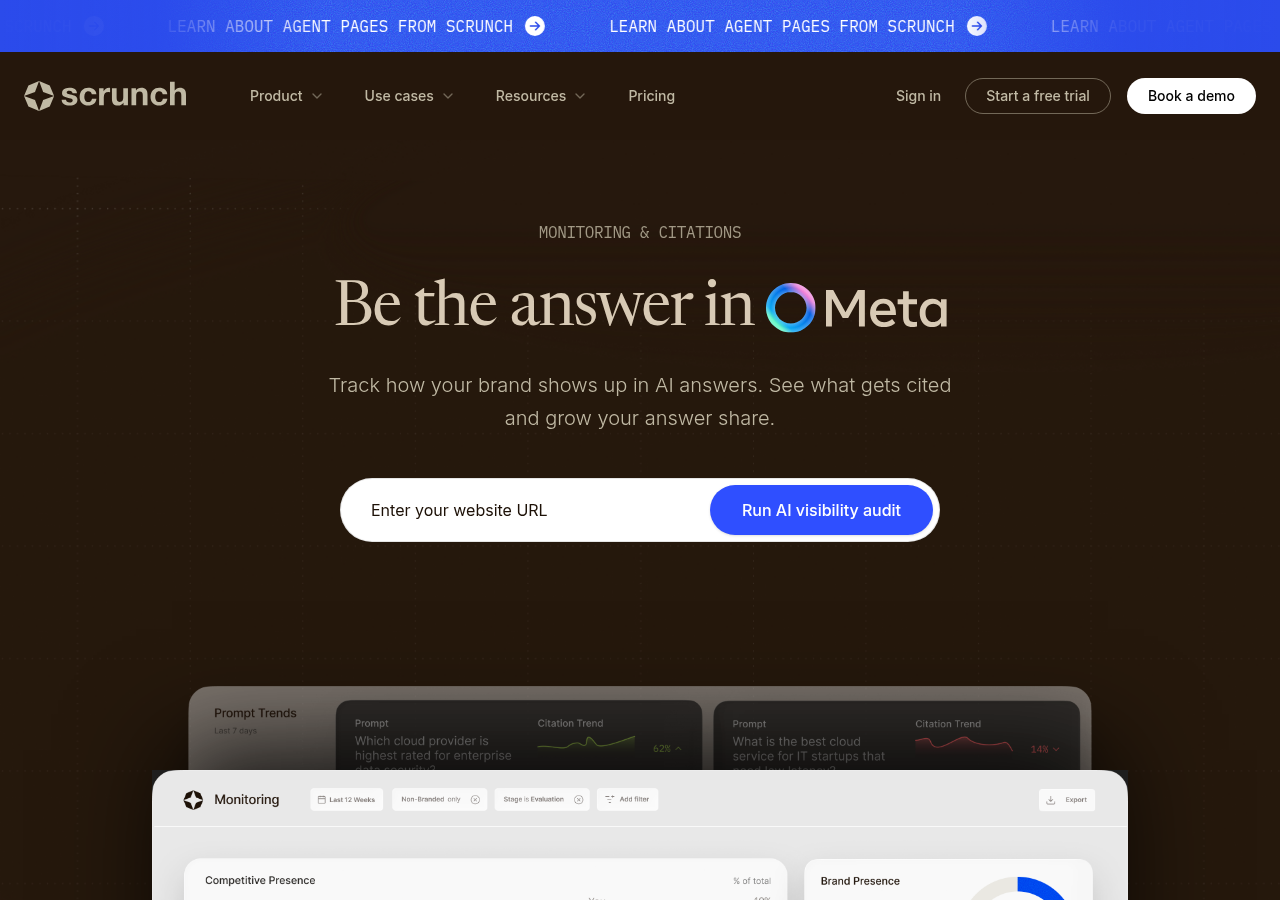
Scrunch AI focuses on helping brands optimize their presence specifically for AI-driven agents by analyzing how these systems interact with your website. It brings a practical perspective to AI search analytics, tailored for teams prioritizing agent-based experiences.
What it is
Scrunch AI is a platform designed to monitor and improve how AI agents interact with your brand online. The tool focuses on the behaviors and preferences of AI-powered agents, aiming to enhance brand visibility and user experiences driven by these technologies.
Best for
Scrunch AI is best suited for brands aiming to optimize their website for AI agent visibility and recommendations. Teams managing multiple digital properties or seeking to improve product/service discovery through conversational AI will benefit most. It's also relevant for businesses focused on adapting content strategies to meet the evolving criteria set by agent-based browsing and recommendation systems.
Key features
Scrunch AI highlights agent behavior analytics alongside brand and content audits. Its feature set is built around:
- Brand Presence Analysis: providing detailed metrics on brand visibility across AI agents and platforms.
- Content Performance Dashboard: tracking engagement and effectiveness of branded content within AI interactions.
- AI Agent Experience Module: evaluating user interactions with AI agents to measure satisfaction and identify pain points.
Pricing
Scrunch AI pricing starts at $250 per month for the Core plan, with Enterprise pricing available by quote. The Core plan includes access to their agent experience analytics suite and essential site auditing tools. For more advanced features or custom enterprise requirements, organizations will need to reach out for a tailored quote.
No free plan is listed.
Pros and cons
Scrunch AI delivers a focused set of analytics for brands targeting AI agent visibility, but with trade-offs related to cost and feature scope.
Pros:
- Deep insights into AI agent behavior
- Brand workspace management for teams
- Automated site audit functionality
Verdict
Scrunch AI meets a unique need for brands that prioritize agent-first digital experiences over standard SEO or web analytics. It's a fit for organizations investing in optimization for AI-driven agents rather than classic search ranking, with pricing that may limit adoption to teams where agent influence is critical.
Expert Insight: Scrunch AI is purpose-built for a future where AI agents, not just search engines, drive how users find and engage with brands online.
5. AthenaHQ — Autonomous Optimization for AI Search
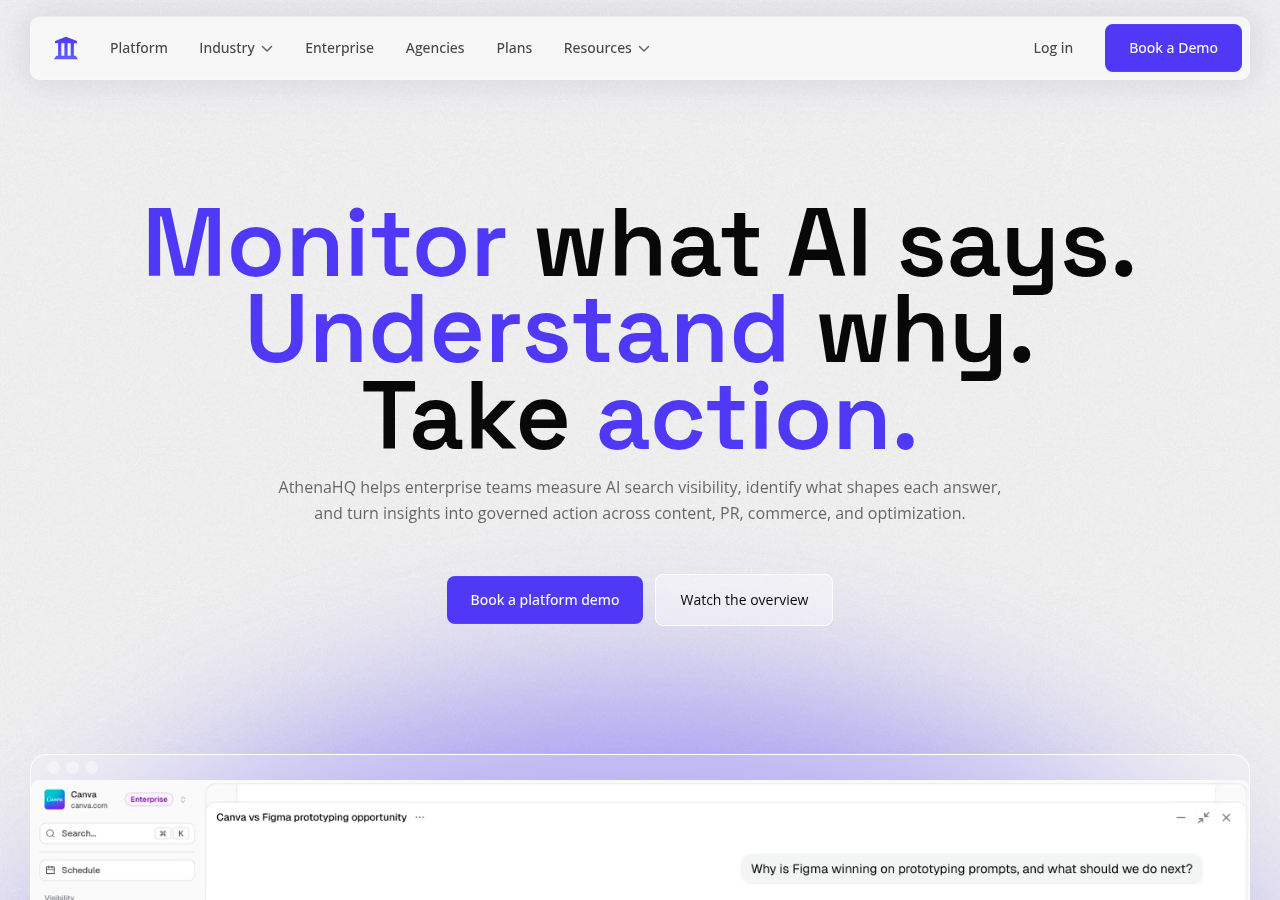
AthenaHQ targets teams aiming to improve their presence in AI-powered search results. This section breaks down how AthenaHQ approaches automated tracking and optimization for AI search engines.
What it is
AthenaHQ is an AI search analytics and optimization platform designed for brands to monitor and boost their visibility across multiple AI-driven search engines. It combines daily tracking, citation analysis, and autonomous execution of content changes into one workflow.
Best for
AthenaHQ is best for fast-growing and enterprise marketing teams that need to manage and improve their brand's visibility across AI search platforms at scale. It is especially useful for organizations targeting multiple AI engines simultaneously and seeking automated insights with minimal hands-on work. The unlimited user model makes it practical for distributed teams or agencies collaborating on AI search analytics.
Key features
Core features include:
Pricing
AthenaHQ offers a tiered pricing structure:
- Essential: Free
- Starter: $295/month
- Enterprise: Custom pricing
All plans support unlimited users. Credits are used for monitoring actions (1 credit per AI response). API access is available via paid add-on. Pricing reflects AthenaHQ’s positioning with larger teams and broad monitoring needs.
Pros and cons
Pros:
- Unlimited users included on all plans
- Broad coverage of AI search engines (ChatGPT, Perplexity, Gemini, Copilot)
- Autonomous content agent aids in continuous optimization
- Geo and language targeting extends reach
Verdict
AthenaHQ stands out for teams seeking an all-in-one platform for AI search visibility, especially those that need to coordinate across multiple people or brands. Its unlimited seats model and focus on autonomous optimizations are attractive, but the pricing and credits model may be a barrier for some smaller businesses or frequent trackers.
Tip: Monitor your credits carefully in AthenaHQ to avoid hitting usage limits earlier than expected, especially on collaborative or large-scale projects.
6. Otterly AI — Content Intelligence for AI Citations
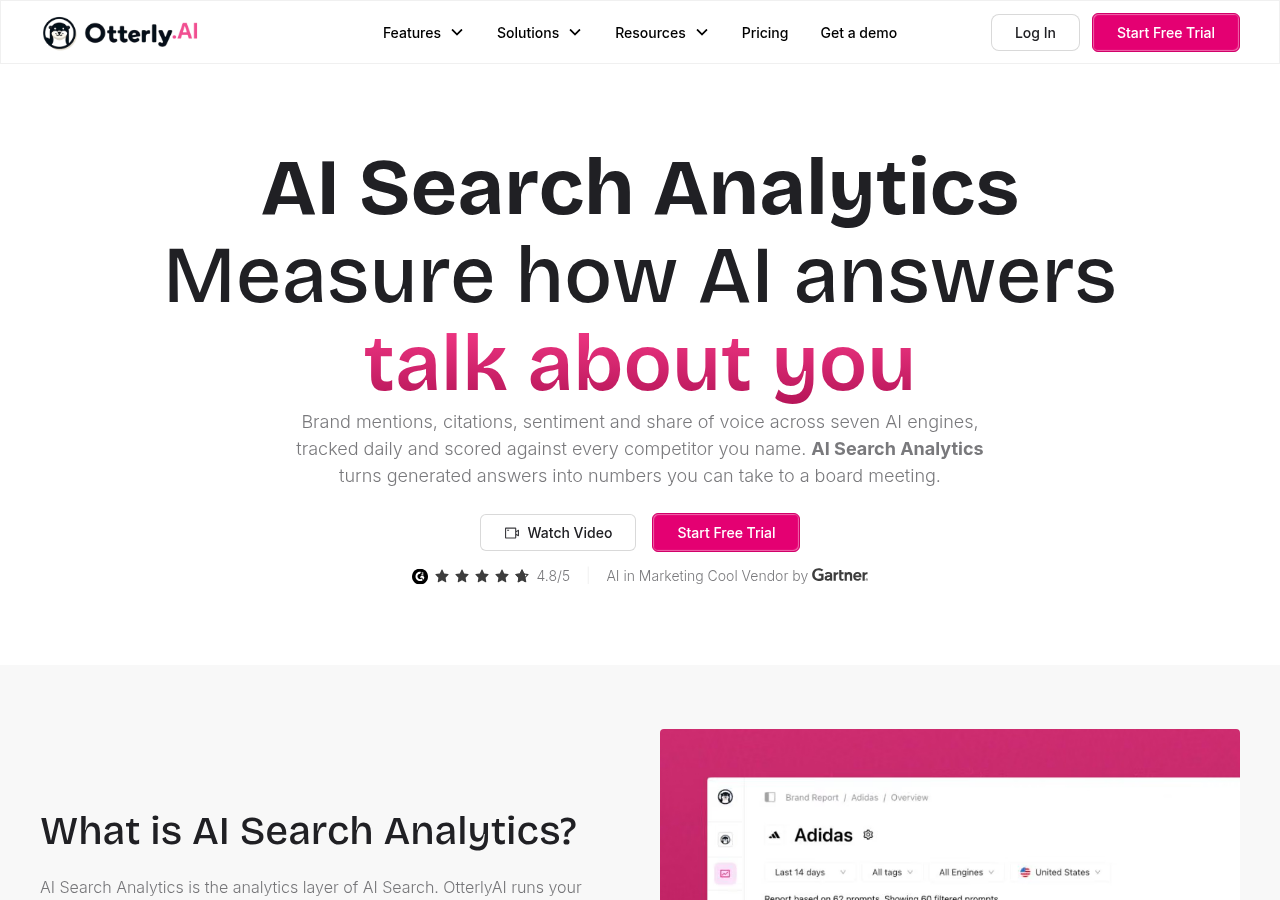
Otterly AI focuses on content intelligence for AI search analytics, helping brands monitor and improve their presence in answers generated by major AI engines. It aims to give marketing teams new insights into where and how their brand is referenced by AI search tools.
What it is
Otterly AI is a content intelligence platform for AI search that enables marketing professionals to analyze, monitor, and optimize their brand’s visibility and citations in AI-generated search results. The platform gathers data from leading AI search engines and provides analytics around brand mentions, content recommendations, and agent behavior.
Best for
Otterly AI is best for marketing teams and agencies that need specialized insights into how and where their brand is cited by AI-powered answer engines. It’s particularly useful for those prioritizing AI search analytics over traditional SEO and aiming to understand the impact of their content on next-generation search platforms.
Key features
Otterly AI offers:
- AI Prompt Research Tool — surfaces key questions and triggers for brand mentions
- AI Search Optimization with Recommendations — actionable advice to increase citations
- Agent Analytics — insight into which AI agents cite your content
- API and MCP Access — enables integration and data retrieval workflows
Pricing
Otterly AI pricing starts with a Lite plan at $29/month and scales to Standard at $189/month and Premium at $489/month. An Enterprise plan is available by request. Each tier unlocks more features and tracked prompts—check their site for full details. There’s currently no free plan tier listed.
Pros and cons
Pros:
- Granular citation analytics — tracks brand mentions across popular AI engines
- Scalable plans — multiple pricing options for different needs
- API access — enables in-depth custom analysis
Cons:
- Lacks traditional SEO planning tools — content intelligence focuses strictly on AI
- No free plan listed — entry-level access is paid only
Verdict
Otterly AI stands out for brands who care about optimizing for AI search engines and agent recommendations, not just classic Google rankings. While it requires a paid subscription for meaningful use, its focus on citation tracking and actionable recommendations make it a strong pick for teams prioritizing AI search analytics in their digital strategy.
Expert Insight: AI search analytics, like those provided by Otterly AI, are becoming essential as traditional SEO no longer guarantees visibility in AI-generated results.
Frequently Asked Questions
What is AI search analytics and how is it different from traditional SEO analytics?
AI search analytics measures your website's visibility and brand citations across both traditional search engines and AI-driven platforms like ChatGPT, Gemini, and Claude. Unlike traditional SEO analytics focused on keyword rankings and traffic data, AI search analytics tracks how AI models mention your brand and content, providing insights to optimize for generative AI search results. SEOLadders integrates these AI insights with regular SEO tools for a comprehensive view.
How can AI search analytics improve my brand's presence in generative search results?
AI search analytics enhances your brand's presence in generative search by tracking how often your brand is cited by AI engines like ChatGPT, Gemini, and Claude. It identifies visibility gaps, competitor mentions, and citation trends to guide optimized content creation and SEO strategies, ensuring your brand is prominently featured in AI-driven search results. SEOLadders automates this entire process, delivering regular AI visibility reports and tailored content publishing to boost your generative search impact.
What are the most important metrics for tracking AI search visibility in 2026?
The key metrics include AI visibility scores derived from tracked questions across major AI engines, brand mentions by AI models, competitor share of voice, sentiment and factual accuracy of AI citations, and AI-driven traffic to your site. SEOLadders tracks these on platforms like ChatGPT, Gemini, Perplexity, Claude, and Google AI, providing weekly data to optimize your organic presence.
How do tools like SEOLadders compare to dedicated GEO platforms?
SEOLadders offers AI search analytics with local SEO capabilities by researching area-specific search data and publishing locally targeted content, but it does not manage Google Business Profile or map listings, tasks typically handled by dedicated GEO platforms. Its strength lies in integrating AI visibility tracking across six engines, automating content creation and backlink outreach, which many GEO platforms do not provide in one tool.
Is daily or weekly tracking necessary for AI-driven SEO performance?
Weekly tracking is sufficient for AI-driven SEO performance monitoring. SEOLadders checks AI visibility and rankings across multiple AI engines weekly to provide updated insights, ensuring timely detection of changes without overwhelming daily data noise. This cadence balances effective monitoring with manageable analysis, helping businesses optimize their AI search presence efficiently.
Conclusion
AI search analytics platforms now give you the power to see not just where your site ranks, but whether AI engines like ChatGPT, Gemini, and Perplexity are mentioning and recommending your brand. In this article, you discovered how SEOLadders stands out by unifying traditional SEO monitoring, automated content publishing, and AI search tracking into a single workflow—something the other five tools on this list handle only in part or require separate services for. If keeping your brand visible to both search engines and AI answer engines is your goal, SEOLadders is the all-in-one solution to consider.
Here's how you can start today:
- Review your current rankings and AI engine mentions with your existing analytics setup
- Choose a platform that tracks both SEO and AI search visibility for your target keywords
- Set up weekly scans to monitor where your brand is being cited by AI models
- Automate content updates and gap-filling to stay ahead of AI recommendations
The companies getting cited next year are already tracking these AI search signals—make sure you're one of them.
Ready to see exactly where your brand is mentioned—or missing—in AI search? Check out SEOLadders' AI visibility features in detail and start your free trial today.
Want this done for you? SEOLadders finds the topics, writes the articles, and gets you cited by AI and ranking on Google, on autopilot.
7-day free trial · Cancel anytime