
Table of contents
TL;DR
- Start with technical SEO and fast indexing.
- Target realistic keywords based on site authority.
- Quality content and link building drive lasting rankings.
- Ongoing iteration beats overnight results.
You’ve launched a new website and spent hours on design and content, but your Google rankings are stuck on page five—or worse, your site doesn’t show up at all. If you run a small business or handle digital marketing, this can feel frustrating. Getting found on Google is often the key to competing with older, established websites.
This article explains how to improve Google rankings for new websites. You’ll learn what Google rankings mean for you, why new sites struggle to get noticed, the basic SEO steps you must follow, practical tips to move up in the rankings—and real examples that show it’s possible to stand out.
What Is Google Ranking for New Websites? A Clear Definition
When a new website goes live, Google ranking refers to how prominently its pages appear in search engine results for relevant queries. New sites typically start without established authority, so understanding the basics of Google ranking is essential to plan effective SEO growth.
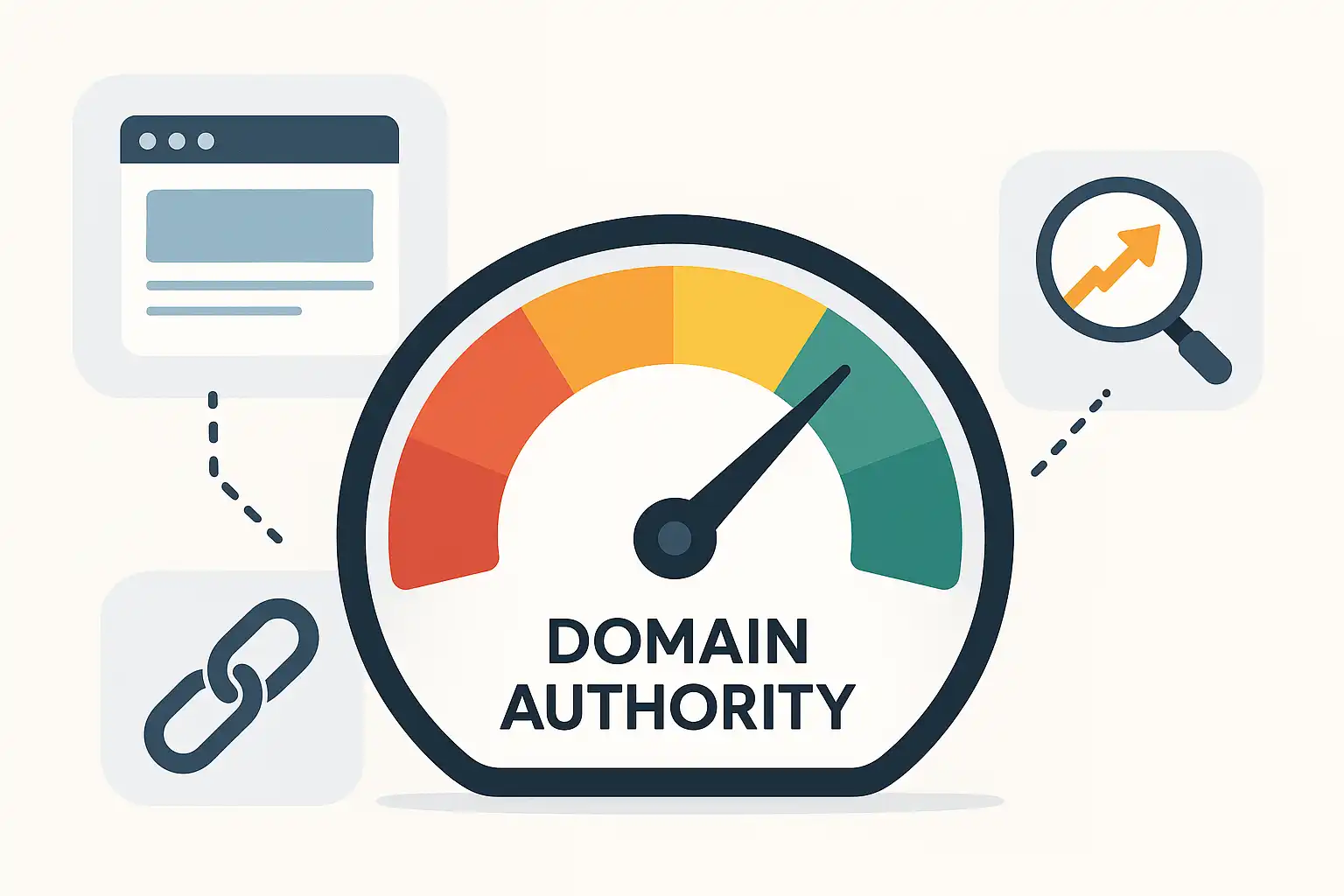
Domain Authority: What It Means for New Sites
Domain Authority is a search engine concept describing how likely a website is to rank for competitive keywords based on its trust, quality, and backlink profile. New websites generally start at the lowest rung of the authority ladder. This means Google views them as unproven, so their ability to rank well—even for less competitive keywords—is quite limited out of the gate.
According to research from SEOZoom, Google increasingly weighs signals of real expertise and trust when evaluating newer domains. In practice, teams launching fresh sites often notice that even after publishing excellent content, initial rankings can be sporadic or drop quickly. Building authority takes patience—earning links, gaining mentions, and consistently producing credible information all help. For a more detailed walkthrough on finding keywords suited to low-authority domains, see keyword research.
Keyword Rankings and Their Impact
Keyword rankings are the specific positions a website’s pages hold in Google’s results for targeted search terms. For new websites, these rankings show which queries the site is already visible for—and where it’s missing opportunities. According to a guide from SEO Ladders, monitoring your early keyword rankings is crucial because it reveals what Google already associates with your content and highlights gaps you should address.
In our experience, rankings for a new site can jump around in the first few months. Don’t panic if today’s position #50 becomes #30 or drops off for a week. This churn is normal as Google tests where your content fits. It's why realistic keyword targeting is essential for beginners; aiming for less competitive phrases and long-tail queries offers the best odds for breakthrough visibility. Tools that track keyword movement help pinpoint your next SEO actions.
Search Engine Indexing Basics
Search engine indexing is the process by which Google discovers, crawls, and adds your website’s pages to its searchable database. For a new website, being indexed means your content is eligible to show up in results—but indexing alone doesn’t guarantee high rankings or traffic. Google's crawlers find your pages, evaluate content quality and structure, and then decide how to list them in search.
A common pitfall is assuming that once a page is indexed, ranking will quickly follow. In reality, improved rankings only occur after Google measures many signals—authority, internal links, user engagement, and technical factors among them. Site owners often discover that adjusting sitemaps, keeping content crawlable, and fixing broken links can accelerate early indexing. For technical insights and common troubleshooting, the Technical Health guide is helpful.
Tip: New websites should not expect immediate high rankings, as Google’s algorithms look for consistent quality and trust signals over time before moving a domain up in results.
Why Google Ranking Matters for Website Owners
For website owners, your position on Google is more than a metric—it's a gateway to online exposure, leads, and growth. Understanding why Google ranking is important helps you prioritize efforts and invest resources wisely.
Key Benefits
Google ranking is a direct measure of a website’s visibility when people search for information online. Higher positions are associated with greater organic traffic, stronger brand credibility, and improved business opportunities.
A site that ranks on the first page for relevant keywords sees a significant boost in exposure. According to research from 14kbsol.com, most search clicks go to results at the top of page one. Being visible where users actually look can dramatically increase engagement with your content, which often leads to more sales or inquiries.
In practice, teams often find that small ranking improvements (even from page two to the bottom of page one) produce visible spikes in site visits. Rankings also signal trust—to both Google and users. Higher-ranked sites are frequently assumed to be more legitimate or authoritative, which can affect purchasing decisions or brand reputation. The downside? Drops in ranking can have immediate impact on monthly analytics and even revenue.
For those just getting started with how to improve Google rankings for new websites, thoughtful SEO can create a sustainable growth engine without requiring massive advertising budgets. The only catch: outcomes depend on ongoing effort, not quick fixes.
Common Use Cases
Website owners use Google ranking as a core driver for several business objectives. The most common use cases include:
- Increasing organic traffic: Ranking higher for target keywords means more potential customers find your site, often at zero cost per click.
- Generating qualified leads: Search visibility brings people actively looking for solutions, so the quality of leads tends to be higher than other channels.
- Building reputation and awareness: Consistent top rankings reinforce brand status in a market, especially for newer brands fighting for share.
- Launching new products or content: Early SEO wins can help new offerings attract attention before competitors do.
From a hands-on perspective, I’ve seen startups use ranking progress to validate demand for new ideas. Small businesses also rely on Google for foot traffic or booking appointments. Even bloggers and informational sites monitor their rank for proof that their content resonates. Those who automate keyword research and content creation tend to find it scales results without endless manual work.
Ultimately, Google rankings connect effort (content creation, optimization) with measurable outcomes. Tracking rank movement helps owners know what’s working—and what needs adjustment.
Expert Insight: Search rankings rarely improve overnight. New websites should expect to build authority and visibility gradually—patience paired with a steady SEO process leads to lasting results.
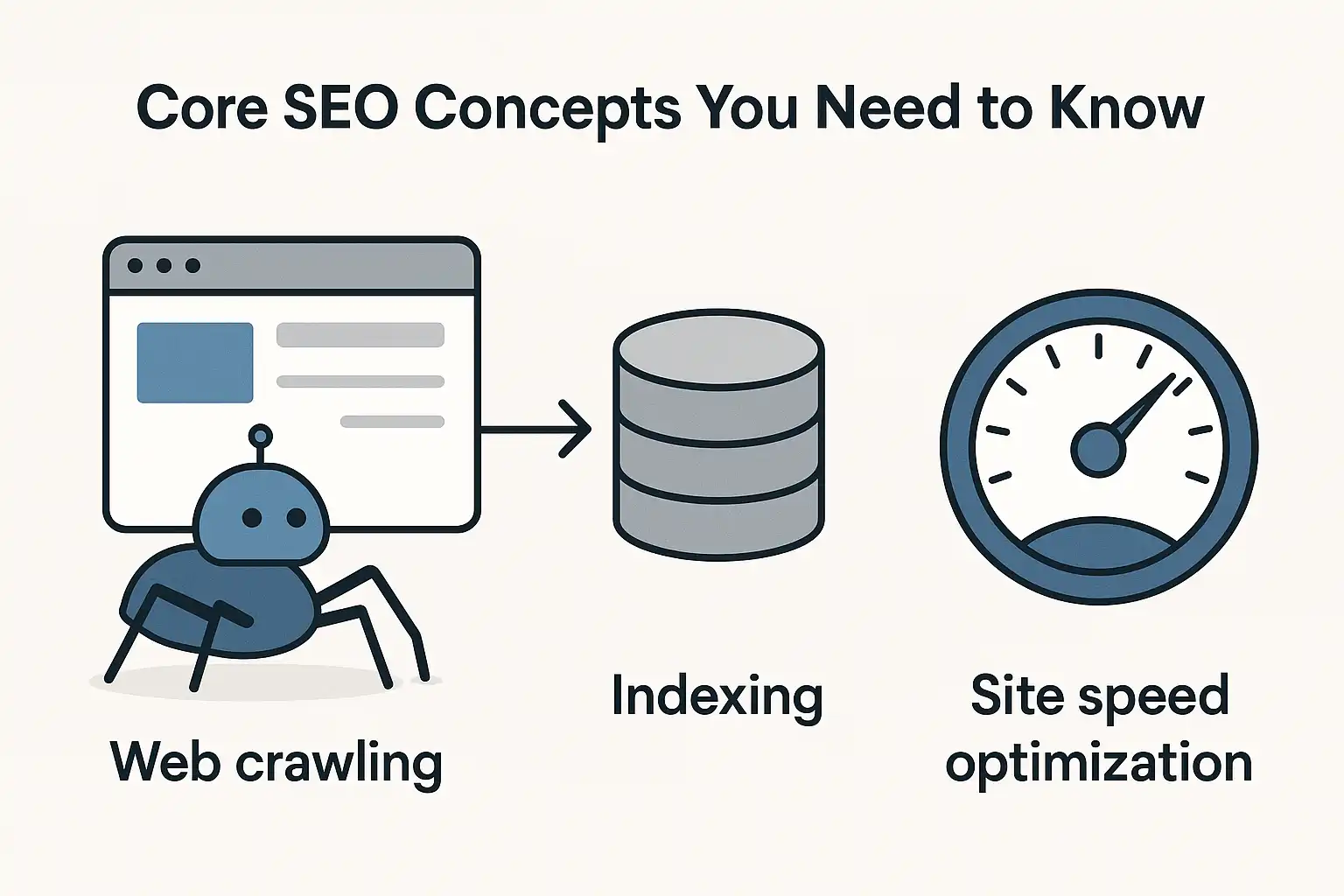
Core SEO Concepts You Need to Know
Understanding the fundamentals of SEO is essential for anyone learning how to improve Google rankings for new websites. Three pillars—technical SEO, on-page optimization, and authority signals—form the backbone of every successful ranking strategy.
Technical SEO Foundations (Crawling, Indexing, Site Speed)
Technical SEO is the process of ensuring that search engines can access, interpret, and rank your website’s content. If Google can’t crawl or index a page, it won’t rank—period. In practice, even small mistakes like a misplaced robots.txt file can block your entire site from appearing in search.
Crawling and indexing issues often arise from broken links, inconsistent internal navigation, or non-indexable page setups. A surprising number of new sites forget to set up their XML sitemap or regularly check for crawl errors. According to Udemy – SEO Course 2025, technical health is one of the fastest ways to win early rankings, especially when competitors overlook these details.
Site speed and Core Web Vitals matter more than ever—Google uses them as ranking signals. Slow load times frustrate users and reduce crawl frequency. Site audit tools like those on Technical Health help identify these invisible issues for quick fixes.
On-Page Optimization Essentials (Keywords, Meta Tags, Structure)
On-page SEO is the process of optimizing individual web pages for your target keywords and clear structure so search engines can understand and rank them. You’ll often hear about optimizing meta titles, descriptions, headers, and body content.
Keywords are the terms users search for, and mapping the right ones to each page helps Google match your content to search intent. In our experience, skipping proper keyword research leads to thin pages that never rank. See keyword research offers more on identifying realistic opportunities for new sites.
Meta tags—like title and description—signal relevance in search results, while headings (H1, H2, H3) organize information for both users and bots. Structure matters: a well-formatted article with logical headings typically ranks better than a wall of unorganized text.
Backlink Building and Authority Signals
Backlink building is the process of earning links from external sites to signal authority and trust to Google. Backlinks act as votes of confidence, and getting even a few relevant links can move the needle on a new site’s rankings.
Authority signals aren’t just about volume; quality and context count more. A common pitfall is chasing directory or low-value links—experienced teams know that even a handful of contextual mentions from reputable sites can outperform dozens of generic directory links. Tools like Directory Studio simplify finding reputable directories for initial links without risking spam issues.
For new websites, early backlink opportunities often come from:
- Local citation sites: Submit your business information to relevant local directories like Yelp, Google My Business, or industry-specific citation platforms. These links help establish geographic relevance and trust.
- Strategic partnerships: Engage with suppliers, customers, or industry peers who might mention or link to your site naturally through partnerships or collaborations.
- Guest blogging on niche blogs: Offer to write valuable content for small but relevant blogs or community sites in your field, securing contextual backlinks.
- Resource pages and link roundups: Identify sites that maintain resource lists related to your niche and pitch your content as a helpful addition.
- HARO (Help a Reporter Out): Respond to journalists’ queries wearing your expertise to earn authoritative mentions and links from news sites.
Actionable outreach tips include personalizing your emails, clearly stating the mutual benefit, and highlighting what makes your content or site valuable. Follow up politely if you don’t get a response within a week or two. Building these initial links lays a strong foundation for sustainable ranking growth.
In practice, relationship-building and content worth linking to are what separates new sites that climb the rankings from those that stall. Your link profile should grow naturally, reflecting genuine interest from other sites.
Expert Insight: Resolving technical SEO issues early on—like crawl errors or missing meta tags—often unlocks ranking gains that content improvements alone can’t achieve. Prioritize technical health checks before scaling your content or backlink efforts.
How Do You Improve Google Rankings for New Websites? The Complete Process
Improving Google rankings for new websites involves a sequence of foundational steps. With the right approach, even brand-new sites can start building visibility and traction in search results without relying on shortcuts.
1. Ensuring Google Can Access and Index Your Site
Google indexing is the process by which Google crawls and adds web pages to its search results. If your site can't be crawled or indexed, it simply won't appear in Google rankings.
Follow this step-by-step checklist to ensure Google can access and index your site:
- Set up Google Search Console: Verify your site ownership in Search Console to access important indexing data and alerts.
- Submit your sitemap: Upload an XML sitemap to Search Console to help Google discover all your pages quickly.
- Use the URL Inspection tool: Check specific pages for crawl status, indexing issues, and any errors like "noindex" tags or redirects.
- Check robots.txt: Confirm your robots.txt file does not block essential pages or directories. Avoid disallowing critical resources like CSS and JavaScript.
- Fix crawl errors: Monitor the Coverage report in Search Console and resolve any 404 errors, server errors, or blocked resources reported.
- Review meta tags: Ensure pages have proper indexable meta tags (no "noindex" or "nofollow" unless intentional).
- Use free debugging tools: Tools like Google's Mobile-Friendly Test, PageSpeed Insights, and the Rich Results Test can reveal issues that affect crawling or indexing.
- Monitor site health regularly: Use technical health checklists such as the one at SEO Ladders to identify crawl problems, slow load times, and hidden errors.
In practice, technical mistakes like broken navigation or missing meta tags often prevent new pages from being indexed. According to W3Solved, technical accessibility is a common bottleneck for new site rankings.
2. Conducting Keyword Research for Realistic Targets
Keyword research is the discovery and selection of search terms your target audience uses—and that your new site can actually rank for.
To approach keyword research effectively, follow this three-step process:
-
Discover Viable Low-Competition Keywords: Start by brainstorming topics related to your niche and use keyword research tools such as Google Keyword Planner, Ubersuggest, or the SEO Ladders keyword research tool to find long-tail keywords with moderate to low search volume but clear intent. These terms usually have less competition and are easier for new sites to rank for.
-
Assess Keyword Difficulty: Use a specific metric like the Keyword Difficulty (KD) score provided by tools such as Ahrefs or Moz. This score estimates how hard it will be to rank on the first page for a given keyword based on competition strength. Focus on terms with lower KD—generally under 30 for new sites—so you can target keywords realistically within your domain authority.
-
Organize Findings into a Content Plan: Collect your shortlisted keywords in a spreadsheet or project management tool. Group similar keywords by theme, intent, or topic cluster, then map them to specific content pieces or pages. Prioritize keywords that fit your niche, have manageable difficulty, and address user intent. This organized plan directs your content creation and ensures steady progress in building search visibility.
New websites rarely outrank established domains for competitive head terms. Instead, prioritize keywords with low competition and clear search intent. A focus on realistic keyword targets gives faster, measurable wins, while avoiding the slow progress common when chasing overly broad terms.
3. Creating and Optimizing Content for Early Wins
SEO content creation is developing original, useful articles tailored to your selected keywords and optimized for ranking.
To improve rankings, produce pages that answer specific queries better than what currently exists. This includes unique value, clear structure, targeted headings—plus meta tags and internal linking. For both speed and quality, content automation platforms can help generate and publish relevant, rank-ready content, especially helpful if you’re resource-constrained.
A common pitfall: publishing generic posts that blend into hundreds of similar articles. Early wins usually come from highly targeted, deeply useful content around low-competition keywords.
4. Promoting Content and Starting Link Acquisition
Link acquisition is the process of earning inbound links from other sites—a primary authority signal for Google's algorithm.
For brand-new sites, the first backlinks are often the hardest to get. Consider submitting to industry directories, engaging in relevant communities, and reaching out for contextually relevant mentions. Tools like Directory Studio help identify credible directories based on authority and spam risk.
Teams often overlook easy opportunities, such as internal linking between new and existing pages or highlighting new content through email signatures and social profiles. Every new link or mention builds trust and momentum, especially in the early months.
Expert Insight: New websites often underestimate the impact of getting technical setup right at launch. Fixing crawl issues early prevents months of lost ranking opportunities and speeds up the whole SEO process.
Real-World Examples: Improving Google Rankings for New Websites
Looking for practical strategies to boost your site's early Google visibility? Here are real scenarios showing how different types of businesses approach ranking improvements when starting from scratch.
SaaS Startup: Targeting Low-Competition Keywords
Targeting low-competition keywords is one of the most effective strategies for SaaS startups learning how to improve Google rankings for new websites. Choosing search terms that bigger players aren't focused on is essential—especially for lesser-known domains with limited backlink profiles.
Consider the story of ClearTask, a new SaaS project management tool aimed at remote creative teams. Instead of competing for broad terms like "project management software," which were saturated by established brands, ClearTask focused on specific searches such as "task collaboration for remote designers" and "creative team workflow tools." These keywords had modest search volume but low competition.
The ClearTask team created content precisely answering these queries, including detailed guides, use case pages, and blog posts addressing challenges unique to remote creatives. They also built a small network of backlinks from niche design blogs and remote work forums by contributing helpful insights and case studies. Within six months, ClearTask’s pages began ranking on page one for multiple targeted terms, driving a 150% increase in organic traffic. Importantly, engagement metrics improved, with longer session durations and higher sign-up rates from their organic visitors.
The key takeaway from ClearTask’s success is that selecting tightly focused keywords aligned with a well-defined audience allows new SaaS sites to gain early traction. This focus shifts effort from competing on volume to capturing meaningful, intent-driven visitors—building a foundation for scaling SEO efforts as the brand grows.
Local Bakery: Optimizing Google Business Profile
Optimizing a Google Business Profile (GBP) is a direct path for new local businesses wanting results from local search visibility. For brick-and-mortar shops like bakeries, the GBP determines whether potential customers actually find your business when searching nearby.
Setup is quick but details matter. The essentials?
- Fill out every field, including hours, address, and business category
- Add real, high-quality photos of the storefront and products
- Collect positive local reviews and respond publicly
There’s more: regularly updating posts or offers signals activity to Google. Practical lessons? Many local owners forget to monitor their profiles and respond to recent reviews. Helpful guides like How do I access my business’s reviews from Google My Business? explain how to stay on top of this workload. Over time, even subtle tweaks to GBP content can yield measurable improvements in local rankings—it’s less about volume and more about trust and completeness.
Niche Blog: Iterating Content and Link Strategies
Iterating content and link strategies is crucial for niche blogs as they seek sustainable ranking growth from day one. Unlike e-commerce or SaaS, niche publishers rely on a steady drumbeat of SEO content and gradual authority signals.
Success in this context comes from repeated, incremental adjustments:
- Audit Content — identify underperforming articles, refresh topics, and improve internal links.
- Test Outreach — build relationships with contributors and sites open to relevant backlinks.
- Measure Results — track position shifts using Topical Authority tools to see what’s working.
In actual campaigns, teams often find that persistence pays. Initial posts rarely rank overnight—consistent posting and active backlink outreach build momentum. The downside? It’s labor-intensive for single authors, but those tweaks and connections often separate blogs that remain invisible from those who climb page one over time.
Expert Insight: Patterns across industries show that small, disciplined steps—like niche keyword targeting, proactive review management, and frequent incremental updates—produce reliable gains for new sites, while shortcuts or overly generic tactics usually stall progress.
Frequently Asked Questions
How long does it take for a new website to rank on Google?
A new website typically takes 3 to 6 months to start ranking on Google, depending on factors like content quality, backlinks, and competition. Consistently publishing SEO-optimized content and following best SEO practices speed up this process. Tools like SEO Ladders help automate keyword research and content creation, improving your chances of ranking faster by targeting achievable keywords matched to your domain authority.
Does domain age matter for Google rankings?
Domain age has minimal direct impact on Google rankings. Google focuses more on content quality, relevance, and site authority than how old the domain is. New websites can rank well by targeting achievable keywords and consistently publishing optimized content. Tools like SEO Ladders help new sites improve rankings by automating content creation and keyword research tailored to their domain authority, speeding up growth regardless of domain age.
What is the fastest way to get a new website indexed?
The fastest way to get a new website indexed by Google is to submit your sitemap via Google Search Console. Additionally, use the URL Inspection tool to request indexing of key pages. Ensuring your site has clean technical SEO and generating fresh, high-quality content speeds up crawling. SEO Ladders helps automate content creation and publishing, which can boost indexing speed and improve rankings for new websites.
Can I rank with zero backlinks as a new site?
Ranking with zero backlinks is possible but challenging for a new website. Google values backlinks as endorsements of credibility and authority. However, focusing on high-quality, SEO-optimized content, user experience, and targeting low-competition keywords can help gain initial rankings. Tools like SEO Ladders automate content creation and keyword targeting to boost rankings even before many backlinks are built.
Why is my new site not showing in Google at all?
Your new site might not appear on Google because it hasn't been indexed yet, lacks SEO-optimized content, or has technical issues like no sitemap or blocked crawl by robots.txt. Also, insufficient backlinks and low domain authority can delay visibility. Using tools that automate SEO content creation, like SEO Ladders, can speed up indexing and improve rankings by consistently publishing optimized articles.
Conclusion
Getting found on Google as a new website isn’t about chasing every tactic—it’s about focusing on the fundamentals that move the needle. Prioritize these steps:
- Identify low-competition, high-intent keywords matched to your domain’s current authority.
- Ensure your site’s technical health is dialed in—fix crawl issues, speed problems, and broken links.
- Publish consistent, well-structured content with internal links and real citations to build trust.
- Track your rankings weekly to spot growth opportunities and adapt your plan fast.
Ongoing SEO improvement requires regular monitoring, analyzing results, and refining your strategy based on what works. For new website owners on a budget, free or affordable tools like Google Search Console, Ubersuggest, and Moz Link Explorer offer valuable insights into keyword rankings, site health, and backlink profiles. Keep at it, and your site will earn visibility faster than you think. ↑ Back to top
Ready to accelerate your new website's search rankings without guesswork? Start for free with SEO Ladders and see how easy hands-off SEO can be.
Want this done for you? SEOLadders finds the topics, writes the articles, and gets you cited by AI and ranking on Google, on autopilot.
7-day free trial · Cancel anytime