
Table of contents
TL;DR
- Get a complete definition of generative engine optimization course
- See the step-by-step process and real skills taught
- When a course delivers value—and when it won’t
- Common mistakes to avoid for long-term results
You’ve spent hours optimizing your web pages, but your brand still struggles to get cited by AI platforms like ChatGPT or Gemini—even though you’re ranking in Google. If you’re a founder or marketer wondering how to bridge the gap between traditional SEO and AI-driven visibility, you’re not alone.
This article breaks down exactly what a generative engine optimization course is and how it works, so you’ll know if taking one is right for you. We’ll cover how courses like SEOLadders teach you to get your brand recognized in both search and AI engines, what skills and results you can expect, and how GEO training differs from typical SEO courses.
What Is a Generative Engine Optimization Course?
A generative engine optimization course teaches the skills and concepts needed to boost visibility in AI-driven search and content recommendation systems. This section covers what sets these courses apart in today’s digital landscape.
Generative engine optimization definition
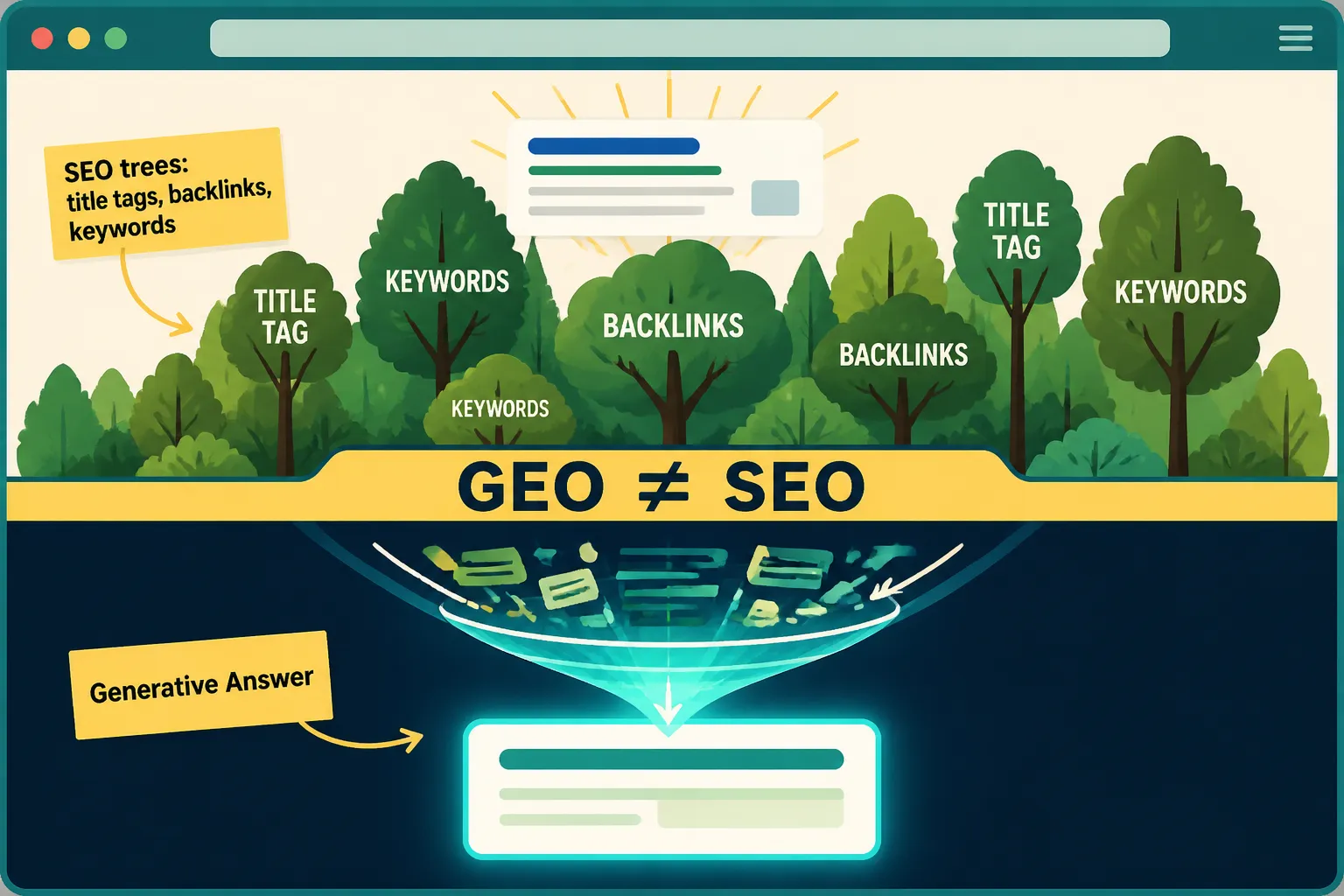
Generative engine optimization (GEO) is the practice of optimizing online content to be surfaced, cited, or recommended by generative AI engines such as ChatGPT, Perplexity, or Google Gemini. Instead of focusing solely on classic search ranking signals, GEO targets how AI systems find, understand, and present information to users. GEO courses provide frameworks for structuring content so it’s more likely to be recommended or directly cited in AI-generated answers. For a broader overview, see Generative Engine Optimization GEO: Definition, Use Cases, and Best Practices.
Why AI engines need new SEO methods
AI engines rely on models that interpret meaning, context, and authority differently than traditional search engines, requiring new optimization techniques. Rather than matching keywords alone, these engines assess factual reliability, cited sources, and natural language clarity. Key methods include:
- Optimizing for citation by authoritative AI platforms
- Clarifying facts to reduce risk of AI errors or omissions
- Structuring content for AI’s schema and context recognition
Important terms: machine learning, NLP, deep learning
Machine learning, natural language processing (NLP), and deep learning are core concepts behind AI engines and generative SEO.
- Machine learning: Systems learn patterns from data to make decisions or predictions.
- NLP: Techniques for enabling machines to read and interpret human language.
- Deep learning: Advanced AI using layered neural networks to improve content understanding and generation.
Info: Generative engine optimization isn’t just about algorithms—clear language, original research, and trustworthy citations are critical for earning mentions from AI engines.
How Does a Generative Engine Optimization Course Work?
A generative engine optimization course is built around actionable training for a search landscape shaped by AI. This section details exactly how the learning process is structured and what you’ll walk away able to do.
Step-by-step: The typical course curriculum
A typical generative engine optimization course follows a structured sequence that moves from foundational theory to hands-on practice. Most start by defining core concepts behind generative engines, how search algorithms now integrate AI, and the principles of generative engine optimization. Next, students are introduced to strategic keyword research tailored for AI-driven platforms. This is usually followed by mapping topics into clusters, creating pillar pages, and understanding buyer intent. The final steps include optimizing content for both traditional SEO and AI answer engines, evaluating visibility in AI results, and analyzing data to improve performance.
Common modules include:
- Understanding generative engines
- AI-focused keyword research and clustering
- Content planning and workflow automation
- Optimizing for AI citations and search
- Analyzing results and iterative improvement
Practical skills and hands-on outcomes
Graduates of a generative engine optimization course acquire tangible skills that can be applied immediately to real sites. Course work focuses on direct application, such as designing content calendars built for AI and search, using tools to perform content topic clustering, and crafting articles structured for citation in AI overviews. Students also learn how to monitor AI-driven rankings and citation mentions using dedicated tools.
Key hands-on outcomes:
- Building and maintaining topic clusters
- Designing content optimized for both Google and AI models
- Auditing sites for technical readiness and AI visibility
- Tracking and analyzing citations in AI answer engines
- Using automated platforms to streamline GEO workflows
Sample diagram: AI-powered SEO workflow
An AI-powered SEO workflow used in these courses is visualized as a staged process from strategy to measurement. The diagram below outlines each step:
| Step | Action |
|---|---|
| Keyword & intent research | Identify topics and questions for AI/search |
| Topic cluster mapping | Organize content pillars and supporting pages |
| Content creation | Write and optimize for AI/model visibility |
| On-page SEO | Apply technical and UX improvements |
| AI/audience testing | Measure AI citation rates and user engagement |
| Iterative optimization | Refine strategy using data and feedback |
This model helps participants visualize which tasks require manual input and where automation or specialized tools can play a role.
Tip: Many generative engine optimization courses recommend supplementing core modules with emerging best practices from blogs and ongoing updates, since AI platforms evolve rapidly.
When Is a Generative Engine Optimization Course Right—And When Isn’t It?
Deciding whether to invest in a generative engine optimization course takes more than just curiosity about AI. The right decision depends on your team's needs and how you plan to use these emerging skills.
Best use cases for GEO skills
GEO skills are best used by teams aiming to boost their brand’s visibility across both search engines and AI-driven platforms. A generative engine optimization course makes sense if you want to:
- Adapt marketing strategies for AI search - AI-driven platforms like ChatGPT and Google AI Overviews are increasingly influential in brand discovery, so you’ll need specific strategies to be named and cited by these engines.
- Create content likely to be sourced by AI - Courses teach how to craft content structured for AI extraction, increasing the odds of being referenced in responses.
- Integrate traditional and generative SEO - Teams who want to balance classic SEO tactics with generative optimization benefit most.
Industries already seeing AI change buyer behavior include SaaS, ecommerce, and online education, where high visibility in AI recommendations drives conversion. If your goal is to future-proof your brand against shifts in how people find information, specialized GEO skills are a strong advantage.
Limits: When a course is not the answer
A generative engine optimization course isn’t always the solution, especially if your business needs rapid execution or has limited resources. Some cases where a course may not help:
- Lack of time to implement change - If you need fast results, learning curves can delay progress.
- No technical capacity - Without a team member who can apply new GEO methods, course value goes unrealized.
- Automated tools already handle the work - Platforms like SEOLadders automate topic research, content planning, and AI visibility tracking, so a course may duplicate what your software already delivers.
Courses also can’t substitute for foundational website quality, so businesses with unresolved technical SEO or weak content should address these basics first. Assess your unique pain points before enrolling.
Tip: GEO skills are most impactful when paired with the right automation tools—think of courses as the strategy and platforms like SEOLadders as the execution.
Generative Engine Optimization Course vs Traditional SEO Training
Choosing between a generative engine optimization course and traditional SEO training shapes the way your team will approach search visibility. This section highlights how each option prepares you for modern web and AI platform demands.
Comparing key outcomes and tools
Generative engine optimization courses focus on strategies that address both classic search ranking and AI-driven answer engines. This means learners dive into topics like prompt engineering, AI visibility tracking, and optimizing for engines such as ChatGPT and Google AI Overviews. In contrast, traditional SEO training centers around Google ranking factors, keyword research, on-page elements, and link building for organic search.
| Factor | Generative Engine Optimization Course | Traditional SEO Training |
|---|---|---|
| Main Objective | Search ranking + AI citation | Search ranking |
| Core Tools Taught | AI visibility trackers, prompt optimization, multi-engine monitoring | Keyword research, on-page SEO tools, backlink analysis |
| Platforms Covered | Google, Perplexity, ChatGPT, Gemini, Claude, Google AI Overviews, more | Google, Bing, Yahoo (classic web search) |
| Measurement | AI mentions/sentiment + search positions | Search engine results rankings (SERP), traffic analytics |
This dual approach helps teams stay visible whether users are browsing or asking AI engines directly. Generative Engine Optimization GEO: Definition, Use Cases, and Best Practices goes deeper on the differences.
Effort, time, and who each option fits
A generative engine optimization course generally requires specialized effort and suits teams aiming for AI-driven reach. Mastering these skills involves learning how to audit content for AI visibility, adapting content types, and tracking both organic and AI channel performance.
- Effort required
- Generative engine optimization: Requires learning new tools and workflows including AI visibility tracking and prompt design
- Traditional SEO: Focuses on established SEO fundamentals, usually with a longer history of available resources
- Time to see results
- Generative engine optimization: Can produce visibility across both search and AI platforms once skills are applied
- Traditional SEO: Outcomes are tied to organic search updates and ranking volatility
- Who it's for
- Generative engine optimization: Forward-thinking founders, marketers, or teams preparing for AI-first platforms
- Traditional SEO: Professionals optimizing for classic Google search, or with existing SEO foundations
If your brand is focused on futureproofing visibility, a generative engine optimization course may deliver broader relevance. The AI Readiness Test can help teams assess how prepared they are for AI-driven search shifts.
Expert Insight: If your business relies on being referenced by AI assistants as well as ranking in Google, generative engine optimization training may offer more long-term value than traditional SEO education.
Common Mistakes in Generative Engine Optimization Courses
Many generative engine optimization courses promise fast results, but common missteps can limit their real-world effectiveness and leave gaps in foundational knowledge. Understanding these pitfalls helps course-takers and teams choose programs that truly prepare them for current digital search and AI-driven discovery.
Skipping core search engine algorithm basics
Skipping fundamental search engine algorithm basics creates a surface-level understanding that can undermine all advanced strategies. Effective generative engine optimization starts with grasping how search engines rank and retrieve data, from crawling to ranking signals. Courses that neglect concepts like indexing, link relevance, or query intent leave teams unable to troubleshoot ranking drops or adapt to search engine updates. To avoid these issues:
- Cover search intent and algorithm changes so students understand why optimizations matter
- Teach technical SEO foundations, including crawling and page rendering
- Reference practical frameworks like those outlined in Generative Engine Optimization GEO: Definition, Use Cases, and Best Practices
A strong foundation lets you apply advanced GEO tactics with real confidence.
Ignoring data quality in training sets
Ignoring data quality in training sets leads to unreliable AI outputs and misinformed optimizations. When generative models are trained on poor-quality or irrelevant content, they produce answers that can misrepresent your brand or fail to rank. Well-designed courses stress:
- Curating high-quality datasets — always use up-to-date, authoritative sources
- Removing bias and duplicates gives AI the best signal
- Validating with search and user feedback ensures training data reflects actual requirements
Ensuring data quality is essential for effective outcomes in any AI-driven optimization workflow.
Over-relying on AI content generation tools
Over-relying on AI content generation tools makes content indistinguishable from competitors and can miss brand-specific needs. While tools accelerate production, too much dependence reduces editorial control, voice, and credibility. Leading courses warn against:
- Using AI output as-is — always review and refine drafts for nuance and accuracy
- Neglecting fact checks or citations, which exposes brands to errors or misleading claims
- Forgetting human judgment: critical when adapting content to shifting search trends
Manual oversight remains key, even in automated GEO environments.
Expert Insight: Even the best AI-driven courses can't replace human review. Fact-checking and quality control at every step guard against errors and keep brand strategy on track.
Frequently Asked Questions
What does a generative engine optimization course actually cover?
A generative engine optimization course covers mastering strategies to improve visibility in both traditional search engines and AI-driven platforms, including keyword research, content planning, and monitoring AI citations. It equips businesses to optimize content for AI engines like ChatGPT and Google AI and manage SEO without in-house experts.
Can in-house teams skip SEO agencies after taking this course?
In-house teams can reduce reliance on SEO agencies after a generative engine optimization course by gaining the skills to handle keyword research, content planning, and technical SEO. However, tools like SEOLadders still automate tasks such as article writing and AI visibility tracking, complementing team efforts rather than fully replacing agencies.
How do generative engines impact SEO rankings?
Generative engines influence SEO rankings by integrating AI-driven content and citations into search results, impacting visibility on both traditional search engines and AI platforms. SEOLadders monitors AI visibility and ensures your content is cited accurately across major generative engines, enhancing your SEO strategy.
Why do so many courses miss practical AI skills?
Many courses miss practical AI skills because they focus on theory rather than hands-on applications. Without offering direct practice in AI tools or workflows, learners struggle to apply knowledge effectively. SEOLadders addresses this gap by automating content creation and AI visibility tracking for real-world SEO results.
Conclusion
A generative engine optimization course teaches you how to position your brand for both classic search results and the new wave of AI answers, a skill set standard SEO courses don’t deliver. SEOLadders stands out by automating the full stack—from keyword research to AI visibility tracking—so even teams without SEO experts can see where they stand.
• Review where your brand currently appears in AI and traditional search engines • Identify which GEO tactics you’re missing that a course (or SEOLadders) would automate • Evaluate if SEOLadders’ all-in-one platform covers your training and hands-on needs
Want to master the basics and advanced tactics behind generative engine optimization? Dive deep into GEO principles and real-world examples to see what’s possible for your brand.

Samuel Kwesi Afriyie
Founder of SEOLadders
Samuel is a software engineer who builds SEOLadders, an AI SEO agent for Google and AI search. This site, including this blog, runs on it.
Want this done for you? SEOLadders finds the topics, writes the articles, and gets you cited by AI and ranking on Google, on autopilot.
3-day free trial · Cancel anytime