
Table of contents
TL;DR
- Actionable checklist covers all backlink building essentials
- Step-by-step guide for outreach and link exchanges
- Avoid common link-building pitfalls with real solutions
- Easy ways to check your links and measure progress
You’ve spent hours creating valuable content and promoting your site, but the results just don’t match the effort—and you keep hearing that what you’re missing is real, high-quality backlinks. If you’re a founder, marketer, or business team without in-house SEO help, figuring out where to begin with backlink building can feel overwhelming.
This guide cuts through the noise and shows you exactly how to earn quality links, step by step. You’ll learn what to set up before you start, how to avoid common mistakes, how to make sure your tactics are working, and why some backlink approaches fail while others succeed. Backlink building remains a core ranking factor, and the strategies here will give you a clear, actionable path to stronger organic visibility.
What You Need Before You Start
Before diving into backlink building, it’s important to have the right foundation. Starting with clear tools, realistic expectations, and a sense of which pages will get the most value sets your whole effort up for results.
Essential tools and free resources
A solid backlink building workflow relies on a mix of free tools and targeted platforms. At a minimum, use a backlink checker to analyze your site and competitors, and consider free options like the SEOLadders Backlink Checker for on-demand audits of your link profile. Pair this with Google Sheets for tracking pitches and responses, and automated tools when you're ready for scale. For more depth on outreach platforms, see 7 Best Backlink Outreach Tools for Earning Quality Links [2026].
Why it matters:
- Free tools cover key steps like prospecting and link quality checks
- Automation keeps you organized when the outreach volume grows
- No signup required on many solutions, so you can start today
Estimated time and skill required
Backlink building usually takes a mix of research, outreach, and follow-up—and the time commitment adds up fast. Beginners with no SEO background can expect 4 to 8 hours to get familiar with link analysis and send their first pitches. If you use platforms like SEOLadders' AI agent, content and outreach drafts are generated for you, reducing manual effort but still requiring review and approval. Skills in prospect research, email communication, and basic SEO are critical at any stage.
- Manual link research: 2-4 hours per week for small campaigns
- Automated outreach setup: 1-2 hours, monitor results weekly
Choosing pages to target for links
Selecting the right pages to earn links is as important as the outreach itself. Prioritize pages that already deliver value—guides, unique data, original research, or detailed resources. These are more likely to attract interest. Avoid targeting purely commercial landing pages at first, since editors often want informative or evergreen content to link to. Track which topics or formats have attracted links using a tool like the SEOLadders backlink management dashboard to refine future outreach.
- Start with deep guides or resources
- Avoid hard-sell landing pages until you have trust
Expert Insight: Taking time up front to prioritize high-value content and set up simple tools will make every outreach email more effective—and save frustration down the line.
How to Build Backlinks: Step-By-Step
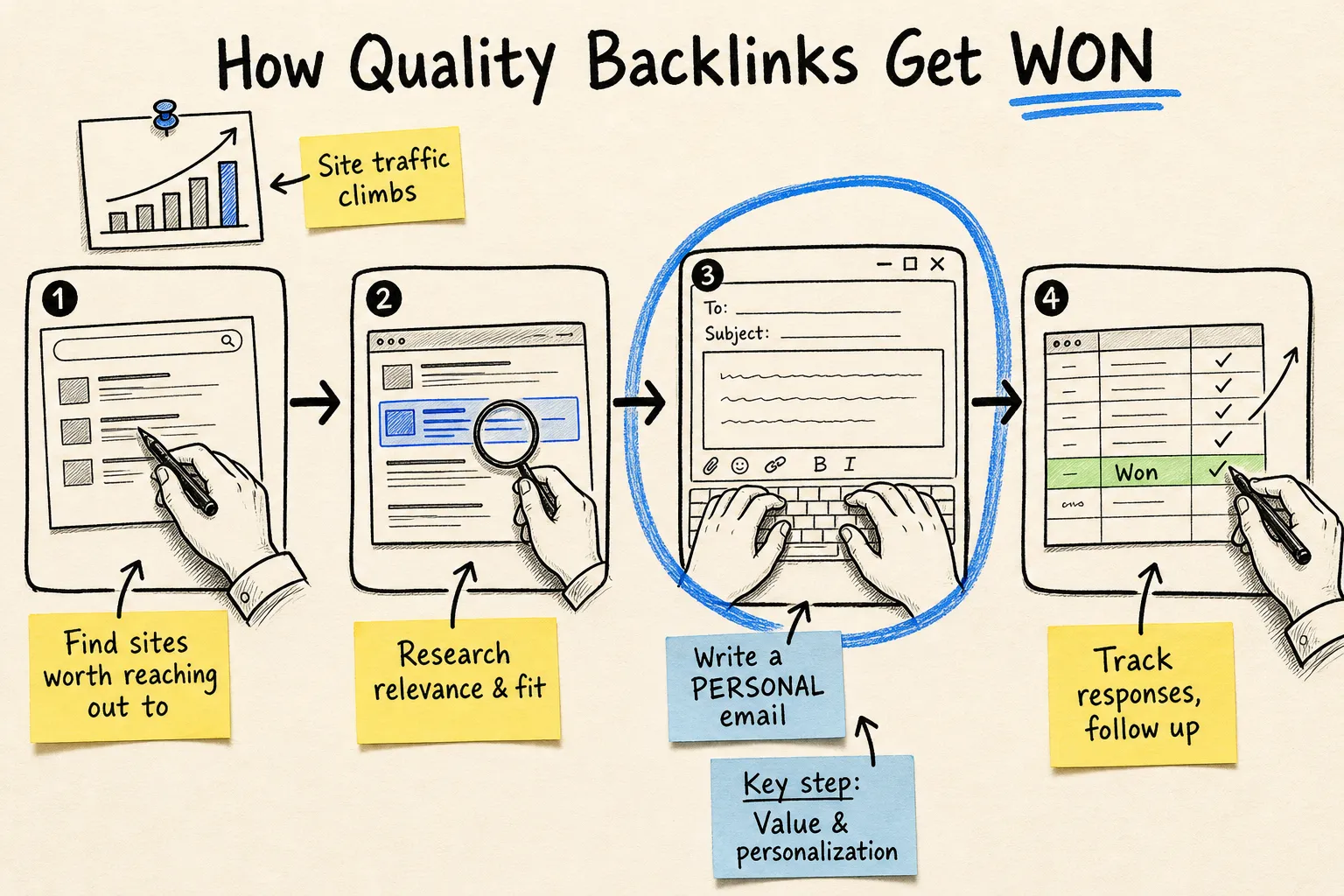
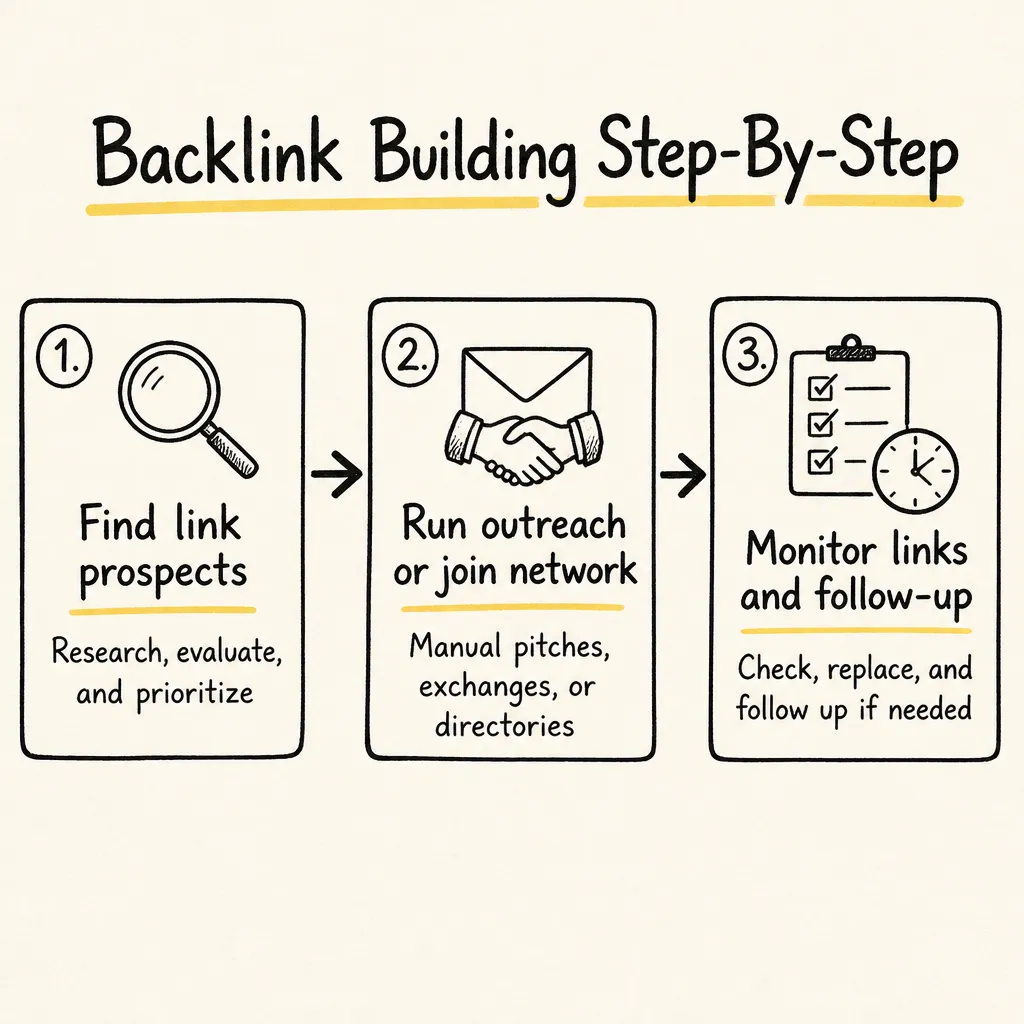
Every quality backlink starts with a targeted process: finding relevant opportunities, reaching out (or exchanging links), and tracking results. Here’s how to approach each stage so your efforts actually pay off.
Find link prospects and analyze competitors
Identifying link prospects and analyzing competitors reveals your fastest paths to new backlinks. Start by using tools like the Backlink Checker to uncover who links to your top-ranking competitors. This exposes the domains most likely to say yes to you too. Compare metrics like Domain Rating, referring domains, and anchor text patterns to spot healthy, relevant sites (and to avoid domains with high spam scores). Build a prospect list by filtering for sites in your niche and those referring links to multiple industry players.
- Research competitors’ backlinks — copy the profiles of similar businesses
- Evaluate link quality — focus on dofollow, relevant sources, and a reasonable spam score
- Prioritize outreach targets — based on domain strength and topic fit
Want more tools for this process? See backlink outreach software comparisons.
Run outreach or join a link network
Backlink building succeeds by contacting prospects with value or exchanging links within quality networks. Use your list to send personalized outreach pitches to editors, ideally with suggested placements or topic ideas they haven’t covered. With SEOLadders, you get up to 15 custom-drafted pitches each week for direct sending. Alternatively, you can join a vetted link exchange network if you have a clean site and quality content—SEOLadders screens participants to prevent direct swaps with competitors or high spam networks. Either way, only one relevant link is added per article, keeping your profile balanced.
- Manual outreach — personalized email pitches (never spam blasts)
- Link exchanges — mutual links hosted by related publishers, not direct competitors
- Directory listings — an extra, lower-effort route
Monitor links and handle follow-ups
Sustained results depend on tracking obtained links and following up when needed. SEOLadders verifies that new links appear and remain live, checking outreach-acquired links regularly until placed and alerting you if any drop. If a link disappears, you’re given a window to replace or restore it—key for keeping your rankings stable over time. For outreach, send a polite reminder email if there’s no reply after several days. Regular monitoring also uncovers broken or lost links for reclaimed outreach.
| Monitoring Task | Frequency | Next Step |
|---|---|---|
| Outreach link check | Daily until live, then every few weeks | Re-send if lost/ignored |
| Exchange link check | Every 2 days (first 90 days), weekly after | Replace if dropped |
| Manual follow-ups | 5 days after no response | Max 2 follow-ups |
Expert Insight: Most link losses go unnoticed. Reliable backlink management tools dramatically reduce silent drops and wasted effort.
Common Mistakes and How to Fix Them
Backlink building can stall fast if common errors go unchecked. Spotting these issues early is the difference between steady gains and wasted effort.
Links do not appear after outreach
When links don’t appear after outreach, it usually signals missed steps in follow-up or targeting. Many teams expect a quick response but find that editors need reminders or more value in the pitch. To improve success:
- Send a polite follow-up after five days if you don’t hear back.
- Check contact accuracy: Use byline or LinkedIn to verify the right editor, as described in best outreach practices.
- Monitor links weekly using a backlink checker until each promised link appears.
- Refine outreach targets: Make sure the page is relevant and hasn’t linked to your domain before.
Unnatural anchor text triggers warnings
Unnatural anchor text is a flag for both search engines and editors. Overusing exact-match keywords or awkward phrases increases rejection rates and risks penalties. The safer approach:
- Mix anchor types: Use a mix of branded, generic, and natural phrases.
- Vary your language: Avoid repeating identical anchor text, even if you’re angling for the same term.
- Check your live anchors in audit tools for patterns that look spammy.
This is a key factor in SEO management.
Too many links from low-quality sites
A high concentration of links from low-quality or off-topic domains weakens your backlink profile. Google’s systems—and tools like the SEOLadders Backlink Checker—flag sites with a high spam score or unrelated themes. Fix it by:
- Prioritizing relevant sites in your outreach.
- Avoiding mass swaps or buying links.
- Regularly reviewing your domain’s referring sites and acting only if manual actions appear in Google Search Console.
Warning: Disavowing links should only be done if you are certain of spammy or manipulative sources, and typically only after receiving a manual penalty.
How to Check It Worked
After building backlinks, evaluating their impact means more than simply confirming placement. This section shows how to check if your links are live, gauge their quality, and monitor for issues like spam or broken links.
Verifying live links and tracking changes
Checking that backlinks are live is essential for measuring your backlink building success. SEOLadders automatically checks live status for both outreach and exchange links on set schedules. For outreach, links are verified daily until they show up, then every few weeks after. Exchange links are checked every two days for the first 90 days, then weekly.
If a link is removed, SEOLadders notifies you and allows seven days to restore it. This ongoing tracking ensures that links you earn remain present, providing accountability that supports long-term backlink management.
Assessing link quality and domain rating
Link quality depends on the authority and relevance of the referring domain, not just quantity. SEOLadders' Backlink Checker analyzes both the total number of links and key metrics like Domain Rating, dofollow share, and the type of referring domains. A high Domain Rating, a relevant topic match, and a strong dofollow percentage indicate a more valuable backlink. Reviewing the anchor text and link placement also helps ensure links look natural, rather than appearing manipulative or spammy.
Spotting spam or broken backlinks
Monitoring for spammy or broken backlinks protects your site's reputation and rankings. SEOLadders includes a spam score in each backlink profile, flagging anything above 30 for extra caution. It also identifies broken links pointing to unavailable pages, making it possible to quickly request an update or replacement. Watch for high spam scores, off-topic sources, or unusual anchor text patterns—these are red flags for low-quality or manipulative links. Regular checks help maintain a healthy backlink profile.
Tip: Automating link checks saves time and catches dropped or broken links before they impact your SEO.
Are Unlinked Brand Mentions Worth Pursuing?
Brand mentions without a backlink often show up in articles, news, and reviews. But how much do these unlinked mentions impact your backlink building and search authority?
The value of brand mentions vs backlinks
Backlinks signal direct authority to search engines, while unlinked brand mentions have a weaker effect. A backlink is a clickable link from another website to yours, passing measurable SEO value and helping you rank higher. In contrast, an unlinked mention just names your brand without actually pointing to your site. Search engines may use mentions as a secondary signal of credibility, especially for well-known brands, but most SEO studies show that actual backlinks carry the clear, direct benefit for rankings.
- A backlink counts as a ranking factor — Google's public statements confirm links are foundational to their algorithm.
- Brand mentions are context signals — They may support trust but don't help you rank unless a link is present.
- Earning mentions can lead to links — Proactive outreach (like those detailed in best backlink outreach tools) can sometimes turn a mention into a valuable backlink.
If you're building authority from scratch or in a competitive niche, prioritize getting actual links rather than just mentions.
How co-citations boost authority
Co-citations are when your brand is mentioned near other authoritative sites, creating contextual relevance—even if you aren't directly linked. Google may see your site as part of an authoritative group when it's mentioned in the same paragraph or article as established competitors. This effect can help search engines connect your brand to important keywords or topics.
- Shared context increases perceived expertise
- Search engines group sites by topical relevance (learn more about topical authority)
- Mentions near links have more value — If your brand is mentioned alongside linked competitors, your chance of ranking on related queries can improve
Co-citations won't replace the need for backlinks, but they add depth to your site's overall authority profile.
Expert Insight: Turn unlinked brand mentions into backlinks by politely reaching out to site owners—many are open to updating their articles with a relevant link if you highlight the mutual benefit.
Why Most Backlink Tactics Fail (And What Actually Works)
Not every backlink helps your site rank, and some common shortcuts can do more harm than good. To get results from backlink building, you need strategies that earn genuine authority rather than quick wins.
The risks of paid and low-relevance links
Paid backlinks and links from irrelevant sites create short-term visibility but often trigger search engine penalties. Google’s guidelines prohibit buying links that pass ranking credit, and a high number of unnatural links or off-topic referring domains usually raises a site's spam score. According to SEOLadders' backlink checker, profiles with many low-quality links or spammy anchor text are flagged as risky. Common signs of failed tactics include:
- Rising spam scores — too many poor-quality or unrelated domains.
- Ranking volatility — penalties can cause sudden drops in search position.
- Wasted budget — paid links often disappear or get disavowed.
Most effective backlink building starts with relevance and authority, so avoid shortcuts that sacrifice either. For real examples of quality-first strategies, see 7 Best Backlink Outreach Tools for Earning Quality Links.
Building relationships that earn real authority
Earning authoritative links means building trust and relevance with real site owners and editors. The highest-value backlinks come from:
- Editorial mentions — content cited as a helpful resource in another author’s work.
- Guest contributions — articles you contribute to respected sites in your niche.
- Link exchanges with quality control — networks like SEOLadders’ exchange, which limit cross-linking and require a clean, topical site with a low spam score.
Backlinks from vetted, related domains offer durable ranking power and amplify your topical authority. Managing this process with clear outreach and rigorous monitoring prevents loss of hard-won links and ensures continued SEO gains.
Warning: Paying for links or relying on unrelated sites risks a manual action or long-term loss of credibility with search engines.
Frequently Asked Questions
What is backlink building and why does it matter?
Backlink building is the process of acquiring links from other websites to your own, which improves your site's authority and search engine rankings. This matters because high-quality backlinks signal relevance and trust, boosting organic visibility. SEOLadders supports backlink building through outreach pitches and a link exchange network to help businesses grow their link profile efficiently.
How can I safely automate backlink outreach?
You can safely automate backlink outreach by using tools that draft personalized pitches and identify accurate contacts without sending emails automatically. SEOLadders does this by preparing up to 15 outreach emails weekly for you to send from your own inbox, ensuring genuine communication and follow-ups while monitoring link status carefully.
Are link exchanges safe for SEO in 2026?
Link exchanges can be safe if managed carefully; SEOLadders uses a controlled network placing one relevant link per article, avoiding competitors, and limits exchange links to under 15% of referring domains. Continuous monitoring ensures links remain live, reducing risks.
What is the difference between a backlink and a brand mention?
A backlink is a clickable hyperlink from another site directing to your website, while a brand mention references your brand name without a link. Backlinks directly impact SEO by passing link equity, whereas brand mentions primarily influence brand awareness.
Conclusion
If you want to earn quality backlinks, you need a repeatable process—everything in this article shows how to set your foundation, pitch for links, and monitor what’s working. SEOLadders stands out by handling topic research, drafting outreach pitches, running link exchanges, and automatically checking your acquired links—features you won’t find bundled together elsewhere.
Try this today:
- Make a list of your best linkworthy content
- Set up your outreach flow and check for unlinked brand mentions
- Track your SEO progress with SEOLadders’ monitoring tools
Ready to take your backlink outreach to the next level? Explore the best backlink outreach tools for earning quality links and find practical solutions for automating your link building.

Samuel Kwesi Afriyie
Founder of SEOLadders
Samuel is a software engineer who builds SEOLadders, an AI SEO agent for Google and AI search. This site, including this blog, runs on it.
Want this done for you? SEOLadders finds the topics, writes the articles, and gets you cited by AI and ranking on Google, on autopilot.
3-day free trial · Cancel anytime