
Table of contents
TL;DR
- Local SEO targets customers searching nearby.
- Services include Google My Business and directory listings.
- NAP consistency and reviews are core components.
- Boosts visibility for local traffic and leads.
Your business shows up on page five—even when someone searches for your exact service plus your city. You’re running promotions, updating your website, and your team keeps asking why new customers are still walking into the shop down the street instead of yours. If you’re a local business owner frustrated with lackluster visibility online, the problem might have less to do with your products, and more to do with your search presence.
This article breaks down exactly what local SEO services are—no jargon, just clear definitions, practical concepts, and true-to-life examples. You’ll discover why local SEO isn’t just a nice-to-have for small businesses, but a necessity if you want your shop or service to appear when your neighbors turn to Google. Get ready to uncover how local SEO works, what’s typically included, and how you can start attracting nearby customers who are already looking to buy.
What Is Local SEO? A Clear Definition
Local SEO services are designed to improve a business’s visibility for searches performed by people in the same geographic area. Knowing what sets local SEO apart is the first step toward reaching more nearby customers and standing out in search results.
Definition of Local SEO Services
Local SEO services are strategies and actions aimed at increasing a business’s visibility in local search results, especially for people searching nearby on platforms like Google Maps. According to Valve+Meter, local SEO helps companies appear prominently when potential customers look for businesses in their city or neighborhood. These services typically include optimizing business listings, ensuring the website clearly lists location details, and cultivating a strong reputation with reviews. In practice, most businesses start by updating their profiles, claiming their listings, and trying to get correct details everywhere online. That’s because small inaccuracies can push a business out of the “map pack”—and customers rarely scroll past the top results. For a deeper dive into how these strategies work in concert, check out our Local SEO automation features.
Key Terminology: NAP, Citations, Geo-Targeting
NAP is an acronym for Name, Address, and Phone number—the essential business info that must be identical across all listings. Citations are references to your business on other sites, often online directories, helping Google confirm your legitimacy. Geo-targeting involves tailoring your SEO efforts or content so it targets people in certain regions, cities, or neighborhoods. You’ll see these terms everywhere once you start working on local SEO. In our experience, trouble usually starts with inconsistent NAP data: one old phone number buried in a directory can tank your rankings. Good platforms let you audit and fix these issues quickly. Modern tools even automate city or neighborhood keyword research—see how with local keyword strategies.
How Local SEO Differs From Standard SEO
Local SEO focuses on improving rankings and visibility for searches tied to specific locations, while standard SEO usually aims for broad, often national results. Where traditional SEO prioritizes backlinks and topic relevance, local SEO places extra weight on local citations, accurate business listings, and review signals. The difference shows up in the metrics that matter: for local, placement on the map pack and in local listings is everything. Standard SEO success is measured by organic positions for general keywords. Sometimes, businesses see both worlds collide—especially franchises or companies with multiple locations. Getting local right means understanding not just what works for Google, but how real customers search for businesses near them.
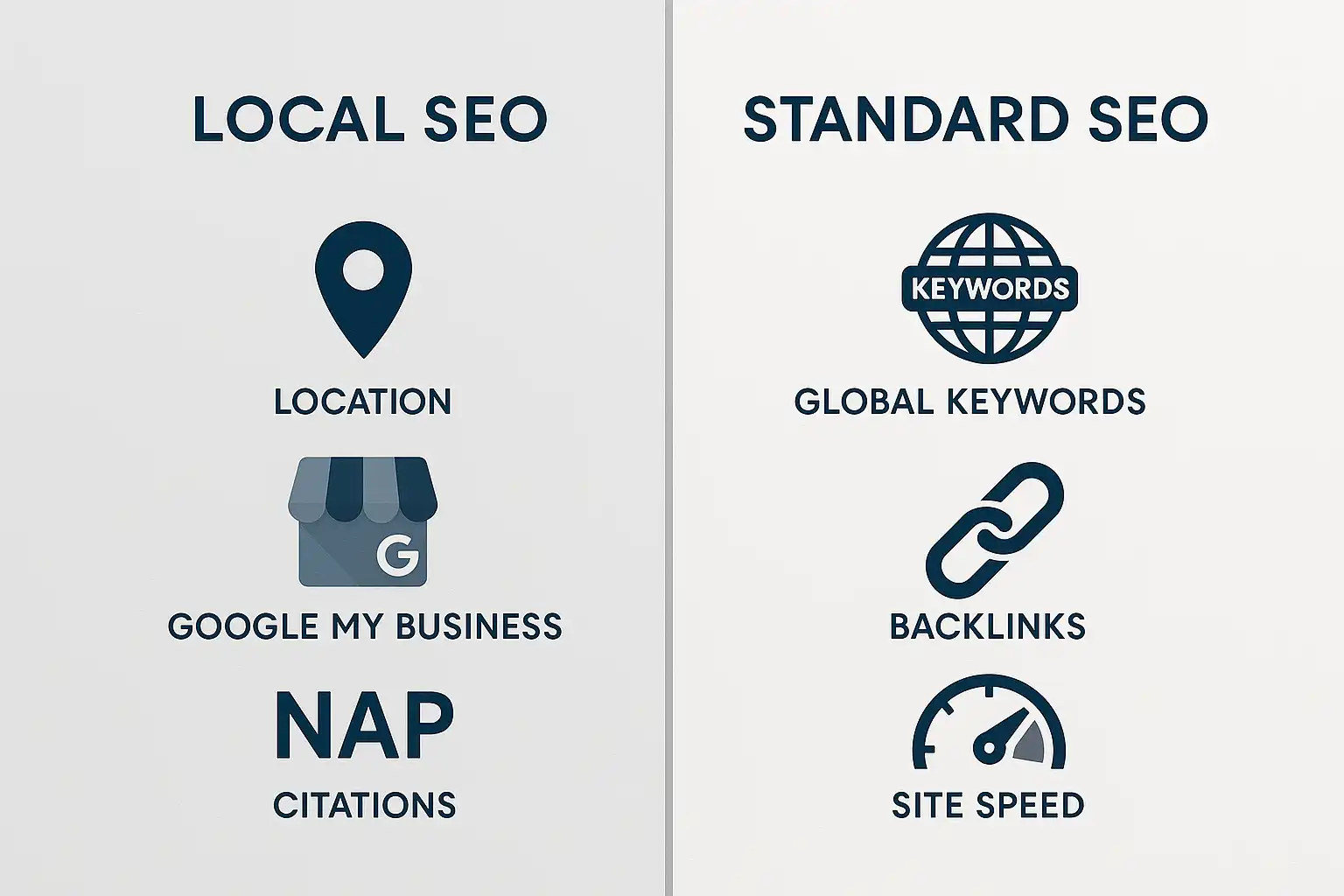
Expert Insight: Even a single outdated phone number or address in a directory can harm your local rankings. Regular audits are worth the effort—many businesses miss this simple fix.
Why Local SEO Services Matter for Small Businesses
Local SEO services are essential for small businesses aiming to be visible when customers search nearby. They help brands get discovered in maps, directories, and mobile search, connecting them with real prospects who are ready to convert.
Key Benefits of Local SEO
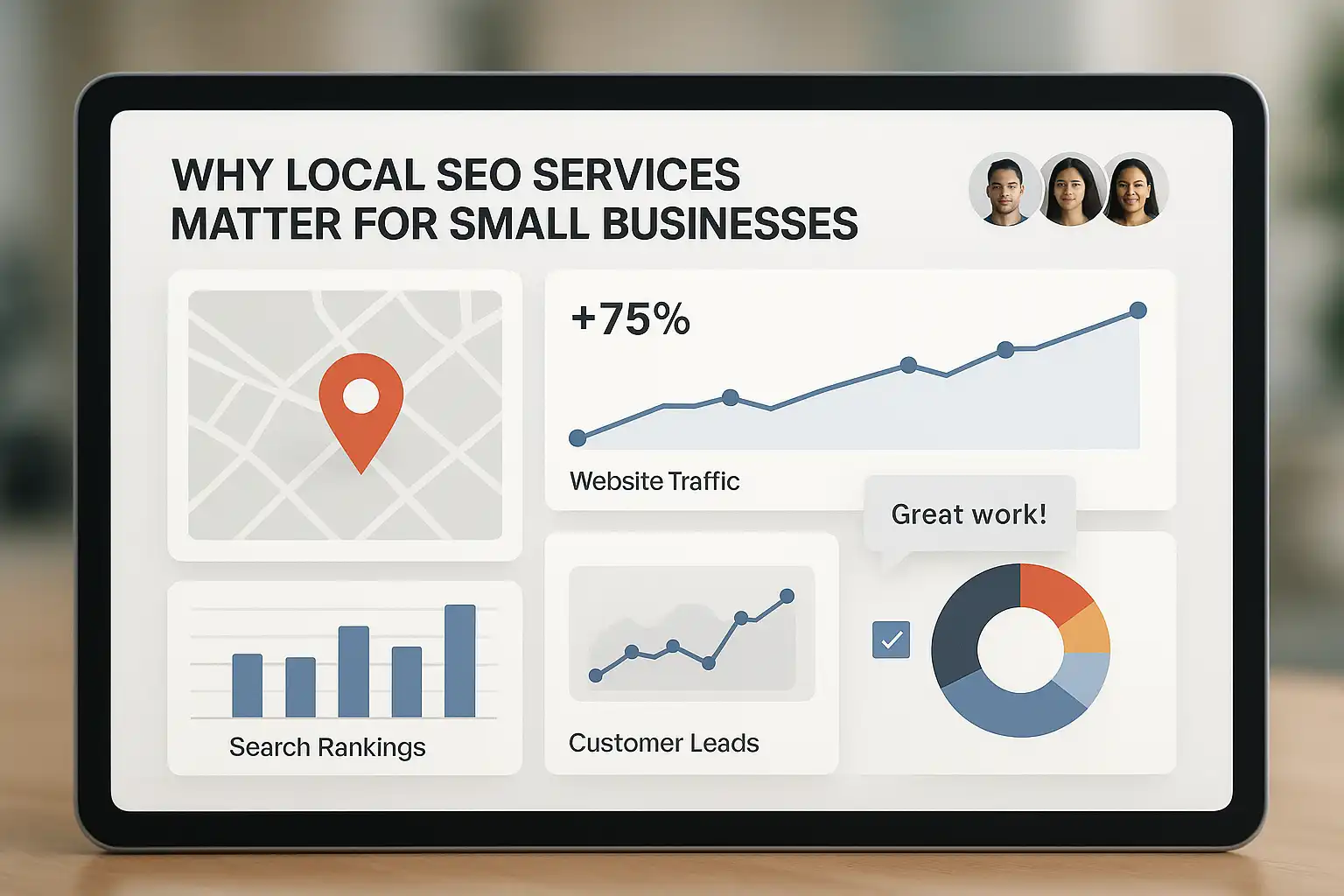
Local SEO services offer small businesses a way to increase local visibility, drive more qualified leads, and build community trust. Unlike standard SEO, they focus on ranking your business for location-specific searches, delivering targeted results that match how people search for nearby services. According to Justwords, benefits include higher map pack rankings, more foot traffic, and stronger word-of-mouth as businesses appear in trusted local listings.
In practice, local SEO often leads to results that general digital marketing misses—like boosting calls from Google Maps or walking customers in the door. Many owners find that even modest local improvements (accurate business hours on multiple directories, for example) can quickly pay off. If visibility in your service area matters, exploring keyword research by location is a good starting point.
Common Use Cases in Different Industries
Local SEO applies across industries, but each field leverages it a bit differently based on how nearby customers search and decide. For example, restaurants rely on accurate menus and up-to-date hours in directories, while plumbers need to show up for urgent “near me” queries. Healthcare practices focus on trust and address consistency, since patients search for credibility above all.
From our experience, even retailers with multiple storefronts see outsized gains when every location is verified and optimized locally. Service providers—whether they’re home renovation, pet care, or consulting—should adjust city or neighborhood keywords for each service zone. Explore tailored tactics and see all integrations for automating these processes to fit your business type.
Local SEO and Online Reviews
Online reviews play a critical role in local SEO by influencing both rankings and customer trust. Google and other platforms consider review quantity and recency as ranking signals, making active review management a must-have for local results. Research from LocalSEO Services FAQ suggests small businesses with steady, positive review streams are more likely to appear at the top of maps packs.
A common pitfall is neglecting timely responses—potential customers notice when bad reviews are ignored. Wondering about best practices? Here’s more on how to access your business’s reviews from Google My Business and why most guides skip review management, even though it can make or break local reputation.
Expert Insight: Even one outdated address or incorrect business hour can undermine years of local trust. Double-check your listings often, especially after any operational change.
Core Local SEO Service Concepts You Need to Know
Understanding the major building blocks of local SEO services makes it easier to evaluate what’s included—and what really drives results in your area. Below are core concepts you’ll encounter in any effective local SEO campaign, each playing a distinct role in local search visibility.
Google My Business Optimization Explained
Google My Business (GMB) optimization is the process of fully completing, verifying, and enhancing your business profile so it stands out on Maps and local search. This starts with adding essential details—think address, hours, categories, and contact info. For most businesses, GMB is the main way to appear in Google’s local “map pack,” often right at the top of search results for local intent queries.
A typical optimization checklist includes uploading current photos, picking relevant business categories, crafting a concise business description, and enabling messaging if appropriate. In practice, teams often find that even small tweaks (like updating holiday hours or choosing the most accurate primary category) have a surprising effect on visibility. For insights on review management within GMB, see What are the best ways to manage and respond to customer reviews?
GMB optimization isn’t a one-off task. Regular updates and responding to reviews matter. As Google’s local algorithm weighs both profile completeness and business activity, consistency pays off—especially in competitive service areas.
The Impact of Local Citations & NAP Consistency
Local citations are online mentions of your business’s name, address, and phone number (NAP) across third-party sites and directories. Accurate citations play a substantial role in local search, as search engines use them to validate your business’s location and legitimacy. NAP consistency means the exact same information appears everywhere your brand is listed.
According to SEO Experts, inconsistent NAP info can cause ranking issues—Google sometimes struggles to trust or even recognize a business if details don’t match. A common pitfall is forgetting about older directory listings or small variations in suite numbers or abbreviations.
In practice, citation cleanup usually requires tracking down outdated and duplicate entries and updating them manually. This process can be tedious, but skipping it often leads to confusion for both search engines and local customers.
Local Keyword Research and Geo-Targeted Content
Local keyword research is the practice of identifying the search phrases your potential customers use when looking for nearby products or services. Geo-targeted content is content crafted to address those queries with specific location references.
The most effective local SEO services rely on tools that surface city and neighborhood-based keywords—as explained by QuickSEO, targeting broad terms misses the high-intent, local traffic. Research usually uncovers long-tail phrases like “plumber near Main Street” or “best dentist in [city].”
In practice, content planners often build out specialized landing pages or blog posts focused on these high-intent phrases. For those wanting an automated approach, see topic clusters and automated article generation for examples of how technology streamlines this process and avoids common DIY mistakes.
Tip: Even small differences in your business name or formatting across directories (like using "St." vs. "Street") can cause data mismatches—double-check for hidden inconsistencies regularly.
How Do Local SEO Services Work? The Complete Process
Local SEO services follow a multi-step process designed to improve a business’s visibility in geographically-targeted search results. Each stage, from initial audit to ongoing tracking, targets specific ranking signals to help your brand show up for the right customers.
Step 1: Local Audit and On-Page Optimization
A local SEO process begins with a local site audit and on-page optimization to assess readiness for local search. According to MagCloud Solutions, this initial evaluation covers technical site health, keyword targeting, and the accuracy of contact information on your main pages.
It’s not just about keywords or title tags. A true local audit will check for:
- Consistent business name, address, and phone (NAP) details
- Fast mobile loading times
- Local schema markup for enhanced map listings
In practice, many businesses discover unexpected problems at this stage—like an old phone number in a page’s footer breaking NAP consistency. Fixing these early can prevent bigger ranking headaches down the line. For automation-friendly teams, reviewing geo-targeted keywords and schema using tools with content automation and integrations streamlines this process considerably.
Step 2: Building Citations and Backlinks
Building authoritative local citations and backlinks comes next in the local SEO workflow. "Local citation" means listing your business on trusted directories, with your NAP details exactly matching your website and Google Business Profile. Directories and aggregators matter—incorrect entries cause confusion for both algorithms and customers.
A typical local SEO package includes:
- Submitting your site to top local directories
- Cleaning up old or duplicate listings
- Strategically earning backlinks from local partners, blogs, and chambers of commerce
Directory tools like Directory Studio help filter legitimate submission targets to avoid spammy sites that can hurt your rankings. In practice, teams often find tedious manual work here, so opting for services that pre-vet citation sources can be a noticeable time-saver.
Step 3: Review Management and Ongoing Tracking
Local SEO services include review management and ongoing tracking to maintain results. Managing Google and third-party reviews isn't just for reputation—it directly affects map and local rankings. Research from BoostOneSEO notes that responding to customer feedback on major platforms sends positive quality signals to search engines.
This step typically involves:
- Encouraging customers to leave reviews (post-purchase or via follow-up)
- Monitoring ratings across Google, Yelp, and industry directories
- Replying promptly to both positive and negative feedback
- Using automated tools for review monitoring and ranking checks
In real projects, long-term tracking is crucial—audits and optimizations aren’t set-and-forget. Consistent monitoring surfaces drops in visibility or sudden changes in competitor rankings, prompting action before lost traffic becomes a problem.
Expert Insight: Local SEO isn’t linear—steps often overlap, and maintaining accurate listings requires periodic audits even after initial setup.
Real-World Local SEO Service Examples
Understanding what are local SEO services is clearer when you see how they’re applied by real businesses. Let’s look at three distinct examples—each showing a core local SEO tactic in action.
Restaurant Boosts Traffic with GMB Optimization
A restaurant improved customer traffic by fully optimizing its Google My Business (GMB) profile. This meant updating hours, adding new menu photos, and actively responding to all customer reviews. According to Buildsworth SEO, GMB optimization directly impacts local rankings and click-through rates in map results. In practice, restaurants see more reservations when their profile appears complete and up-to-date, especially if they highlight changes or special events right in GMB. Teams often find that real menu photos and quick replies to questions can have a bigger impact than running ads. For more tactics on this, see Local Seo features for local businesses.
Plumber Grows Leads by Managing Reviews
A plumber generated more leads by actively managing and responding to customer reviews on Google. Review management is not just about getting more stars—it's about signaling credibility and engagement to both search engines and potential clients. Research from slcwebsitedesign.com shows that home service businesses with recent, positive reviews rank higher and get more phone calls. In practice, plumbers benefit from setting daily or weekly routines to request feedback and reply to all reviews, not just the glowing ones. Readers can find additional review management guidance in What are the best ways to manage and respond to customer reviews?.
Multi-Location Retailer Improves NAP Consistency
A multi-location retailer improved map rankings by standardizing its Name, Address, and Phone Number (NAP) across all directories. NAP consistency is essential for making sure Google and customers don’t get mixed signals when searching for store locations. In practice, these retailers often discover conflicting data—like mismatched phone numbers—when they run duplicate listing checks or audit their citations. It’s common for one outdated directory to affect the entire network’s rankings. Systematically cleaning up business listings remains tedious, but it’s a key local SEO step. Businesses looking to automate some of this work should review Directory Studio for citation building.
Expert Insight: Real-world local SEO work is often less about “hacks” and more about ongoing, consistent management—results come from maintaining details others ignore.
Frequently Asked Questions
What is included in local SEO services?
Local SEO services include optimizing a business's online presence to rank higher in local search results. Key activities involve managing Google My Business listings, local keyword research, location-based content creation, citation building, local backlink acquisition, and reputation management. These services help attract nearby customers and improve visibility in geographic-specific searches. SEO Ladders supports local SEO by automating location-optimized content and keyword targeting to boost local search rankings.
How do local citations influence rankings?
Local citations positively impact search rankings by verifying a business's name, address, and phone number across trusted directories and websites. These citations build consistency and trust with search engines, improving local relevance and helping your business appear higher in local search results. Citation building and NAP accuracy are handled by dedicated listing tools; SEO Ladders covers the content and keyword side of the same job.
Is NAP consistency really that important?
Yes, NAP consistency (Name, Address, Phone number) is crucial for local SEO. It helps search engines verify your business's legitimacy and improves local search rankings. Inconsistent NAP details across directories can confuse search engines and harm your visibility. Tools like SEO Ladders can assist in maintaining consistent local SEO data to enhance your local ranking and attract nearby customers.
Can local SEO work for service-based businesses?
Yes, local SEO is effective for service-based businesses because it targets customers within specific geographic areas. It helps improve visibility in local search results by optimizing location-specific keywords and business listings. Tools like SEO Ladders can automate this process, generating tailored content to attract nearby clients and boost local online presence.
Why do some businesses rank higher in maps even with fewer reviews?
Businesses can rank higher in maps despite fewer reviews due to factors like proximity to the searcher, business category relevance, verified listings, and consistent local SEO signals such as accurate address and optimized content. Google also considers engagement, hours of operation, and backlinks. Tools like SEO Ladders help optimize these local SEO factors to improve map rankings effectively.
Conclusion
Local SEO services are your ticket to making sure local customers actually find—and choose—your business when they search online. To move forward, focus on these steps:
- Audit your Google Business Profile for accuracy and completeness
- Build or claim local directory listings relevant to your area
- Prioritize city- or neighborhood-based keywords throughout your site
- Ask happy customers for reviews, and reply to them promptly
Put these items into action and you’ll start seeing more locals walking through your door—and fewer missed opportunities. ↑ Back to top
Ready to attract more local customers and dominate your neighborhood search results? Try our all-in-one Local SEO automation features for free and see your business rise today.
Want this done for you? SEOLadders finds the topics, writes the articles, and gets you cited by AI and ranking on Google, on autopilot.
7-day free trial · Cancel anytime