
Table of contents
TL;DR
- Start with focused keyword research and intent.
- Structure content for clarity and user needs.
- Optimize on-page elements and technical SEO.
- Make every post mobile and speed friendly.
You know the frustration—sinking hours into thoughtful blog content, hitting publish, and then... crickets from Google and your analytics. For website owners and digital marketers chasing meaningful traffic, not knowing how to write SEO friendly blog posts can leave your best ideas buried on page five, unseen by your audience.
This guide breaks down what actually makes a blog post SEO friendly—not just in theory, but step-by-step. You'll learn why SEO matters, which elements help posts rank, and proven methods to build blog content Google loves. Plus, you'll see what real SEO optimized posts look like, so you can stop guessing and start climbing the rankings with confidence.
What Makes a Blog Post SEO Friendly?
Making a blog post SEO friendly isn’t just about keywords. It’s about aligning content with how people search, structuring posts for clarity, and handling technical on-page details that search engines value. Here’s how the basics work in practice.
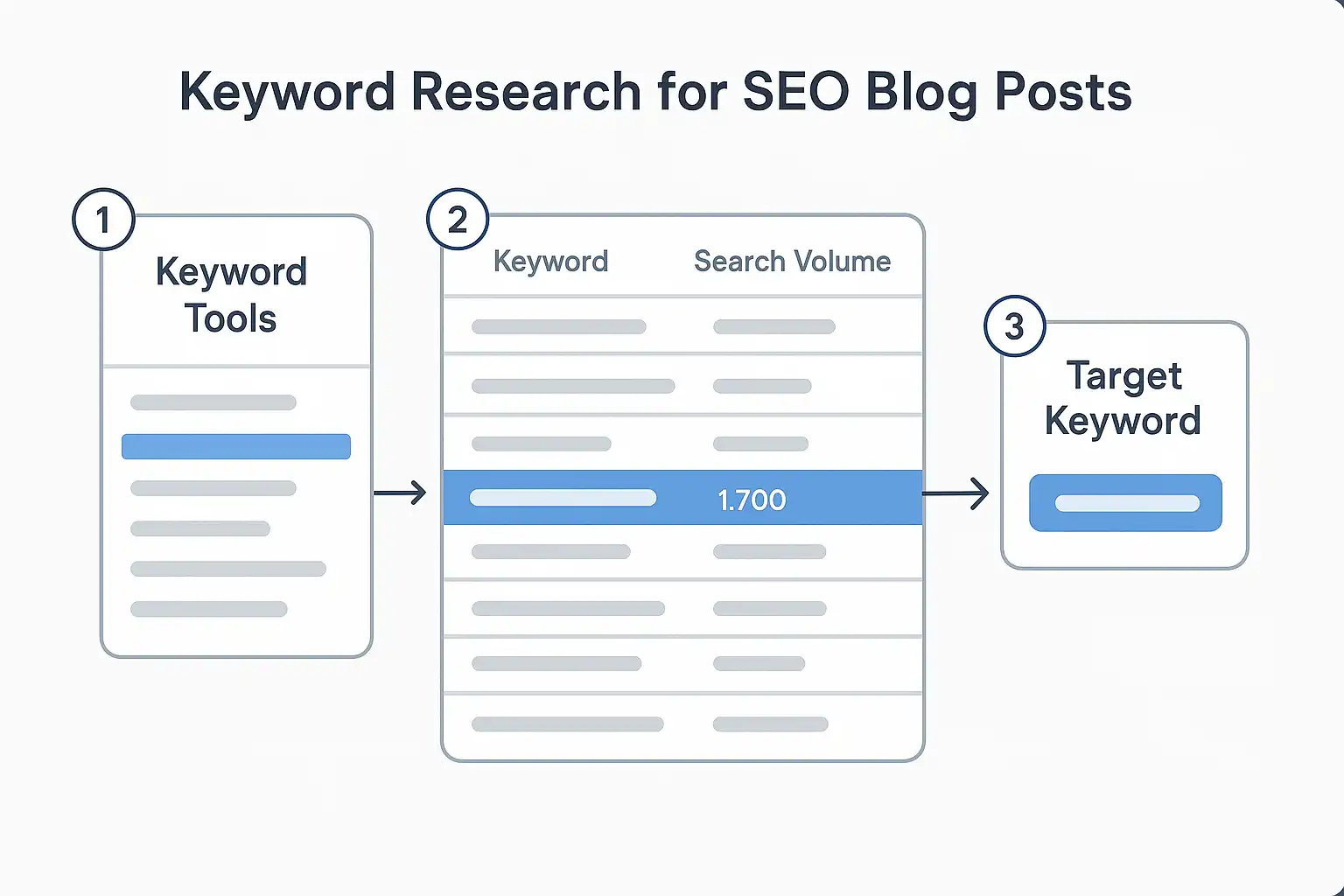
Keyword Research Basics
"Keyword research is the process of finding words and phrases that your target audience actively searches for online." Without it, you’re guessing what people want. According to Topcontent, targeting the right keywords is foundational for showing up in organic search results.
In practice, you’ll want to:
- Focus on keywords that match what your site can realistically rank for (low to medium difficulty)
- Prioritize topics with clear intent (does the searcher want info, a product, or something else?)
- Consider long-tail variations to attract more qualified traffic
Tools can accelerate the process: for example, See keyword research on SEO Ladders highlights automated approaches tailored to your website’s authority and niche. Experience shows that skipping research leads to weak rankings, even if the writing is strong.
On-Page Optimization Fundamentals
"On-page optimization involves adjusting elements like titles, headings, and images to help search engines understand and rank your content." These tweaks are more visible than technical SEO and make a real impact.
Key on-page basics:
- Add your primary keyword in the title, first paragraph, and at least one header
- Use short, descriptive meta descriptions (even if Google sometimes rewrites them)
- Always include alt text for images to boost accessibility and SEO
A common pitfall is over-optimizing: stuffing keywords or using awkward, robotic phrasing will backfire. In our experience, balancing readability and SEO signals works best. Tools such as Schedule & Publish make this easier at scale, but manual attention is still needed for unique value.
Content Structure Essentials
"Content structure refers to how information is organized within a blog post, shaping both user experience and SEO performance." Clear, logical sections help both readers and search engines grasp your intent right away.
Effective structure tips:
- Open with a direct answer or summary so visitors know they’re in the right place
- Use plenty of subheadings (H2, H3) to break up major themes
- Add bulleted or numbered lists where complex ideas need clarity
In practice, teams often overlook structure in favor of creativity or storytelling. But honestly, this one surprised us: posts that are easy to scan not only retain users longer but also tend to win featured snippets. If you’re stuck, try experimenting with tools like the Article Outline Generator for inspiration.
Expert Insight: When planning for SEO, balance keyword usage with authentic, conversational writing—Google’s recent updates reward posts that help readers, not just search engines.
Why SEO Optimization Matters for Blog Success
SEO optimization sits at the core of creating blog posts that both reach readers and deliver results. Without a focus on SEO, even the best writing can vanish in the search engine noise. Here’s why it matters if you’re aiming to master how to write SEO friendly blog posts:
Key Benefits of SEO-Focused Content
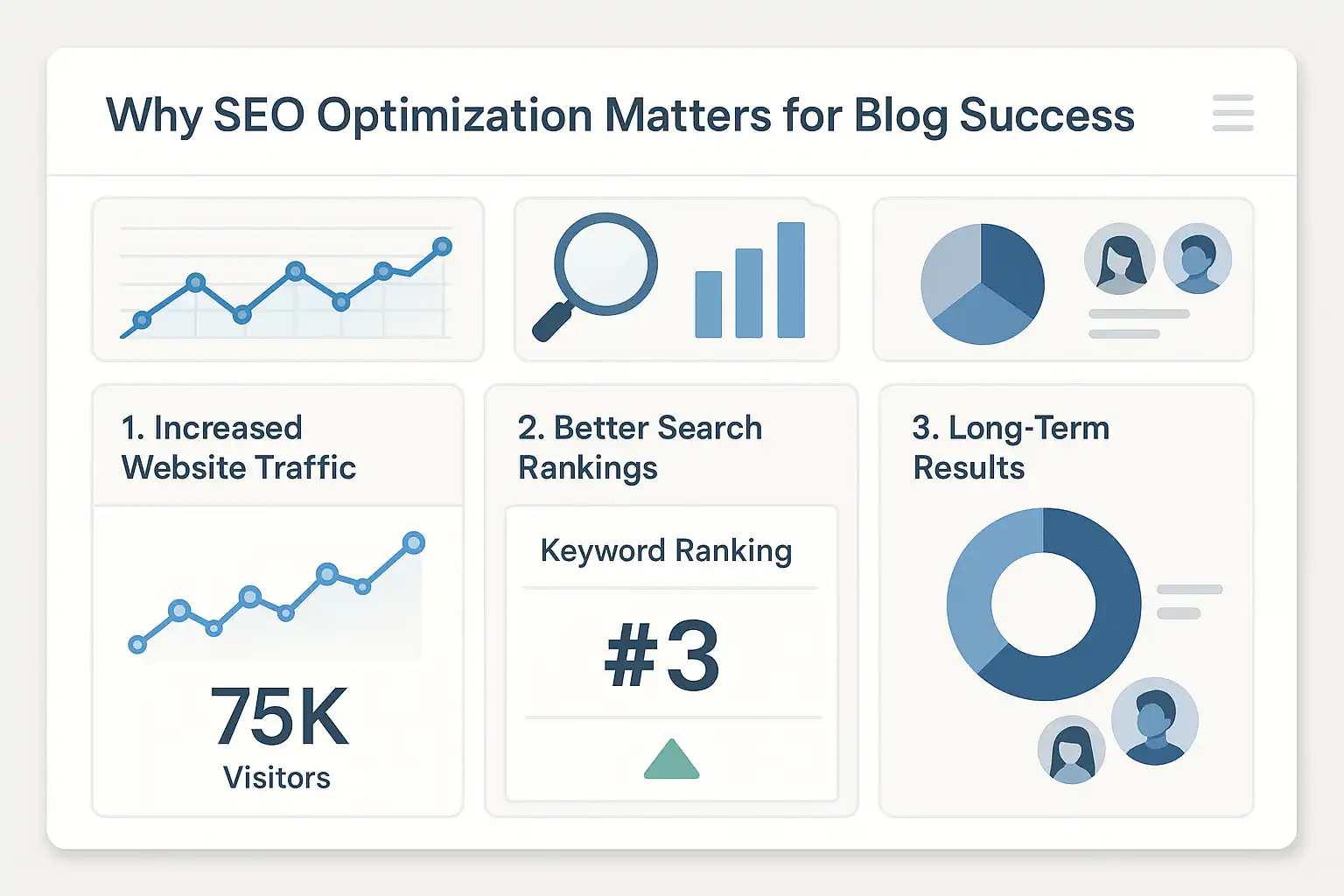
SEO-focused content is the most reliable way to increase organic visibility, attract targeted readers, and build long-term authority in your niche. Well-optimized posts can:
- Rank for valuable keywords that match your audience’s searches
- Drive consistent, passive traffic over time
- Strengthen topical relevance and trust
According to SEO Content Writing Course, content that actively targets search intent and uses structured on-page techniques is far more likely to earn prominent placements on Google. In practice, blogs that apply SEO at every step gain traction faster than those relying on social or paid channels alone.
If you want to see how automation can scale these benefits, check out See all integrations for examples of AI-powered SEO solutions that streamline the process.
Common Use Cases for SEO
The most frequent use cases for SEO in blog strategy are building traffic, supporting lead generation, and growing brand authority. Common scenarios include:
- Launching a new site or blog section
- Expanding into related topics to strengthen topical authority
- Publishing evergreen content that reliably attracts ongoing visitors
Teams often find that targeting low-competition keywords—sometimes known as “easy wins”—can be transformative in the early days of a blog. To discover them, advanced keyword research tools are key. Curious what this looks like in practice? The See keyword research page explains how strategic research aligns with scalable growth.
The Role of User Intent in Ranking
User intent is the core principle shaping which blog posts rank on Google. User intent is the underlying goal a searcher has when entering a query, such as seeking information, comparing options, or looking to buy.
Most high-ranking blog content meets the precise needs reflected in user search behavior. A common pitfall is focusing only on keywords, missing the ‘why’ behind the query. Posts that match not just the words but the purpose—educational, navigational, or transactional—outperform generic articles every time.
In our experience, mapping every blog outline directly to search intent produces tangible SEO lifts that keyword stuffing never does.
Expert Insight: While optimizing for SEO is critical, over-optimization can actually hurt rankings—balance keyword targeting with natural, reader-first writing for best results.
Core Elements of High-Ranking Blog Posts
High-ranking blog posts stand out for their strategic technical setup and user-focused writing. To truly master how to write SEO friendly blog posts, you need to combine smart keyword usage, sharp meta tagging, and signals of authority—each playing a distinct role in search visibility.
Strategic Keyword Placement
Strategic keyword placement is the foundation for ranking content in search engines. Keywords should appear where they naturally fit, but with care—not everywhere at once. According to SEO: blogolize.com, placing primary and secondary keywords in the opening paragraph, subheadings, and throughout the body can signal relevance to both crawlers and human readers.
In practice, writers often start strong but scatter focus by overusing keywords or missing obvious spots. The sweet spot comes from:
- Using the main keyword in the first 100 words
- Including variations and related phrases in H2 or H3 subheads
- Sprinkling keywords in image alt tags and links
For better ideas on surfacing high-intent terms, see keyword research guides. This approach keeps the language fluent for people while still sending clear signals to search bots. Miss it, and the post can feel spammy or invisible—neither help you rank.
Meta Tags: Titles, Descriptions, and More
Meta tags are HTML elements that summarize page intent for search engines and users. Properly optimized titles and descriptions influence both rankings and click-through rates. The post’s title tag should feature its core keyword near the start, ideally with supporting words for context or intent.
In our experience, fine-tuning a meta description to echo the post's main value or solution improves relevance. Tools like a Meta Description Generator can help draft options in seconds. And don’t ignore OG tags and schema—while not always visible to users, they strengthen how your content appears across platforms and enrich snippet results.
Small tweaks here matter more than most realize. Even one misplaced or duplicate tag can tank visibility, especially on competitive results pages.
Internal Linking and Backlink Signals
Internal linking is the practice of connecting related articles within your site structure, boosting session duration and clarifying topic clusters for Google. Effective linking uses descriptive anchor text and context—never generic.
A well-connected article guides readers to deeper resources, as in a post that naturally points to an Article Outline Generator when discussing blog structure. Backlink signals—external, trustworthy sites citing your content—amplify authority in Google's eyes. Building backlinks requires outreach, great content, or submission to reputable directories. A common pitfall: stuffing links purely for search bots; genuine in-content links actually help users and carry more weight with search systems.
Look, both strategies work best when planned from the outline stage, not tacked on afterwards.
Expert Insight: Over-optimization—a common beginner's mistake—can hurt rankings. Focus on clarity and genuine value over repeating the same keyword excessively.
How to Write SEO Friendly Blog Posts: Step-by-Step
Writing SEO friendly blog posts is a multi-step process focused on user intent, clarity, and technical optimization. Below are three actionable steps to ensure your blog content stands out in search rankings and delivers value to real readers.
1. Outline with Search Intent in Mind
An SEO blog outline should always begin with focused search intent so your post answers what readers actually want. According to Jessie on a Journey, understanding intent can be the difference between ranking and being ignored. Start by:
- Identifying the main question—What do searchers expect to find for your target keyword?
- Listing related subtopics—Use tools like a free Article Outline Generator to ensure full coverage.
- Ordering sections logically—Move step-by-step or by importance, not just what feels natural.
In practice, outlining with clear intent avoids wasted effort. Many teams forget that even strong writing won't compensate for missing the searcher's core expectation.
2. Write and Format for Readability
Readability is what keeps users on the page long enough for search engines to notice engagement. "Formatting for readability" means structuring blog posts with:
- Short paragraphs (1-3 lines, simple sentences)
- Descriptive subheadings that echo real search queries
- Bullet lists to break up information
- Bold or italic emphasis for important points
From experience, making content scannable leads to lower bounce rates. Tools like the Headline Analyzer can help you write enticing, click-worthy headings without resorting to clickbait. A common pitfall is overstuffing with keywords—readers spot this instantly, and it’s a turnoff.
3. Optimize Loading Speed and Mobile Experience
Page speed and mobile-friendliness directly impact both SEO performance and user satisfaction. "Optimizing for speed and mobile" involves two clear priorities:
- Compress images and minimize scripts to guarantee fast load times.
- Use responsive themes and preview on actual devices, rather than trusting desktop-only designs.
You’ll notice quickly that even the most in-depth guides won’t rank if users bounce due to slow or broken mobile layouts. According to Utaheducationfacts.com, search engines use mobile-first indexing, making this step non-negotiable. Assuming your CMS supports on-the-fly optimization—like Wordpress integrations—removes much of the guesswork.
Expert Insight: Even well-researched, beautifully formatted blog posts fail if they ignore speed or break on mobile. Test every post live on your phone and with real readers—not just in preview mode.
Examples: What Real SEO Friendly Posts Look Like
Theory only gets you so far—sometimes, it's seeing real SEO friendly blog posts that brings the process to life. Below you'll find modeled examples highlighting strong structure, practical on-page SEO, and a pitfall to avoid if you want sustained rankings.
Well-Structured Listicle Example
A well-structured listicle is a type of SEO friendly blog post that delivers value through clarity, skimmable formatting, and natural keyword use. The secret sauce? Immediately signaling the main topic and search intent—usually in the list title—then walking readers through easily digestible points. You’ll see:
- Compelling H1 that matches the target keyword
- Intro paragraph that previews the list’s benefit
- Direct, keyword-relevant subheaders for each bullet or section
- Short paragraphs, plenty of white space, and, when relevant, supporting visuals
In practice, top-performing listicles rarely just dump items—they include brief explanations, internal links to deeper resources, and sometimes a summary for next steps. Anyone who needs help getting started can use a tool like the Article Outline Generator to scaffold an SEO-optimized structure before drafting.
Case Study: Blog Post with Rich On-Page SEO
A blog post with rich on-page SEO is content that tightly aligns headings, internal links, images, and meta descriptions to the target keyword. According to Tools for Creators, strategic optimization remains a key factor in content visibility. Here’s how this looks on a live site:
- Start with a specific, search-focused headline (e.g., “How to Write SEO Friendly Blog Posts in 2026”).
- Use keyword-rich H2s and H3s to organize sections, making the structure easy for people—and Google—to scan.
- Balance keyword usage so it sounds natural—not repetitive.
- Embed internal links to relevant resources, like deeper guides on Topical Authority.
- Optimize images with descriptive filenames and alt text.
Real posts typically include contextual links and small, actionable lists instead of huge, unbroken blocks of text.
Overrated Advice to Rethink: Keyword Stuffing
Keyword stuffing is the practice of overloading a blog post with repeated keywords in an attempt to manipulate search rankings. This approach feels robotic and—let’s be honest—makes your content unreadable fast. Search engines can recognize it too. Instead of boosting rank, it dampens user trust and sometimes triggers algorithmic penalties.
Teams often find that chasing a magical keyword density distracts from writing helpful content. Today’s best-performing articles stick to natural language, smart synonyms, and topical relevance. For sustainable SEO, structure your content around the user’s question—not the urge to mention your phrase a dozen times. For more on balancing keyword use with readability, see guides on content automation best practices.
Expert Insight: Review your own content for keyword repetition and overly similar phrases—even seasoned writers can miss this in long drafts.
Frequently Asked Questions
What is the ideal blog post length for SEO?
The ideal blog post length for SEO typically ranges from 1,000 to 2,500 words, balancing depth and readability. Longer posts can rank better as they cover topics comprehensively, but quality and user intent matter more than length alone. Tools like SEO Ladders help automate creating SEO-optimized articles tailored to your site's authority and keyword intent, ensuring your content is the right length for ranking.
How many keywords should you target in a post?
Typically, target one primary keyword per blog post and incorporate 2-3 related secondary keywords to support it. This approach keeps your content focused and improves SEO without keyword stuffing. SEO Ladders helps automate keyword selection, ensuring the keywords match your site's domain authority and organic growth goals.
Can you rank without backlinks?
Yes, it's possible to rank without backlinks by optimizing on-page SEO elements like content quality, keyword use, and user experience. However, backlinks remain a strong ranking factor; they boost authority and trustworthiness. To improve rankings without backlinks, focus on creating valuable, targeted content and use tools like SEO Ladders for automated, SEO-friendly blog posts tailored to your domain authority.
Do images and infographics affect SEO?
Yes, images and infographics positively impact SEO by enhancing user engagement, providing visual explanations, and increasing time spent on a page. Properly optimized images with descriptive alt text, filenames, and captions help search engines understand content context, improving rankings. SEO Ladders automates adding relevant, AI-generated images and infographics to blog posts, boosting SEO performance effortlessly.
Is on-page optimization enough to reach first page results?
On-page optimization alone is usually not enough to reach first-page results on Google. Effective SEO also requires off-page factors like quality backlinks, site authority, and consistent content updates. Tools like SEO Ladders help by automating content creation and focusing on both on-page SEO and realistic keyword targeting, improving chances of ranking higher.
Conclusion
Crafting SEO friendly blog posts doesn't have to be a shot in the dark. When you focus on strong keyword selection, strategic on-page elements, and user-focused formatting, solid search rankings become much more attainable.
- Audit an existing post to see if it hits every SEO checklist item covered above
- Use a keyword research tool to uncover low-competition opportunities this week
- Update your next draft with clear headings, engaging meta descriptions, and natural internal links
- Review real examples and adjust formatting or media based on what works
Better rankings start with small, focused actions—so put these steps into play and keep refining each post you publish. ↑ Back to top
Ready to save hours on keyword research and publishing? Try SEO Ladders' automated keyword research and article generator for faster, SEO friendly posts—start your free trial and see real ranking results.
Want this done for you? SEOLadders finds the topics, writes the articles, and gets you cited by AI and ranking on Google, on autopilot.
7-day free trial · Cancel anytime