
Table of contents
TL;DR
- Use SEO analysis to find site performance gaps
- Smart keyword research unlocks low-competition wins
- Content optimization boosts authority and rankings
- Automate with tools like SEO Ladders for scale
You’re pouring hours into blog posts every week, but your Google rankings barely budge and that dream of steady, free traffic still feels miles away. For founders and marketing teams, chasing organic growth can sometimes feel like you’re following outdated checklists instead of winning results.
This guide breaks down exactly how to improve organic traffic—no fluff, just proven SEO steps you can act on fast. You’ll learn why traditional advice often falls flat, how to spot your site’s real opportunities, and which specific actions actually move the needle. Get ready for a practical roadmap and honest explanations, so you finally see organic traffic climb for real.
What Is Organic Traffic and Why Does It Matter?
Organic traffic drives visitors to your website from search engines without paying for ads. Understanding why this matters is essential if you're serious about long-term, cost-effective growth. Let's break down exactly what organic traffic is, how it's measured, and why it's so central to SEO strategy.
Definition: Organic vs Paid Traffic
Organic traffic is website traffic that arrives through unpaid search results, while paid traffic comes from advertising campaigns. According to SEOZoom, organic search results are listings ranked by relevance and quality, not by payment. This distinction affects how you approach how to improve organic traffic. With organic, users find your pages because they match search intent, not because you've bid on keywords.
In practice, site owners see that organic traffic takes longer to build but usually delivers higher engagement, since users trust search engine rankings over ads. The flipside? Paid traffic offers immediate results, but requires ongoing investment and rarely builds long-term equity. Weighing these two channels is key if you're deciding where to focus marketing efforts.
Key SEO Analysis Terms Explained
SEO analysis terms are the vocabulary that explain how organic performance is measured and tracked.
Some core concepts include:
- Impressions: How often a page shows in search results
- Organic Click-Through Rate (CTR): Percentage of impressions that turn into visits (WebAllWays)
- Keyword difficulty: How hard it is to rank for a search phrase
- Domain authority: Search engines’ estimate of a site’s trust and strength
Teams often confuse these with paid metrics, but organic traffic depends much more on site relevance and quality. Familiarity with SEO terms helps when using tools for keyword research and tracking to improve results.
Understanding Search Engine Algorithms
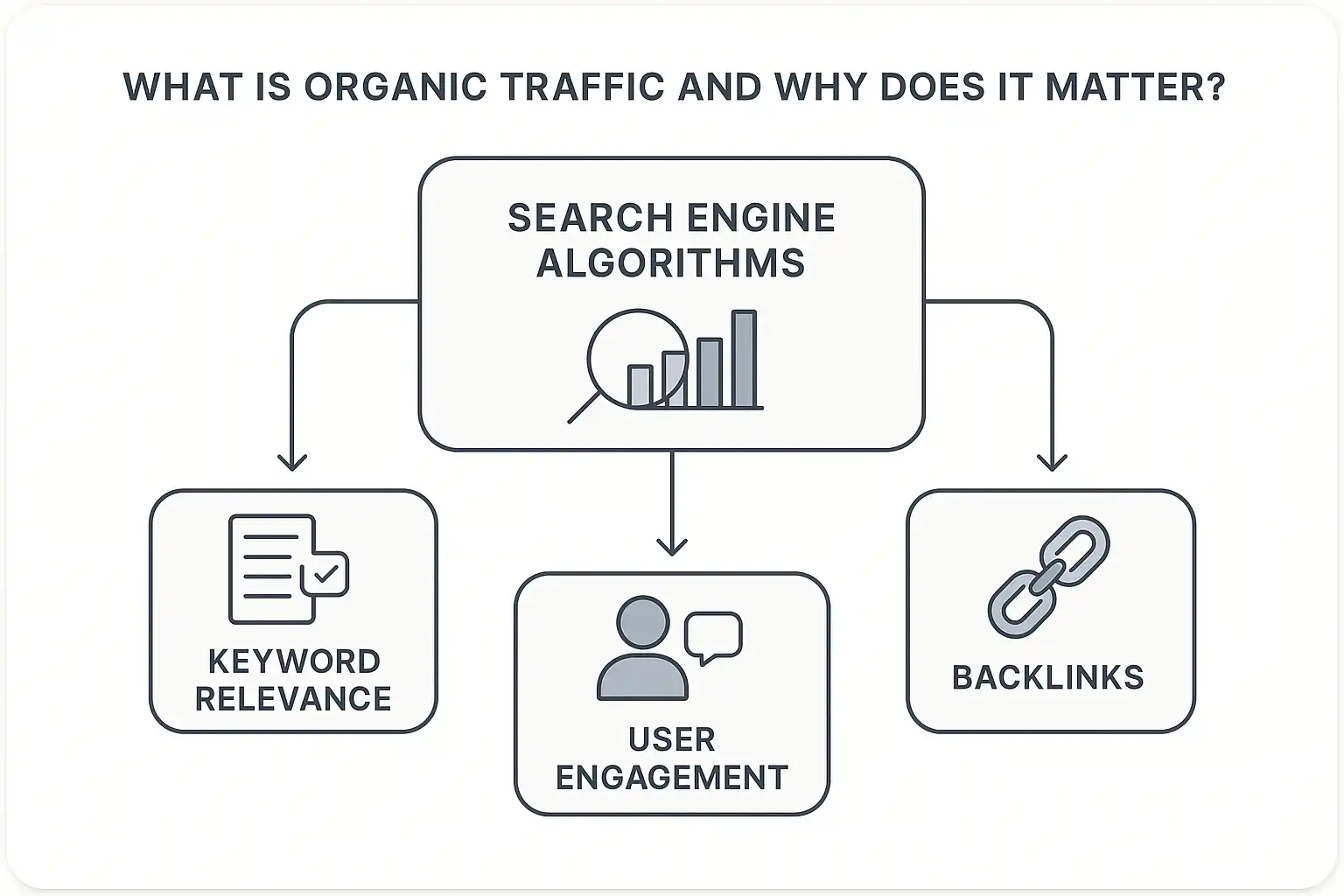
Search engine algorithms are systems that decide which results appear at the top of organic search pages. Google, Bing, and others analyze hundreds of factors—like page quality, link profile, user engagement, and freshness—every time someone searches. Algorithms aren’t fixed; they change frequently, and sometimes unpredictably.
In our experience, a common challenge is misjudging what actually influences rankings. A change in algorithm often disrupts traffic patterns, leaving teams scrambling to adjust strategy. Reliable growth in organic traffic requires monitoring updates and adapting content based on what the algorithms now prioritize. For website owners, following algorithm trends is as important as understanding fundamental content automation techniques for SEO.
Expert Insight: When comparing organic and paid traffic, monitor which channel delivers visitors who actually convert—not just those who click.
How Do You Identify Opportunities Using SEO Analysis?
Spotting hidden SEO opportunities hinges on a structured analysis—not guesswork. Whether you’re trying to fix traffic plateaus or plan new initiatives, a focused review of your site and competitors can make all the difference.
Site Audits: What to Look For
A site audit is a systematic evaluation of your website’s technical and SEO health. A solid audit uncovers problems affecting how search engines crawl, index, and rank your pages. “Site audit” checks should cover:
- Crawl errors, broken links, and redirect chains
- Duplicate content and missing meta tags
- Core Web Vitals (loading speed, interactivity, stability)
- Invisible SEO blockers (disallow directives, canonical issues)
According to Windido, flagging and fixing technical flaws is one of the most impactful steps for improving organic rankings. In practice, even healthy-looking sites often have underlying errors that drag results. Many teams rely on automated platforms for recurring audits—see Technical Health for what a modern audit workflow looks like.
Why it matters:
- Unfixed technical issues cap your site’s ranking potential
- Audits reveal quick wins (like fixing broken links)
- Audits provide baselines for measuring future improvements
Evaluating Keyword Research Approaches
Keyword research is the process of finding and prioritizing terms your audience actually searches. Effective keyword research highlights high-potential opportunities—especially those with low competition but clear intent. In self-serve tools and with agencies, priorities usually look like:
- Search volume and keyword difficulty
- Intent alignment (informational vs. transactional)
- Existing SERP competition
- Fit for your domain authority
A common pitfall: relying solely on high-volume terms. In our experience, targeting more realistic, low-difficulty keywords (“low-hanging fruit”) consistently drives faster organic traffic gains. If you want to see how AI can automate this, browse see keyword research automation.
Why it matters:
- Choosing wrong keywords leads to wasted effort
- Right research surfaces winnable, valuable terms
- Data-backed choices guide your content calendar
User Experience and On-Page SEO Checks
On-page SEO is optimizing individual pages for both users and search engines. “User experience” is how visitors navigate, read, and interact with your content. On-page and UX checks typically include:
- Clear, relevant headings with targeted keywords
- Internal linking to related content
- Mobile usability and content readability
- Optimized images (alt text, size)
In practice, many sites overlook small issues—like poor navigation or missing alt text—that quietly hurt rankings and engagement. According to research from SEO Buddy, cohesive on-page improvements often trigger measurable jumps in organic traffic. It’s helpful to benchmark against competitors; tools like Schedule & Publish can automate many of these checks as part of your content process.
Why it matters:
- Improved UX boosts dwell time and lowers bounce rates
- Better structure helps search engines understand relevance
- Even minor on-page tweaks can yield outsized ranking results
Expert Insight: Don’t just audit once—ongoing, periodic analysis catches new issues and surfaces fresh keyword opportunities as your site and competitors evolve.
What Steps Actually Improve Organic Traffic?
Improving organic traffic isn’t about following random SEO checklists—it’s about targeted changes that search engines (and your audience) reward with higher visibility. Here’s what genuinely moves the needle when it comes to consistent, measurable growth.
Content Optimization for Search Intent
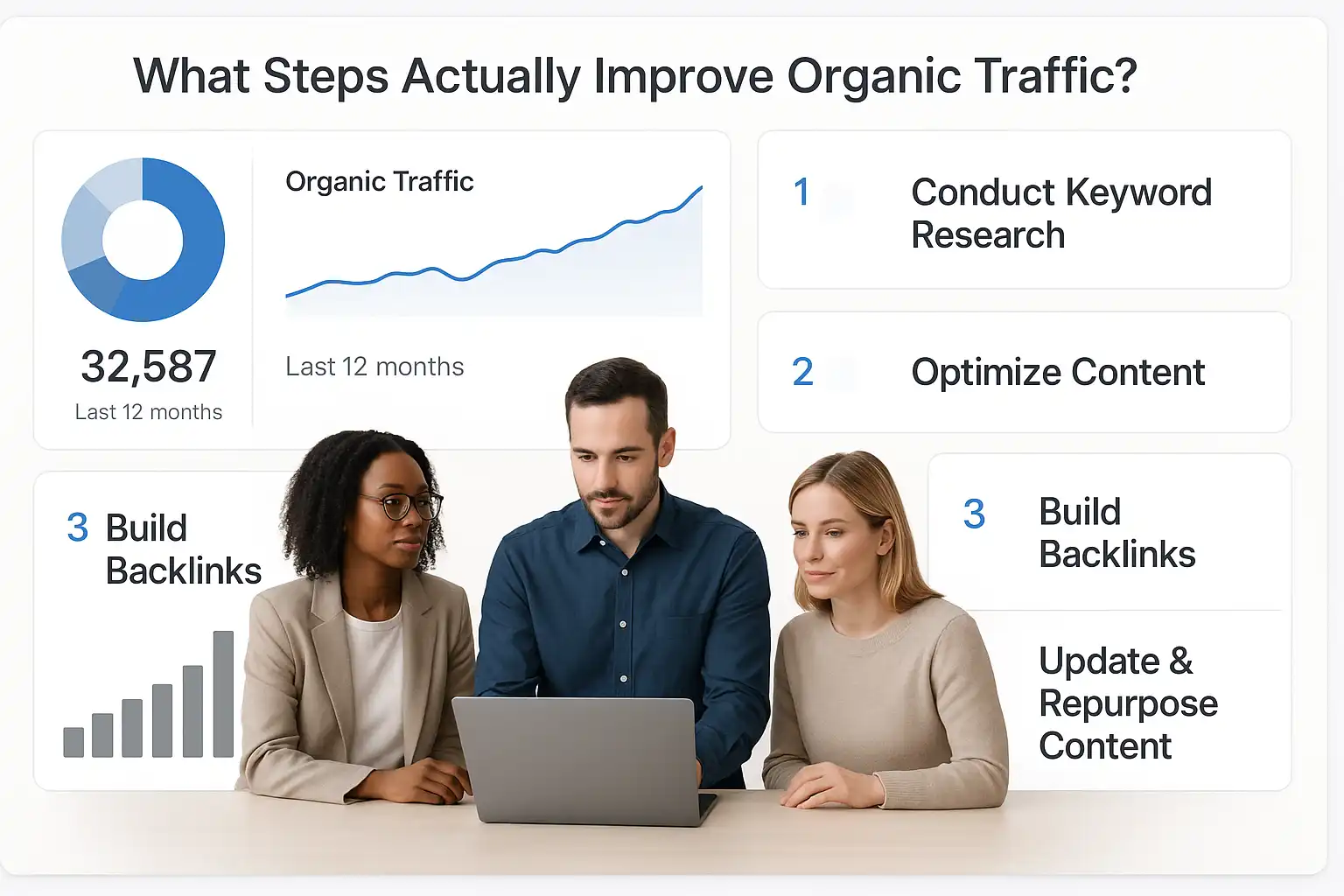
Content optimization for search intent is the single most reliable way to boost organic traffic over the long term. Search intent is the reason behind a user’s query, and aligning your content to it signals relevancy for both readers and search engines.
In practice, addressing what users are actually seeking—whether that’s a tutorial, quick answer, or side-by-side product comparison—keeps bounce rates low and conversions high. Honestly, teams often overlook this by stuffing in keywords without real regard for user intent. The result? Stagnant rankings.
According to Essential Tips on SEO For Cannabis Websites, sites that meticulously match content to real search intent consistently outperform those that don’t. Try using Article Outline Generator to map out intent-specific topics, then audit pages to make sure they’re truly answering the searcher’s core question.
Why it matters:
- Higher click-through rates (CTR) from more relevant SERP listings
- Longer average time on site, reflecting deep engagement
- Better odds of earning featured snippets or position zero
Backlink Building: Quality over Quantity
Backlink building: quality matters far more than the number of links when your goal is to improve organic traffic. High-authority links act as signals of trust, while low-grade or irrelevant links can actually cause ranking drops or manual penalties.
A Wellows overview emphasizes that one link from an established website relevant to your niche often outweighs dozens of generic directory links. In practice, it’s tempting to chase easy wins, but that rarely pays off. Teams who focus on meaningful outreach or contribute to recognized platforms often see clearer ranking jumps over time.
Comparing link sources? Here’s how placements stack up at a high level:
| Source | Impact on Traffic | Typical Difficulty | Risk |
|---|---|---|---|
| Niche Authority | High | High | Low |
| Generic Directory | Low | Low | Medium to High |
Why it matters:
- Fewer, relevant links create sustainable authority
- Reduces risk from algorithm changes
Automation: When and How to Scale Efforts
Automation is the most effective way to scale repeatable SEO tasks without sacrificing quality, but it only works when applied thoughtfully. SEO automation is the use of tools or processes to handle keyword research, content creation, and publishing workflows that would otherwise slow team output.
In our experience, automation shines for publishing consistent, intent-optimized content—like what’s possible through Schedule & Publish solutions or platforms that see all integrations offer. But here’s the thing: automation supplements strategy, not replaces it. If your underlying process is flawed, scaling will only amplify problems.
Look,
- Identify bottlenecks—orphaned tasks drain resources.
- Implement workflows that mirror proven best practices.
- Monitor output quality to spot issues before they compound.
Why it matters:
- Maintains high publishing cadence without hiring more staff
- Lets teams focus on big-picture strategy
- Compounds small gains for outsized results
Expert Insight: Search intent shifts fast in some industries, so even automated content needs regular audits to stay aligned with real user needs.
Why Most Organic Traffic Advice Misses the Mark
Plenty of popular SEO tips seem actionable but don’t actually move the needle. Let’s dig into why much of the mainstream advice on how to improve organic traffic falls short—especially around content, keyword focus, and real-world campaign results.
Common Myths About Content Frequency
The belief that publishing as often as possible is the main driver of organic growth is one of the most persistent SEO myths. Content frequency is how often new pages or posts appear on a site. You’ll see guides claim that a daily cadence fuels algorithmic momentum, but that rarely reflects how rankings actually work.
According to StrategyDriven, consistent content is helpful for engagement, but Google rewards quality, topic depth, and relevance far more than mere volume. In practice, teams that pour resources into churning out generic articles hit a wall—spending rises, while rankings and traffic barely budge.
Here’s what usually matters more than schedule:
- Matching content to search intent
- Covering subtopics comprehensively
- Showing expertise through citations, real examples, and unique analysis
Publishing frequently can work if every piece adds value. Otherwise, focus on authority and usefulness before worrying about a posting calendar.
Overrated Tactics: Chasing High-Volume Keywords
Focusing efforts on high-volume, ultra-competitive keywords is often counterproductive for most sites. Chasing high-volume keywords refers to the strategy of targeting keywords with massive monthly searches, under the assumption more volume equals more traffic.
The issue? Sites without strong domain authority or established backlink profiles usually can't dislodge entrenched competitors. We’ve seen countless teams invest months on "impossible" targets, only to see little ranking movement—and with Google changing its algorithms constantly, it only gets harder.
A more practical move is to find winnable keyword opportunities tailored to your site's actual authority. That means:
- Identifying long-tail or low-competition keywords
- Matching topics to what your audience realistically searches for
- Building incremental momentum with narrower wins
The downside to chasing big keywords? It eats budget and morale, especially when quicker organic gains are possible elsewhere.
What We've Seen Work at SEO Ladders
The most consistent organic traffic growth we've observed comes from aligning keyword strategy with domain strength and automating repetitive SEO workflows. Organic traffic growth is best achieved by publishing content mapped to realistic opportunities, not just publishing more or going after trendy phrases.
At SEO Ladders, the most progress happens when teams automate keyword research to uncover under-served, intent-matched topics, and then publish deeply relevant articles on a predictable schedule. In practice, automation enables:
- Consistent quality across dozens of articles
- Built-in internal links and structured data
- Faster iteration based on real ranking results
We've found that relying solely on conventional advice (like copying competitors' big topics) usually leads to frustration. Instead, measurable improvement stems from process efficiency and better targeting—less about volume, more about targeted value.
Expert Insight: Publishing high-frequency, generic content rarely pays off unless your domain already ranks well. Sustainable growth usually comes from matching topics and keyword difficulty to your site's authority, then automating quality output over time.
How We Vetted These SEO Strategies
Every recommendation here is built on a structured vetting process. We relied on clear scoring methods, validation through live campaigns, and close analysis of automation fit—so you can trust the specific steps covered in our guide on how to improve organic traffic.
Scoring Criteria for Tools and Tactics
Our scoring criteria for SEO tools and tactics is designed to be both transparent and practical. "Scoring criteria for SEO tools and tactics" is the framework used to objectively compare solutions based on factors that drive real organic growth: measurable ranking impact, automation capability, technical accuracy, and ease of use. We pulled from recognized industry frameworks and layered in first-hand observations from hands-on site work.
Tools get evaluated for:
- Keyword research quality (does it find winnable keywords or just volume?)
- Content optimization features (semantic depth, on-page recommendations)
- Automation depth and integrations (native publishing, scheduled content, etc.)
- User experience (setup speed, error recovery)
For hands-off automation, Schedule & Publish platforms were reviewed to see if they deliver on claimed efficiencies. A cross-check against manual efforts revealed which platforms truly reduced time-to-rank.
Why it matters:
- Ensures fair, side-by-side comparisons
- Prevents overvaluing flashy features with no ROI
- Reveals which options fit users less familiar with deep SEO
Real-World Performance Benchmarks
SEO strategies are only as good as their real-world track record, so all tools and approaches were benchmarked in active environments. "Real-world performance benchmarks" are live tests that compare keyword gains, ranking movement, and content indexing speed against the published claims of each tool. According to Vettted, strong measurement of off-page and on-page metrics is essential for visibility gains.
In practice, teams often find that some platforms excel in keyword targeting but lag in publishing speed or local SEO handling. We watched for whether automated outputs matched the unique needs of different business models, from SaaS to local services.
If a tool failed to consistently rank test articles or integrate smoothly—especially those using features like Topical Authority—it lost major points.
When to Choose SEO Ladders for Automation
SEO Ladders is a content automation platform that uses AI to deliver scalable, domain-matched organic growth without ongoing manual labor. "When to choose SEO Ladders for automation" comes down to the blend of performance and fit for teams that want to automate everything from keyword discovery to publishing.
It's especially effective for:
- Sites with limited in-house SEO resources
- Founders seeking hands-off content pipelines
- Projects requiring multilingual or local targeting
The downside? Automation isn't right for everyone. If your site demands extreme editorial control or unique creative formats, consider a hybrid workflow first. For most growth-focused sites, starting with a free trial showed measurable ranking jumps within just a few weeks—something manual processes couldn’t match in our experience.
Expert Insight: Scoring SEO tools with live campaigns often reveals hidden friction—like missed deadlines or inconsistent indexing—that marketing copy never mentions.
Frequently Asked Questions
How long does it take to improve organic traffic?
Improving organic traffic typically takes 3 to 6 months, depending on factors like website authority, content quality, and SEO strategy. SEO changes require time for search engines to crawl, index, and rank your pages. Tools like SEO Ladders can accelerate this process by automating keyword research and publishing optimized content regularly to boost rankings faster.
Are backlinks still important for organic rankings?
Yes, backlinks remain important for organic rankings because they signal site authority and trust to search engines. Quality backlinks from relevant, reputable sources help improve your site's visibility and ranking potential. SEO Ladders aids this by automating content creation that naturally attracts authoritative backlinks, enhancing your overall SEO strategy without extra manual effort.
Can you automate SEO and still see results?
Yes, automating SEO can deliver results when paired with smart tools that handle keyword research, content creation, and publishing efficiently. Automation frees up time and ensures consistency, but it’s vital to monitor performance and adjust strategy. Platforms like SEO Ladders automate these processes by generating SEO-focused content, publishing it, and tracking keyword rankings to help grow organic traffic effectively.
What's the biggest mistake in organic SEO?
The biggest mistake in organic SEO is focusing on keywords that are too competitive or irrelevant to your site's domain authority and audience. This wastes time and resources without real ranking gains. Successful SEO targets realistic, intent-matched keywords and creates quality content consistently. Tools like SEO Ladders help by automating keyword research aligned with your site's authority, ensuring you avoid this common pitfall.
How do I know if my keyword research is effective?
You know your keyword research is effective if your targeted keywords lead to improved search rankings, increased organic traffic, and better engagement. Check if the keywords align with your site's domain authority, have manageable difficulty levels, and match user intent. Tools like SEO Ladders automate this by identifying realistic, winnable keywords tailored to your site, making research more precise and efficient.
Conclusion
Real gains in organic traffic don’t come from quick hacks—they’re the result of focused analysis, realistic keyword targeting, and content that’s built for both people and search engines.
- Audit your analytics to spot untapped search opportunities—it’s more revealing than guessing which pages need work
- Research and choose keywords that match your current authority (stop going after impossible head terms!)
- Upgrade old content and regularly publish new pieces around real search intent, not just what everyone else writes
- Track your keyword rankings to catch early wins and easily adjust your next move
Stay proactive and keep adjusting your approach as your site grows—organic traffic growth always rewards the ones who stick with what actually works. ↑ Back to top
Ready to skip time-consuming manual work and start seeing real gains? Start for free with SEO Ladders and watch automated keyword research, content creation, and publishing move your organic rankings in the right direction.
Want this done for you? SEOLadders finds the topics, writes the articles, and gets you cited by AI and ranking on Google, on autopilot.
7-day free trial · Cancel anytime