
Table of contents
TL;DR
- SEO rarely produces noticeable gains in less than 3 months.
- Results depend on domain age, content, and competition.
- You can accelerate progress with strategic backlink building.
- SEO progress requires tracking key metrics, not just rankings.
You’ve been churning out blog posts, perfecting on-page details, and waiting for the organic traffic to roll in—but weeks later, the silence is deafening. If you’re a founder or digital marketer, the question circles nonstop: how long does SEO take to work, and are you even on the right track?
This article demystifies the real SEO timeline, laying out exactly what determines how fast (or slow) you’ll see results. You’ll get a clear definition of SEO timelines, learn why patience pays off, pick up must-know timeline concepts, see how each phase impacts visibility, and walk through real-world examples so you know what’s possible—and what’s not.
What Is SEO Timeline? A Clear Definition
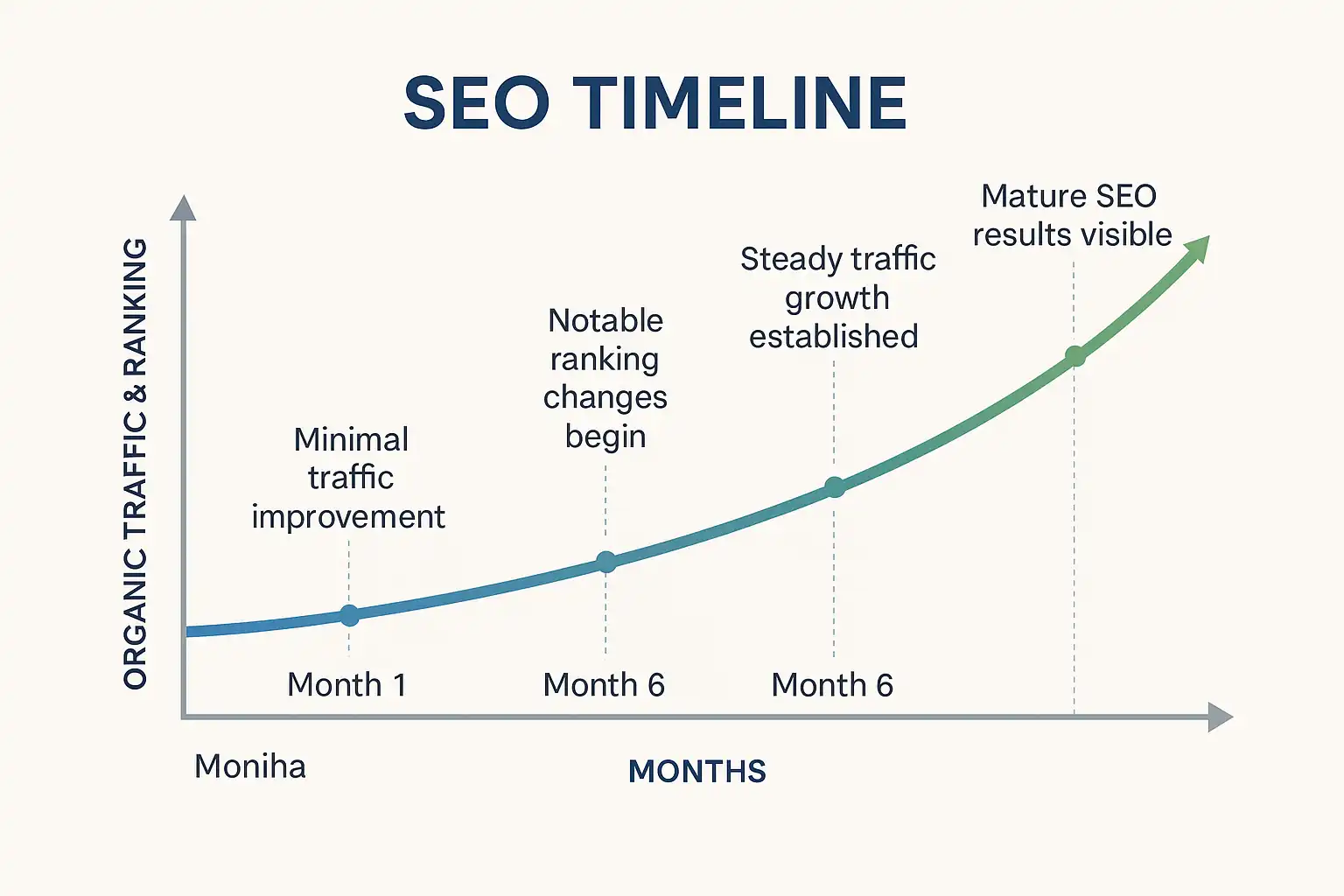
The SEO timeline describes how long it takes to see measurable improvements in organic search visibility after launching SEO efforts. Grasping this timeline is essential for setting clear expectations and planning sustainable growth.
Understanding Organic Traffic Growth
Organic traffic growth is the increase in visitors from unpaid search results as a website gains credibility and ranks higher. Growth doesn’t happen overnight—most sites experience gradual rises as new pages are indexed and start to earn trust. According to Definition, many sites begin to see small fluctuations in a few months, but significant traffic gains typically take longer. In practice, the compounding effect of consistent publishing and ongoing optimization is what eventually drives steady organic growth.
Teams often find early months frustrating when traffic plateaus, then notice a climb after crossing certain authority thresholds. Using a platform with automated content automation can help fill these plateaus by ensuring a regular publishing schedule and improving your chances of catching those early growth signals.
Key SEO Timeframe Terms
SEO timeframe terms are the concepts used to describe each stage of the SEO process and its expected duration. You’ll hear phrases like: "indexing speed" (how quickly pages appear in search), "ranking lag" (the delay before rankings shift), and "traffic ramp-up" (the period when visibility starts translating to visits). These help teams communicate realistic deadlines to stakeholders.
Honestly, many businesses misjudge these definitions—expecting traffic much faster than is typical. See keyword research processes for more information on picking keywords that actually match your domain’s realistic growth period. Knowing the difference between a page being indexed and ranking for competitive searches will save you a lot of stress along the way.
How Search Engine Ranking Changes
Search engine ranking changes refer to the shifts in a site’s position on result pages due to updates, optimization, and new content. Ranking flux is normal—especially right after changes are made. Early on, you might see keywords jump up, drop, or bounce around the second and third pages.
In our experience, consistent content updates and tracking via keyword tracking tools provide vital feedback. The downside? Effects aren’t linear. Sometimes a big technical fix moves the needle quickly, but more often, progress is uneven. Monitoring rankings helps you spot patterns and adjust tactics before bigger traffic shifts follow.
Info: SEO timelines vary. Early movement in rankings may be visible before meaningful traffic growth; patience and regular tracking are key to seeing lasting results.
Why SEO Takes Time to Deliver Results
SEO isn’t immediate—results unfold gradually, shaped by search engine algorithms, competition, and site history. If you’re wondering how long does SEO take to work, it’s important to understand why this process rewards patience, not shortcuts.
Key Benefits of a Measured Approach
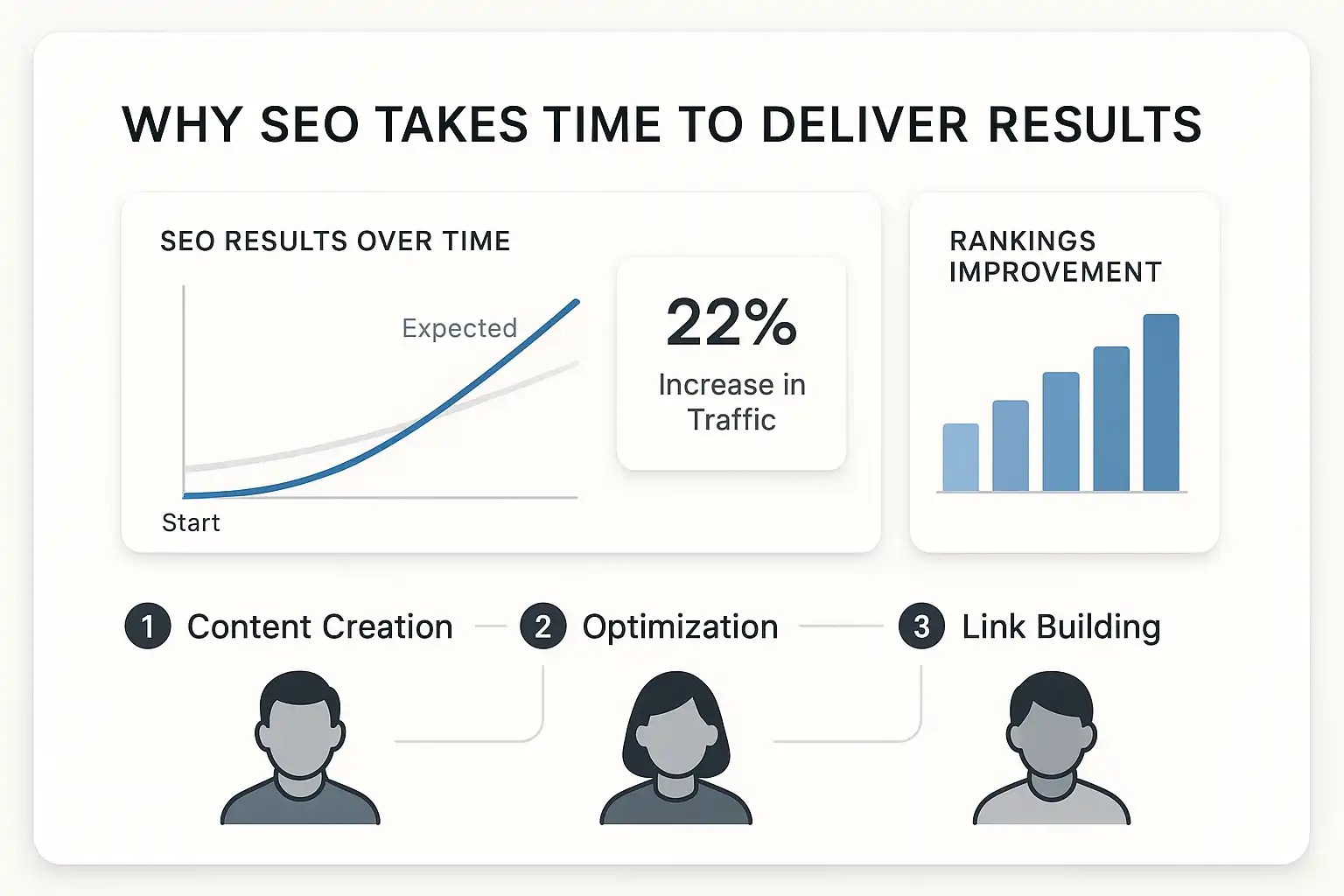
Measured SEO strategies consistently outperform rushed tactics because search engines prioritize stable, trustworthy growth. According to Veecotech, gradual improvements signal legitimacy and reduce the risk of penalties.
Consistent progress allows you to:
- Build domain authority through natural backlinks
- Identify what content actually earns results
- Spot technical issues before they compound
In practice, teams that pace rollouts have more opportunities to refine strategy based on real ranking data—instead of scrambling to fix big mistakes. The upside? Fewer ranking drops and more sustainable traffic. If you need automation without sacrificing quality, exploring content automation integrations might help maintain consistent publishing cadence.
Typical Use Cases for SEO Timelines
Common SEO timelines fit predictable scenarios. "SEO timeline" is the period from launching a new campaign to seeing substantial rank movement and organic traffic gains. Here’s how it often breaks down:
- Brand new websites typically wait months for first visible jumps
- Established sites launching new content might see early wins in weeks
- Local businesses often move faster on hyper-targeted terms
Realistically, outcomes depend on domain strength, competition, and keyword difficulty. Many find a phased approach—prioritizing technical fixes, then layering in content and backlinks—works best. Monitoring progress with tools from the Topical Authority page can set healthy expectations.
Why Most SEO Guides Get This Wrong
Most SEO guides mislead people about how long does SEO take to work because they ignore the variables unique to each site. Many promise overnight wins, but in practice, search engines rarely reward rushed campaigns.
A common pitfall is treating all projects alike, regardless of domain history or the industry’s competitive landscape. The downside? Premature focus on rankings leads to abandoned efforts just when compounding results would have started. We've seen that patients—paired with realistic keyword research—makes the difference between short bursts and compounding growth. Sound timelines reflect real-world complexity, not wishful thinking.
Expert Insight: Rushed SEO changes can trigger ranking volatility or even penalties—steady, sustained progress is safer and more likely to build lasting gains.
Core SEO Timeline Concepts You Need to Know
Understanding "how long does SEO take to work" comes down to mastering a handful of timeline concepts. The pace at which organic results appear is driven by link acquisition, content quality, technical setup, and the strategic use of keywords—all measured by real data, not guesses.
Backlink Building and Domain Authority
Backlink building and domain authority are two of the strongest predictors of how quickly SEO delivers visible results. Domain Authority is an estimate of your website’s trust and influence based on the quality and number of inbound links. More authoritative backlinks signal to search engines that your content deserves better rankings.
According to The Abc’s Of Seo – The Effectiveness Of Seo, effective link building accelerates trust, but not all links carry equal value. Links from spammy sources can slow or even damage your progress. In practice, teams often find sustained outreach brings steady improvements over several months, not overnight. Want a shortcut? Explore pre-vetted opportunities with a tool like Directory Studio. Still, nothing substitutes real relationships or mentions in reputable industry content—those are the links that truly move the needle.
The Role of Content Quality and On-Page Optimization
Content quality and on-page optimization are essential for SEO growth and speed. Content quality is how well your content answers search intent, covers relevant topics, and engages readers. Weak, thin, or duplicated content rarely ranks, even with top-tier links.
On-page optimization means optimizing technical and semantic elements—like titles, metadata, and internal linking—for each page. Small fixes often lead to quick uplifts, while deeper rewrites take time to show up in Google’s index. In practice, balancing topical depth with optimization makes more difference than endless rewrites. For streamlined, authority-matched publishing, See all integrations to scale production efficiently. But don’t expect results from content uploads alone—combining strategy with quality is what delivers ranking power.
Analyzing Keyword Research and SEO Metrics
Keyword research and SEO metrics analysis are what turn hunches into predictable SEO timelines. Keyword research is the process of identifying and prioritizing terms with realistic ranking potential, considering both search volume and keyword difficulty.
Tracking progress? Teams rely on metrics such as ranking positions, click-through rates, organic sessions, and indexed pages. Analyzing these shows which parts of your strategy are actually working. A truegeometry.com deep dive found ongoing measurement and adjustment is what separates stagnant projects from those that hit targets. Want to see how smarter keyword strategies get put into action? See keyword research to explore hands-off ways of finding winnable search terms.
Expert Insight: The fastest SEO gains often come by identifying low-competition keywords matched to your domain rating—skip the crowded search terms until you've built up real authority.
How SEO Works: The Complete Process and Timeline
Understanding exactly how SEO works—and why it takes time to deliver results—means breaking down the process into its core stages. Each step builds on the last, shaping how quickly (or slowly) you'll start to notice ranking improvements.
Step 1: Technical Health and Setup
Technical health is the foundation of every SEO campaign because search engines cannot rank a site they can’t crawl or index. According to Panzidigital, fixing crawl errors, broken links, slow loading, and missing metadata is critical if you want to appear in search results at all.
In practice, teams often discover small technical missteps—like non-indexable pages or duplicate titles—well after launch. Addressing these issues early can prevent months of invisible setbacks. The Technical Health toolkit lets you audit and monitor these problem areas, catching errors that silently drag down rankings.
Tasks here include:
- Ensuring mobile usability
- Accelerating site speed (Core Web Vitals)
- Eliminating major crawling/blocking issues
- Structuring URLs, robots.txt, and sitemaps
Most SEO timelines stall here if skipped.
Step 2: Content, Keywords, and Publishing
Content, keywords, and publishing drive real ranking progress because search engines rely on each page’s topical relevance and authority. High-quality content answers user questions and uses keyword phrases in naturally relevant ways. Platforms like SEO Ladders now automate much of the keyword discovery process, helping teams focus on winnable queries rather than just chasing high-volume ones—this matters more than most guides suggest.
Realistically, content has to be published and indexed before any results appear. A common pitfall is producing high-value articles but not releasing them consistently, leaving your SEO on pause. In our experience, setting a simple content calendar—preferably with automation—cuts delays and paces growth in line with how long SEO takes to show results.
Important steps are:
- Targeting achievable keywords
- Publishing fresh, useful content frequently
- Optimizing on-page SEO (headlines, meta, internal linking)
- Monitoring performance after launch
Step 3: Link Building and Trust Signals
Link building and trust signals are what transform early SEO wins into lasting search authority for your site. "Backlinks" are links from other reputable sites pointing to yours, signaling to search engines that your site is worth ranking.
Research from Panzidigital suggests consistent link acquisition is key for competitive results, but not all links are equal. Directory listings, contextual mentions, and exchange programs (like those highlighted on Link Exchange) help diversify your link profile. But quality always beats quantity here.
In reality, teams often underestimate the patience required. Early results from content updates might stall if no links arrive or if trust-building signals (like updated reviews and clear site policies) lag behind. The upside? When sustained, this step usually separates quick wins from long-term ranking shifts—and ultimately determines how long SEO takes to work for your site.
Expert Insight: Even after all steps are complete, it’s common to see ranking movement lag by weeks or months. Factor this lag into your expectations so you don’t mistake slow progress for failure.
Real-World SEO Timelines and Examples
SEO timelines play out differently depending on the age, authority, and existing footprint of a website. Let’s break down realistic expectations for both new and established sites, then share actual scenarios teams encounter when measuring SEO progress.
Brand-New Site vs. Established Domain
A brand-new site typically takes much longer to achieve SEO results than an established domain. According to Internet Marketing Ninjas, new websites often face a steep uphill battle in Google’s eyes. They start with no backlinks or history, so it’s common for them to see only minimal organic growth in the first several months.
In contrast, older domains—even those that haven’t done formal SEO—usually have some degree of baseline authority. It’s not uncommon for modest improvements to drive visible gains in 2–4 months if proper technical fixes and content updates are made. In practice, our team has found that real traction is much faster when building on an existing foundation. For those curious about how authority affects keyword targeting, check out how to match keywords to domain rating.
Case Study: Fast Results with Local SEO
Local SEO is one of the few scenarios where quick SEO wins are genuinely achievable. For service-area businesses targeting low-competition local keywords, it’s possible to see new listings rank on the first page in just a few weeks. Research from Ace Web Experts highlights multiple cases where local visibility shot up after citations and directory work.
Our own experience backs this up. When technical basics are dialed in and a strong set of location-specific pages is published, Google often indexes and ranks these pages sooner than most long-form, national content. Explore more on automated publishing to see how automation supports these fast wins.
What We’ve Seen With Consistent Content
Consistent content publication is the main driver of compounding SEO results over time. Sites that post new, high-quality articles each week gradually gain topical authority, even if rank changes seem slow at first. A common pitfall is expecting instant upticks—most of the traffic growth shows up after a few months of steady output.
Teams often find that content produced regularly (and kept updated) stacks up, leading to accelerating results as Google recognizes breadth and freshness. Platforms that automate content creation and publishing, like those with content automation workflows, can help teams stay on schedule and avoid burnout, which is key for long-term growth.
Expert Insight: For new domains, patience is essential—results rarely appear in the first three months, no matter how aggressive your tactics.
Frequently Asked Questions
Can SEO work instantly for any website?
SEO does not work instantly for any website because search engines need time to crawl, index, and rank new or updated content. Improvements in rankings typically take weeks to months depending on factors like site authority and competition. Tools like SEO Ladders help speed this process by automating optimized content creation and publishing, accelerating visible SEO results.
Why do some sites rank faster than others?
Some sites rank faster because of factors like higher domain authority, quality backlinks, faster site speed, better technical SEO, and relevant, optimized content. Established sites with trusted signals often see quicker ranking improvements. SEO Ladders helps by automating targeted, authority-matched content creation and backlinking, giving sites a smoother, faster path to ranking gains.
Is link building still essential for faster results?
Yes, link building remains essential for faster SEO results because quality backlinks boost your site's authority and improve rankings quicker. Combining link building with consistent content creation and technical SEO accelerates organic traffic growth. Tools like SEO Ladders can automate backlink earning by integrating smart internal linking and generating authoritative content, supporting faster, sustainable ranking improvements.
What are the biggest timeline misconceptions about SEO?
The biggest timeline misconceptions are expecting quick results and underestimating SEO complexity. SEO typically takes 3 to 6 months or longer to show meaningful impact due to factors like competition, domain authority, and content quality. Rapid ranking gains are rare; consistent, quality content and gradual optimization are key. Tools like SEO Ladders help automate and streamline this ongoing process, making timeline expectations more realistic.
How do I know if my SEO is on track?
You can tell if your SEO is on track by monitoring key metrics such as ranking improvements, organic traffic growth, and keyword performance over time. Tools like SEO Ladders provide automated keyword tracking and rank analysis, giving clear insights into progress. Consistent content publishing, backlink quality, and improved site health also indicate effective SEO efforts.
Conclusion
SEO progress doesn’t happen overnight—knowing what drives the timeline can save you a ton of frustration and keep your strategy grounded in reality. Here’s what to do next:
- Benchmark your current rankings before you make changes
- Map out the full SEO process for your website, from keyword research to technical fixes
- Track your rankings weekly to spot improvements and plateaus
- Adjust your expectations for steady growth over months, not weeks
Stay consistent, measure what's actually moving the needle, and trust the timeline. ↑ Back to top
Curious what realistic SEO progress looks like for your business? Explore how SEO Ladders automates growth, tracks important ranking milestones, and accelerates your organic results.
Want this done for you? SEOLadders finds the topics, writes the articles, and gets you cited by AI and ranking on Google, on autopilot.
7-day free trial · Cancel anytime