
Table of contents
TL;DR
- Actionable ways to generate leads for SEO
- Best tools for automated SEO client acquisition
- Conversion tips to turn visitors into leads
You’ve poured hours into ranking your website, but your inbox is quiet and nobody’s reaching out. If you’re an SEO consultant or digital marketer, the real heartbreak isn’t your traffic—it’s the lack of qualified leads turning that hard-earned visibility into new business.
This guide cuts through the noise on how to generate leads for SEO. You’ll find step-by-step methods, the right tools, and tested conversion tactics to help you attract prospects, capture them on your site, and avoid the common traps that derail most SEO lead funnels. Let’s get you from ranking to real results.
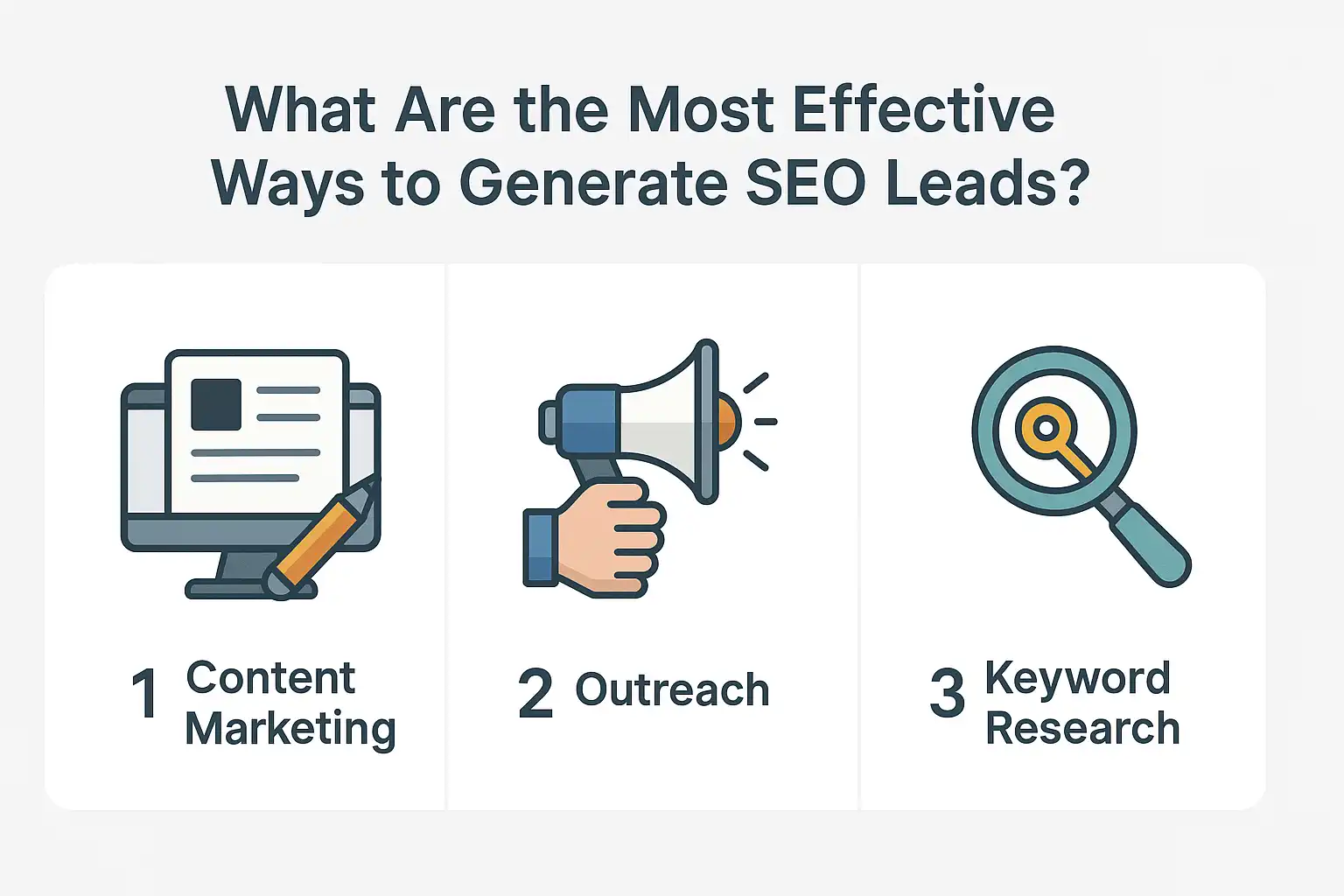
What Are the Most Effective Ways to Generate SEO Leads?
Generating SEO leads involves far more than simply driving traffic. You need strategies that connect with qualified prospects and prompt them into action. Here are key approaches—and what actually moves the needle for lead generation in the SEO space.
Lead Generation Strategies Overview
Effective SEO lead generation strategies are a mix of inbound and targeted outbound techniques that guide prospects from awareness to conversion. The most impactful approaches usually combine multiple channels:
- Content-driven landing pages: Create pages targeting high-intent keywords (see SEO Ladders’ keyword research) your ideal customers search for.
- Educational webinars and resources: Offering value up front helps build trust and creates soft entry points for future outreach.
- Directory submissions: Being featured on reputable directories can capture traffic and leads that are researching SEO services. Tools like Directory Studio help streamline this often-overlooked tactic.
- Smart automation: Using AI tools can automate initial outreach and follow-ups but should be paired with authentic touchpoints.
In practice, agencies often blend organic inbound with carefully crafted outbound, noting that over-relying on one channel alone rarely delivers steady, scalable results.
Practical Outreach Methods
Practical outreach methods for SEO lead generation include cold email, social engagement, and partnership requests that speak directly to a prospect’s unique needs. Cold outreach works best when it’s personalized—in our experience, referencing a prospect’s recent blog post or Google ranking grabs their attention.
Here’s a sequence that tends to work:
- Identify fit by reviewing a potential client’s search presence.
- Personalize the pitch with an actionable insight (not a template).
- Offer value, like a free audit or preview—be specific and low-pressure.
- Follow up within a few days—automation helps, but always review manually before sending.
We’ve found smart internal tools—think content automation integrations—make this process more consistent. But conversion depends on relevance and timing, not just outreach volume.
Common Pitfalls to Avoid
Common pitfalls in SEO lead generation include chasing irrelevant keywords, sending generic outreach, and measuring success by sheer traffic rather than qualified leads. Generic messaging almost never works—prospects spot cut-and-paste emails instantly. Another trap: focusing on vanity metrics like pageviews instead of real conversions.
Teams sometimes overlook nurturing warm leads. Just because a prospect isn’t ready today doesn’t mean they won’t convert later. Consistent follow-up—without spamming—often separates successful pipelines from stagnant ones. And watch out for over-automating: the downside? It can strip out the personal approach that sets your brand apart.
Why it matters:
- Increases qualified pipeline size
- Saves time and resources
- Builds long-term relationships with prospects
Expert Insight: The strongest SEO lead pipelines mix tailored inbound with highly-relevant outreach—automation works, but a human touch is what consistently closes deals.
How to Use Keyword Research and Content Marketing for Lead Generation
Keyword research and content marketing work together to attract qualified leads for SEO services. Choosing the right keywords and publishing targeted content makes it possible to pull in prospects who are ready to take action.
Targeting High-Intent SEO Keywords
High-intent SEO keywords are terms that indicate a user is closer to taking action, often used by people searching for solutions or service providers. The fastest way to attract leads is by focusing on these commercially oriented keywords aligned with your expertise or offerings. In practice, many teams waste effort chasing high-volume terms that their site can’t rank for. Instead, matching keywords to your domain authority—and filtering based on true search intent—helps avoid unqualified traffic.
A hands-on method: create a short list of focus keywords with clear buying signals (like “SEO lead generation service” or “SEO agency for B2B”), and evaluate difficulty with tools that account for your current ranking power. Solutions like SEO Ladders’ keyword research automation simplify this by identifying attainable, high-conversion opportunities tailored to your site’s authority.
Why it matters:
- Attracts visitors ready for outreach or demo requests
- Reduces time wasted on non-converting keywords
- Enables smarter content planning and ROI measurement
Content Types That Attract Leads
Lead-generating content is any SEO-focused asset designed to capture and qualify visitors who could become customers. Not every blog post does this—formats matter. Some of the most reliable options include comparison guides, in-depth how-tos, and topic-specific case studies.
Here’s what actually works (in our experience):
- Problem-solution articles targeting service-intent keywords
- Comparison templates (e.g., your process vs. a popular alternative)
- Showcase case studies with outcomes (protect client details, but highlight results)
- Interactive checklists, calculators, or templates that collect emails
Honestly, teams often underestimate the impact of swapping generic listicles for focused, actionable resources. The difference? High-value content typically brings in users who’ll submit contact forms or request calls. To streamline planning, try the Article Outline Generator for creating clear, SEO-friendly outlines instantly.
Using SEO Ladders for Content Automation
Content automation is the process of using tools to create and publish SEO content at scale—without manual effort. It’s especially effective for lead generation when paired with intent-matched keywords. Systems like SEO Ladders’ Schedule & Publish take care of the heavy lifting, from keyword clustering to scheduled, AI-written articles equipped with internal links and media.
In practice, automating this process lets you:
- Publish on a set calendar—Continuity builds compound search traffic.
- Dynamically adjust topics—Algorithms refocus new articles as keyword trends shift.
- Scale without hiring writers—You get consistent output, freeing up your team’s time.
The downside? You’ll need upfront setup and careful review to ensure on-brand messaging. But for most, the ability to publish dozens of conversion-targeted articles monthly—without bottlenecks—makes this approach stand out.
Expert Insight: When using content automation, set aside time each month to audit top-performing articles and refresh any sections that may have become outdated or off-message. This keeps your leads relevant.
Best SEO Tools to Find and Capture Qualified Leads
Choosing the right SEO tools is fundamental if you want to understand, attract, and convert high-quality leads organically. For anyone serious about how to generate leads for SEO, analytics and automation platforms make the difference between random site visits and a predictable lead pipeline.
Essential Digital Marketing Analytics Tools
The most effective digital marketing analytics tools are those that clarify which channels and content generate qualified SEO leads. Google Analytics, for instance, remains a core platform for tracking organic traffic, user journeys, and on-site conversions—giving you clarity on what drives real inquiries (not just visits).
However, teams often realize standard analytics are limited when it comes to uncovering keyword-level insights or automating content adjustments. In practice, advanced solutions like Topical Authority allow marketers to pinpoint which keywords attract the right audiences and which pages convert best. When set up properly, you can:
- Visualize ranking changes for high-intent phrases
- Spot low-hanging fruit keywords sitting near page one
- Sync keyword gaps to your content calendar
Why it matters:
- You see where to invest effort (and stop guessing)
- It’s easier to update underperforming content
- You’ll connect analytics to tangible business outcomes
Integrating Inbound Marketing Platforms
Integrating inbound marketing platforms lets you centralize lead capture, automate nurturing, and tie analytics to content workflows. An inbound marketing platform is a software suite that automates the process of attracting visitors, converting them to leads, and engaging them until they’re ready to buy.
In real-world use, these platforms eliminate busywork by syncing keyword research, blog publishing, email follow-ups, and lead scoring. Solutions like SEO Ladders’ Schedule & Publish even bridge content creation with direct CMS publishing—meaning leads from SEO articles land directly in your funnel, without manual uploading. The result? Marketers gain time for strategy while ensuring no qualified lead slips past.
Teams often find the transition tricky if integrations are fragmented, so favor tools with a solid integration road map. Check user reviews before diving in—gaps between promise and execution are common here.
Comparison: SEO Ladders vs. Other Tools
SEO Ladders offers an automated workflow that covers keyword research, authority-matching, AI article creation, internal linking, and auto-publishing—features that differ from many general SEO tools. Here’s how it compares on core criteria:
| Feature | SEO Ladders | Most SEO Tools |
|---|---|---|
| Automated content | Yes | Rare |
| Authority-matched keywords | Yes | Not typical |
| One-click publishing | Yes (WordPress/Webhook) | Rare |
| Keyword gap integration | Yes | Some |
| Pricing transparency | Clear plans | Varies |
Experienced teams appreciate not just automation but the platform’s focus on targetability—especially for businesses that want more than tracking metrics. The downside? Full automation isn’t right for brands requiring bespoke creative, so consider your needs carefully.
Expert Insight: The most valuable tool is the one your team will actually use consistently—feature overload often leads to adoption failure, so prioritize usability over sheer volume.
Why Most SEO Lead Funnels Fail (and What Actually Works)
Most SEO lead funnels don’t deliver steady results because they misunderstand what persuades visitors to become real leads. Here's why so many efforts fizzle out—and the smarter tactics that consistently attract and convert prospects when you’re figuring out how to generate leads for SEO.
Misaligned Conversion Rate Optimization Efforts
Conversion rate optimization (CRO) is the process of improving website elements to increase the percentage of visitors who become leads. The main issue? CRO work often targets metrics that don’t correlate with actual leads generated, like page views or generic engagement rates.
Teams regularly pour resources into tweaks—popups, new button colors, even exit-intent modals—but rarely measure whether these changes lead to more demo requests or qualified inquiries. In practice, we’ve seen forms with extra fields (supposedly for better qualification) tank overall conversions, and multi-step signup processes lose impatient prospects early. A classic example: adding a "how did you hear about us?" field before you’ve built trust.
According to Ryan Deiss – Traffic & Conversion Summit 2015, true CRO means mapping every on-site optimization to the desired lead action—nothing else matters if visitors aren’t sending their info or requesting a call. If you want to see how automation platforms handle intent-based calls-to-action, see all integrations for reference.
Sales Funnel Mistakes We’ve Seen
The most common sales funnel mistakes in SEO lead generation are unclear offers, leaky handoffs, and premature asks that don’t match search intent. A weak call-to-action, such as a generic “Contact Us,” gives visitors no compelling reason or guidance. We've witnessed confusion when multiple signup buttons or offers clutter the page—users hesitate, bounce, or forget why they arrived.
Another problem involves sending traffic straight from blog content to sales forms without warming them up. When you skip steps in nurturing, most search visitors aren’t ready to talk budgets or timelines. On the flip side, endless nurturing sequences with little urgency cause drop-off too.
In practice, balancing educational touchpoints with timely calls-to-action lies at the heart of what actually works. Proper funnel design weaves intent—informational, commercial, or transactional—into each step. If you need tools to pinpoint the keywords that convert, see keyword research for practical examples.
Evaluation Criteria for Sustainable Lead Gen
A sustainable SEO lead funnel is a system that attracts, qualifies, and converts prospects reliably over time. The core questions to ask: Are your leads qualified and moving through your funnel, or just filling forms? Do you measure what happens after someone downloads a guide—or does the trail go cold?
To evaluate:
- Track the conversion to real conversations or sales, not just emails captured
- Match funnel stages to content and search intent (informational, evaluation, ready-to-buy)
- Revisit analytics monthly: which steps stall, where does friction spike?
Teams often discover vanity conversions—lots of leads that never engage with sales. Real progress comes from tinkering, then watching what actually moves pipeline numbers. For insights on cost, capacity, and feature tradeoffs, check current Pricing structures as a reference.
Why it matters:
- Reduces wasted sales effort
- Improves win rates by filtering only real prospects
- Informs future CRO and content tweaks with actual user journeys
Expert Insight: Marketers often optimize for micro-conversions (like newsletter sign-ups) that look impressive in reports but don’t result in qualified SEO leads. Always tie every test and tweak back to revenue-focused actions.
How to Optimize Your Website for Consistent SEO Lead Generation
To generate leads for SEO on autopilot, your website needs more than just keyword visibility—it should actively convert visitors into qualified inquiries. Here’s how to set up your site for steady, predictable lead flow driven by search.
Conversion-Driven Website Elements
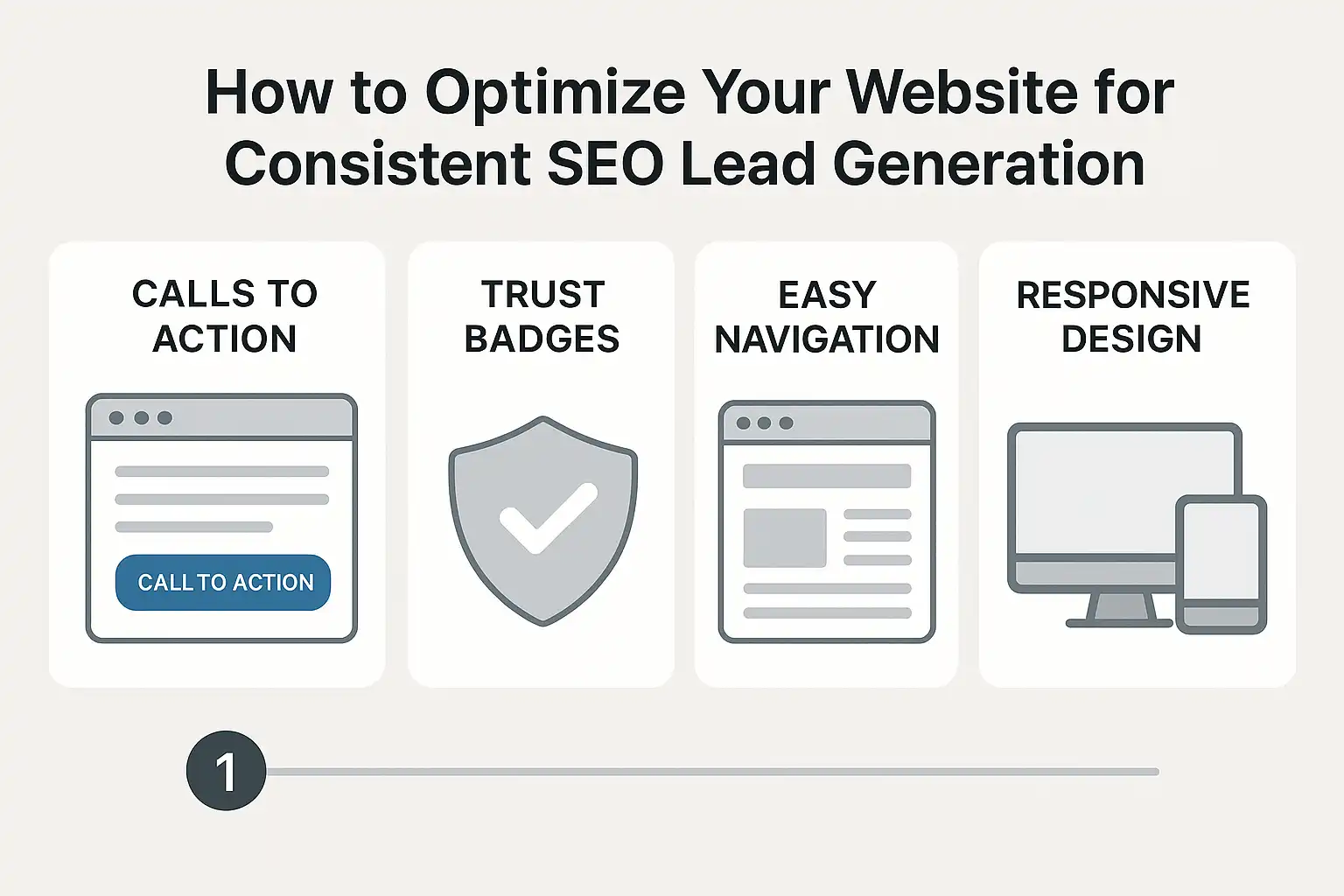
Conversion-driven website elements are features that capture visitors’ attention and turn them into leads. Clear call-to-actions (CTAs), benefit-focused landing pages, and persistent contact options are crucial for guiding users from search to inquiry.
Look for these on effective SEO agency sites:
- Prominent, uncluttered CTAs on every key page
- Streamlined forms (keep fields minimal—name, email, maybe a short message)
- Live chat, chatbot, or callback request options for instant engagement
- Social proof signals like testimonials and client logos
In practice, small tweaks can have outsize effects. A button color change raised opt-ins for one consulting team—though it’s not magic for everyone. If you want to build content around high-converting topics, tools like the Article Outline Generator help ensure your blog posts guide visitors toward conversion.
Building Trust and Authority Signals
Trust and authority signals are elements that reassure potential leads your business is reputable, professional, and competent. According to Brainguru’s overview of top lead generation strategies, visible proof—such as Google reviews, case studies, and external certifications—can significantly impact conversion rates.
In our experience, missing trust indicators is a common reason for low lead volume. Include:
- Real client testimonials, not just names and logos
- Third-party ratings (link to your Google reviews)
- Explainer videos or detailed service breakdowns
- Author bios with credentials
Think beyond the homepage—add these to landing pages and even service descriptions. Over time, this helps your SEO not just bring traffic, but convert at a higher clip.
Tracking and Improving Your Funnel
Tracking and improving your SEO lead funnel means measuring where visitors drop, and constantly testing changes to improve results. Funnel tracking tools let you pinpoint which page or form fields lose users, and where tweaks add the most leads.
Here’s a simple three-step process:
- Map your lead funnel: Mark every conversion step, from landing page to inquiry.
- Review performance: Use analytics to spot exit points and bottlenecks.
- Test changes: Adjust CTAs, experiment with form fields, and iterate.
Most teams struggle to get reliable attribution. Connecting Topical Authority to your analytics setup can clarify which keywords actually generate qualified leads, not just traffic.
Expert Insight: Lead generation is rarely about more traffic—it’s about precise conversion flow and establishing credibility at every visitor touchpoint.
Frequently Asked Questions
What is the fastest way to generate SEO leads?
The fastest way to generate SEO leads is by targeting low-competition, high-intent keywords with tailored content that matches your domain authority. Automate this with tools like SEO Ladders, which speed up keyword research, content creation, and publishing, helping you quickly attract and convert leads through scalable, SEO-optimized articles.
How does keyword research support lead generation?
Keyword research supports lead generation by identifying the specific terms potential customers use when searching, allowing you to create targeted content that attracts qualified traffic. This focused approach improves your website's visibility for relevant queries, increasing the chances of converting visitors into leads. Tools like SEO Ladders automate keyword research and optimize content to match user intent, making it easier to generate consistent leads through organic search.
Can automation tools replace manual outreach for SEO leads?
Automation tools can streamline and scale lead generation by handling repetitive tasks, but they cannot fully replace manual outreach. Personalized communication and relationship-building remain essential in converting SEO leads. Combining automation, like SEO Ladders' AI-driven content and keyword tools, with thoughtful manual outreach offers the best results for lead generation.
What are the biggest mistakes with SEO lead funnels?
The biggest mistakes in SEO lead funnels include targeting overly competitive keywords beyond your domain authority, neglecting clear conversion paths, and failing to nurture leads effectively. Poor content relevance and weak calls-to-action also reduce funnel efficiency. Tools like SEO Ladders help avoid these by matching keywords to your site's authority and automating optimized content creation and publishing, ensuring steady, quality lead flow.
Does content marketing work for local SEO lead generation?
Yes, content marketing is effective for local SEO lead generation. Creating location-specific, valuable content helps businesses rank higher in local search results and attracts nearby customers. SEO Ladders supports this by automating local SEO content creation with location-optimized keywords and embedded local schema, making it easier to reach and convert local audiences consistently.
Conclusion
Success with SEO lead generation boils down to pairing strategic content with clear conversion paths, and never leaving your funnel to chance.
- Audit your funnel to spot friction points where leads fall through
- Use intent-driven keyword research to target ready-to-buy queries
- Set up lead magnets or content upgrades on your top pages
- Test and tweak your CTAs to boost email signups and demo requests
- Monitor results weekly and refine based on real conversion data
Persistence always pays off—the leads you want are just a few smart tweaks away. ↑ Back to top
Ready to automate your SEO lead generation and save hours every week? Try scalable, conversion-focused methods with SEO Ladders’ free trial and see how effortless consistent pipeline growth can be.
Want this done for you? SEOLadders finds the topics, writes the articles, and gets you cited by AI and ranking on Google, on autopilot.
7-day free trial · Cancel anytime