
Table of contents
TL;DR
- Local SEO targets customers near your business
- Appearing in the Google map pack boosts trust
- Citations and reviews directly influence rankings
- Consistent NAP info is key for local visibility
You open another day’s sales report and realize fewer people are walking through your door—and your website isn’t winning any new local customers either. For small business owners, missing out on people right in your neighborhood can feel both frustrating and costly, especially when you know they’re searching on Google for businesses just like yours.
This article lays out exactly why local SEO is important for small businesses like yours. You’ll get a clear explanation of how local SEO works, the key strategies behind it, and real-world examples of local businesses seeing real results—so you can finally reach the people who matter most: your nearby customers.
What Is Local SEO? A Clear Definition
Local SEO refers to the strategies and actions used to help a business appear in search results when people look for products or services nearby. Understanding its definition and components is essential for small businesses aiming to increase visibility with customers in their area.
Defining Local SEO and Its Role
Local SEO is the process of optimizing a business’s online presence to attract more customers from relevant local searches. This includes both Google’s organic rankings and features like the local map pack. According to CTRify, local SEO ensures that businesses show up when potential customers search for products or services in their specific area, especially on mobile devices.
In practice, small businesses focus on local SEO to appear on Google Maps, increase walk-in traffic, and prompt calls or visits from nearby searchers. This matters more than most realize—not every search gets a national result, and showing up locally can make a direct difference in daily revenue. You’ll see how automated content built around your topics helps with much of this work for busy owners.
Key Local Search Terminology
Understanding a few foundational terms is important for anyone new to local SEO. NAP stands for name, address, and phone number—the primary business information Google and customers rely on. Citation refers to an online mention of your NAP on another website, helping verify business legitimacy. Map pack describes the cluster of local listings shown above organic results for location-based queries.
From actual client work, teams often stumble by confusing citations (business listings on external directories) with reviews (customer feedback directly on Google or Yelp). Here’s a quick rundown:
- GMB/Google Business Profile: Your core listing for search and maps.
- Service area: The geographic region your company is targeting.
- Schema markup: Code used to help search engines recognize local service signals.
If you want to review practical local keyword ideas, the Keyword Ideas tool is a good starting point.
How Local SEO Differs from General SEO
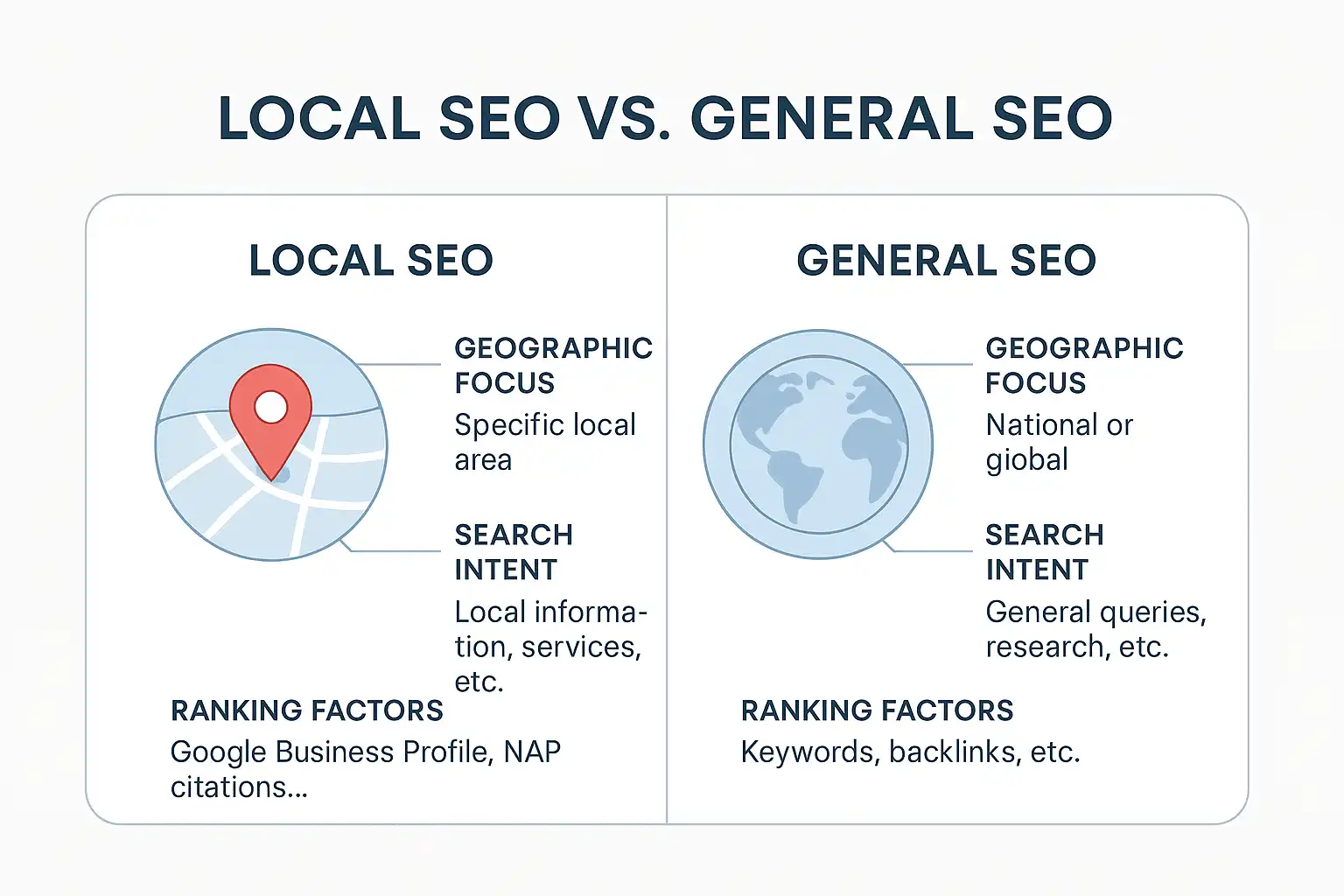
Local SEO involves unique ranking factors not found in traditional SEO. Businesses targeting local visibility rely on proximity, citations, and customer reviews, while general SEO prioritizes site-wide authority, backlinks, and broad keyword coverage.
Here’s a direct comparison:
| Aspect | Local SEO | General SEO |
|---|---|---|
| Target Audience | Local shoppers | Wider/global audience |
| Major Ranking Signals | GMB, reviews, citations | Content & backlinks |
| Results Placement | Map pack, local organic | Organic listings only |
Honestly, lots of small businesses expect local rankings to work just like national SEO—they don’t. If you want content crafted for your city, automated content automation can match intent specifically for local queries, not just broad topics.
Expert Insight: Local SEO strategies usually give the highest ROI for businesses relying on walk-ins, phone calls, or local service appointments—think restaurants, clinics, or trades.
Why Does Local SEO Matter for Small Businesses?
Local SEO closes the gap between small businesses and customers searching nearby. By focusing on signals Google weighs for maps and local packs, businesses gain more visibility and trust in their immediate market.
Key Benefits of Local SEO for Local Search Rankings
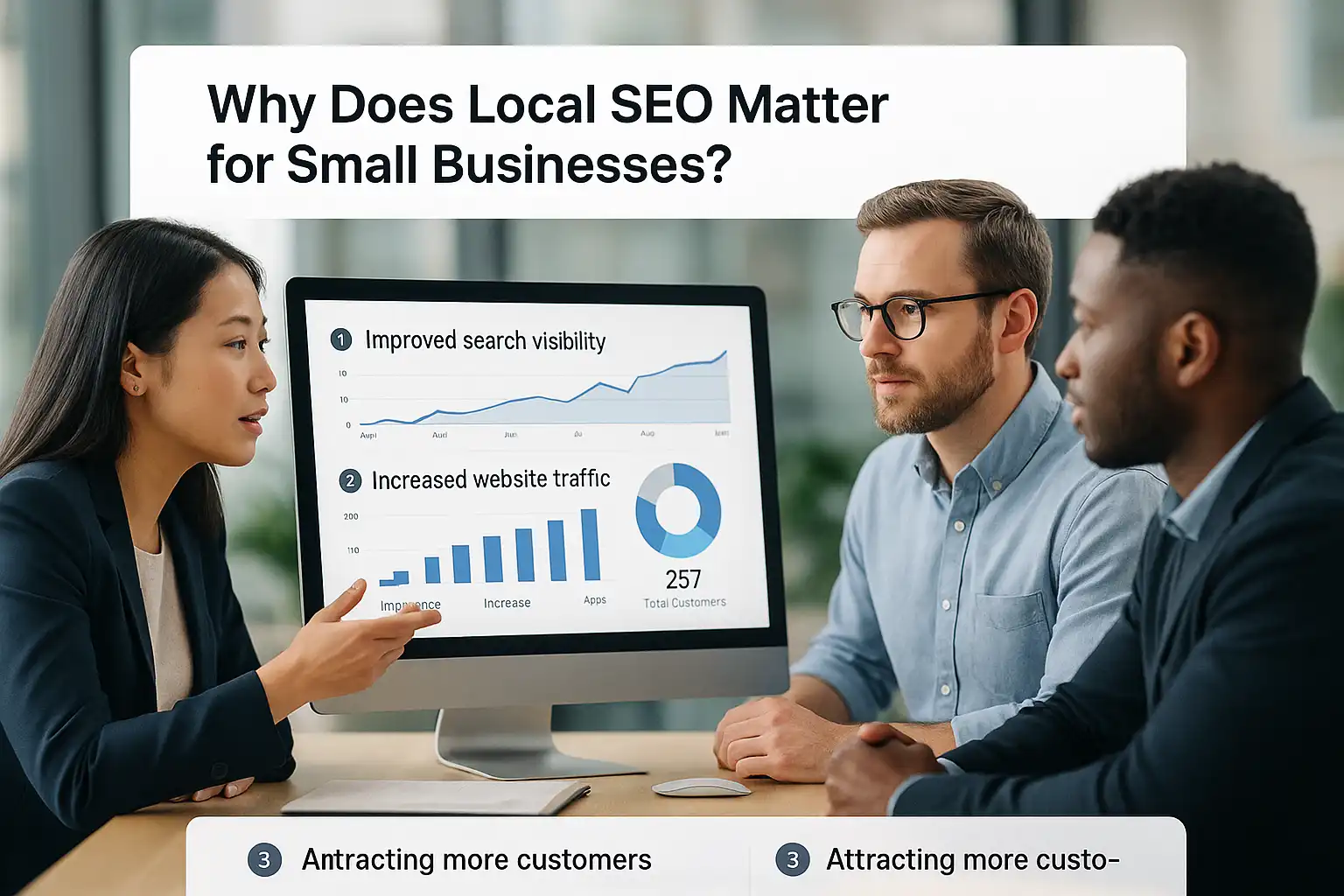
Local SEO is the process of optimizing your online presence so your business ranks higher in location-based searches. According to Local SEO Services, well-crafted local SEO helps small businesses appear more frequently in Google's map pack and local listings—directly where customers look when they're ready to act.
A strong local presence isn’t just about showing up; it’s about being chosen. Consistent business information, positive reviews, and relevant local content all boost your credibility in search. From experience, neglecting citation accuracy or Google Business Profile updates is a common way businesses lose their local edge—even if they already rank well organically.
Want more detailed tactics ready to implement? The Local Seo platform offers targeted solutions for optimizing business details and content for each city or service area.
Most Valuable Use Cases: Driving In-Person and Online Conversions
The most valuable use cases for local SEO are driving calls, walk-ins, and web conversions from local intent queries. Local SEO connects you to people searching for goods and services in their surrounding area—think “bakery near me” or “emergency plumber open now.”
In practice, these searches often lead directly to a visit or purchase, bypassing the longer research cycle of national queries. Small businesses see this firsthand: after optimizing for local keywords, they track more requests via call buttons, map directions, and reservation links.
Want to see what keywords are actually bringing in customers? Use tools like Topical Authority to monitor your position for high-intent local terms and observe how they impact real customer flows.
What Most Businesses Overlook About Mobile Optimization
Most businesses underestimate the impact of mobile optimization on local SEO rankings. Research consistently shows that the majority of local searches happen on smartphones, often when people are already in your neighborhood.
If your website isn’t easy to use on mobile—slow loading, hard-to-read text, no click-to-call button—you’ll lose out to competitors who deliver a better experience. In practice, this matters even more for service businesses, where urgency and fast access can make or break a sale.
For a closer look at technical mobile updates that move the needle, the Technical Health guide covers best practices for site speed, navigation, and local usability.
Tip: Even small changes to your Google Business Profile, like updating holiday hours or adding new photos, can significantly boost local engagement and rankings within days.
Core Local SEO Concepts You Need to Know
To understand why local SEO is important, it’s critical to master several key concepts that directly impact your visibility in local searches. Local businesses often overlook these basics, but ignoring them can mean missing out on the map pack—and on customers.
Google My Business: Your Essential Map Pack Listing
Google My Business is the central listing that allows businesses to appear in Google’s map pack and local search results. Claiming and optimizing this profile gives you a direct line to customers searching for services nearby. Businesses that maintain accurate hours, categories, and photos see stronger local engagement. In practice, missing or outdated profiles won’t show up in the coveted map pack—even if you’re the closest business to the searcher. It’s something we see all the time: two similar stores, but one gets all the local clicks simply because their details are current and complete. According to Media Man Int Blog: SEO News, consistent optimization of your Google My Business can help improve both visibility and trust signals for searchers. There’s a quick win here—businesses can learn more about local listing optimization if they want to secure their spot in local rankings.
Citations, NAP Consistency, and Their Impact
NAP consistency means your Name, Address, and Phone must match exactly across every online mention. Search engines use these details to verify legitimacy and rank your business in local results. A single wrong digit or missing suite number can split your online presence—hurting both SEO and customer trust. Citations are listings of your business on reputable directories and websites, which act as votes of confidence for search engines. Teams often discover that solving a tangled web of old listings is more work than expected, but getting it right is crucial for ranking. If you’re unsure where your citations stand or how to improve them, local SEO platforms now offer features specifically to help audit and fix NAP issues. You can also explore curated tools like Directory Studio for quality directory submissions.
Customer Reviews and Local SEO Credibility
Customer reviews directly influence your local SEO credibility and can make or break your appearance in top local search results. More importantly, searchers trust businesses with a consistent record of genuine feedback. According to Media Man Int Blog: SEO News, reviews signal trustworthiness to both users and Google’s algorithms. In practice, I’ve seen businesses climb local results after a flood of authentic reviews, with even one negative review responded to respectfully improving their public image. Managing responses, learning where to find your reviews, and addressing concerns promptly are all essential tasks—see more about managing and responding to customer reviews for practical tips.
Expert Insight: Many small businesses ignore citation and review basics, focusing on advanced tactics before the essentials. Local rankings usually move fastest when you fix foundational listing details first.
How Local SEO Works: The Complete Process
Local SEO isn't just a checklist—it’s a series of precise actions that make a business visible to nearby customers at exactly the right moment. Here’s how the core steps work for every location-based business aiming to rank higher in their area.
Step 1: Optimizing Google My Business
Optimizing Google My Business (GMB) is the foundational first step for local SEO visibility. This process involves creating or claiming your business profile, then thoroughly completing accurate business information, categories, and photos. According to Webnonline, a full and regularly updated GMB listing directly improves local map pack rankings and pins your business to relevant local searches.
In practice, businesses often overlook consistency. Details like business hours and services need to match what’s on your site and across directories. Teams frequently forget to update GMB with seasonal changes or COVID-era adjustments, which can cause lost visibility. Linking tools that support local SEO automation—like those featured on Local Seo—can help keep listings current without manual re-entry.
Step 2: Building Citations and Managing NAP
Building citations means listing your business on reputable third-party directories with correct NAP—name, address, and phone number—details. NAP consistency is the single most important factor in citation trust. Even a minor typo across platforms can weaken your credibility with search engines, decreasing your visibility in local searches.
Local SEO practitioners usually start by auditing major directories and industry platforms, then move to area-specific sites. The downside? Manual submissions are tedious, and too many businesses rush this part, leading to mismatched addresses or outdated phone numbers. Automation tools or resources like Directory Studio can speed things up by guiding you to vetted, high-trust directories for faster local ranking results.
Step 3: Earning and Responding to Customer Reviews
Earning and responding to customer reviews is critical for building local trust signals. Customer reviews are user-generated endorsements that influence both potential customers and Google’s local ranking algorithm. The volume and quality of recent reviews often make the difference in which businesses show up first for “near me” searches.
In our experience, review management trips up even experienced teams. Timely, genuine responses help resolve complaints and show real engagement—while ignoring feedback can cause reputation issues. Questions about monitoring or responding? Resources like What are the best ways to manage and respond to customer reviews? dive into effective strategies.
Most guides gloss over this, but active review management reliably boosts conversions and local ranking cues.
Expert Insight: Consistent business information across every listing—not just Google—is essential for strong local rankings. Don’t let a single outdated phone number on a niche directory undermine your authority.
Real-World Local SEO Examples
Seeing local SEO in action makes it clear why local SEO is important for businesses focused on capturing nearby customers. Here are three distinct scenarios that showcase how strategic optimizations translate into measurable gains for different business models.
Multi-Location Restaurant Boosting Map Pack Visibility
Ranking in the map pack for multiple locations is a strong indicator of effective local SEO for restaurant chains. A common strategy involves creating unique Google Business listings for each branch, using accurate NAP details, and gathering location-specific reviews. According to Chatterchat, restaurant groups that maintain consistent listings see their outlets featured more often in map results, driving new customer visits.
In practice, restaurants find small differences in address formatting or hours can weaken their rankings in one area—even when nearby sites do well. Optimizing each profile and keeping menu, photos, and reviews up to date is the difference-maker. Tools like Local SEO automation simplify this process across dozens of branches.
Medical Practice Growing Through Location-Based Keywords
Targeting location-based keywords is fundamental for healthcare providers aiming to reach patients in their vicinity. Location-based keywords are search phrases that combine services with geographic qualifiers (e.g., 'dentist in Springfield'). In the healthcare industry, optimizing pages for multiple services and cities leads to more map and organic traffic than generic targeting. Google’s map pack and local results tend to surface practices that clearly reflect hyper-local relevance in their content and reviews.
From experience, medical offices that build out unique landing pages for neighborhoods or suburbs (not just the city center) usually outperform those with a generic site. If you want to see what strategic keyword targeting looks like in action, check out Topical Authority tools for location intent.
Home Services Company Outranking National Competitors Locally
Outranking national brands locally is possible when a home services business prioritizes local SEO basics. Consistent NAP information, review generation, and citation building push small firms above big chains for 'near me' searches in their core market. National competitors often overlook local signals, leaving an opening for businesses invested in review management and hyper-local content.
Teams often find the difference comes down to locally-optimized website sections, customer responses, and building relevant citations. Harnessing review flows and local content automation—like those explained in content automation guides—lets small businesses consistently earn top map pack spots even against well-funded brands.
Expert Insight: Even if your business serves multiple locations or specialties, Google rewards granular, city-specific optimization. Templates rarely perform as well as unique profiles and landing pages for each area.
Frequently Asked Questions
How does local SEO affect Google map pack rankings?
Local SEO directly impacts Google map pack rankings by optimizing your business's relevance, proximity, and prominence in local searches. Key factors include accurate Google Business Profile info, local keywords, consistent citations, and positive reviews. These signals help Google trust your location, making your business more likely to appear in the map pack, boosting local visibility and customer traffic.
Do reviews actually impact local search visibility?
Yes, reviews significantly impact local search visibility by influencing search engine rankings and user trust. Positive reviews improve a business's credibility and relevance, increasing its chances of appearing in local search results and Google Maps. Managing reviews effectively is crucial for local SEO success. Tools like SEO Ladders can help track and enhance local SEO performance, including review management.
Is NAP consistency more important than citation quantity?
Yes, NAP consistency (Name, Address, Phone) is more important than citation quantity in local SEO because consistent info builds trust with search engines and customers. While many citations can help, inconsistent details can hurt rankings and confuse users. Dedicated listing-management tools keep this accurate and consistent, which is what protects your local search presence.
What’s a common mistake with mobile optimization for local SEO?
A common mistake in mobile optimization for local SEO is neglecting page loading speed and usability on mobile devices. Slow-loading pages or confusing navigation can frustrate users and hurt local rankings. Ensuring mobile-friendly design and fast performance helps local search visibility. Tools like SEO Ladders automate content optimization, improving mobile-friendly SEO to better connect with local customers.
Is local SEO only for brick-and-mortar businesses?
No, local SEO is not only for brick-and-mortar businesses. It benefits any business targeting customers in specific geographic areas, including service-based and online companies serving local regions. Local SEO helps improve visibility in location-based searches, attracting nearby customers effectively. Tools like SEO Ladders support local SEO strategies by automating location-specific keyword targeting and content creation.
Conclusion
Getting found by local customers starts with understanding why local SEO is important and putting those best practices into action. Here’s how you can kickstart your local visibility today:
- Claim and fill out your Google Business Profile, making sure your info is accurate and complete
- Research and use city or neighborhood keywords directly in your website content
- Ask happy customers for more reviews, and reply to each one to build trust
- Keep your business hours, address, and contact info consistent on every online listing
Small steps like these can help you stand out in your neighborhood’s search results and win new customers in no time. ↑ Back to top
Ready to boost your local rankings and attract real, nearby buyers? Check out how SEO Ladders builds the topic clusters and location-specific content behind stronger local rankings.
Want this done for you? SEOLadders finds the topics, writes the articles, and gets you cited by AI and ranking on Google, on autopilot.
7-day free trial · Cancel anytime