

Table of Contents
How to Rank Higher in Google Searches: Actionable SEO Steps Explained
If you’re a founder or solo entrepreneur, seeing your website buried deep in Google results can feel discouraging—especially when traffic and leads depend on that visibility. The frustration grows when you can’t afford expensive SEO agencies or find the process overwhelming on your own.
This guide breaks down exactly how to rank higher in Google searches, step by step, with practical strategies anyone can apply. You’ll learn what affects your rankings, why it matters, and the difference between organic positions and paid ads—plus see real-world examples to inspire your next move.
What Is Ranking Higher in Google Searches?
Ranking higher in Google searches means your website appears closer to the top of Google’s search results for specific queries. Achieving better rankings is essential if you want to increase online visibility and attract relevant visitors without paying for ads.
Google Rankings: Definition and Basics
Google rankings refer to the position a website or webpage holds in Google’s search results for a particular keyword or query.
Sites that rank at the top of results pages tend to get the majority of user clicks. Google uses a complex algorithm with hundreds of factors to decide how sites are ranked, but the basics involve evaluating content quality, relevance, and perceived authority.
In practice, moving up even a few positions can result in noticeably more web traffic. When working on how to rank higher in Google searches, many site owners find that subtle improvements in content and technical setup pay off quickly, especially for less competitive keywords.
What Is Search Engine Optimization (SEO)?
Search engine optimization (SEO) is the process of improving your website to increase its visibility in organic (unpaid) search results on Google and other search engines.
SEO combines various strategies including content creation, technical adjustments, and earning links from other sites. The primary goal is for your pages to rank as high as possible for keywords your audience uses. While SEO may sound complex, the core principle is making your site both valuable to users and easy for search engines to crawl and understand.
Based on common implementation patterns, a mix of keyword targeting, useful content, and ongoing technical improvements usually forms the foundation of a successful SEO approach.
Key Terms: Keywords, Backlinks, Page Speed
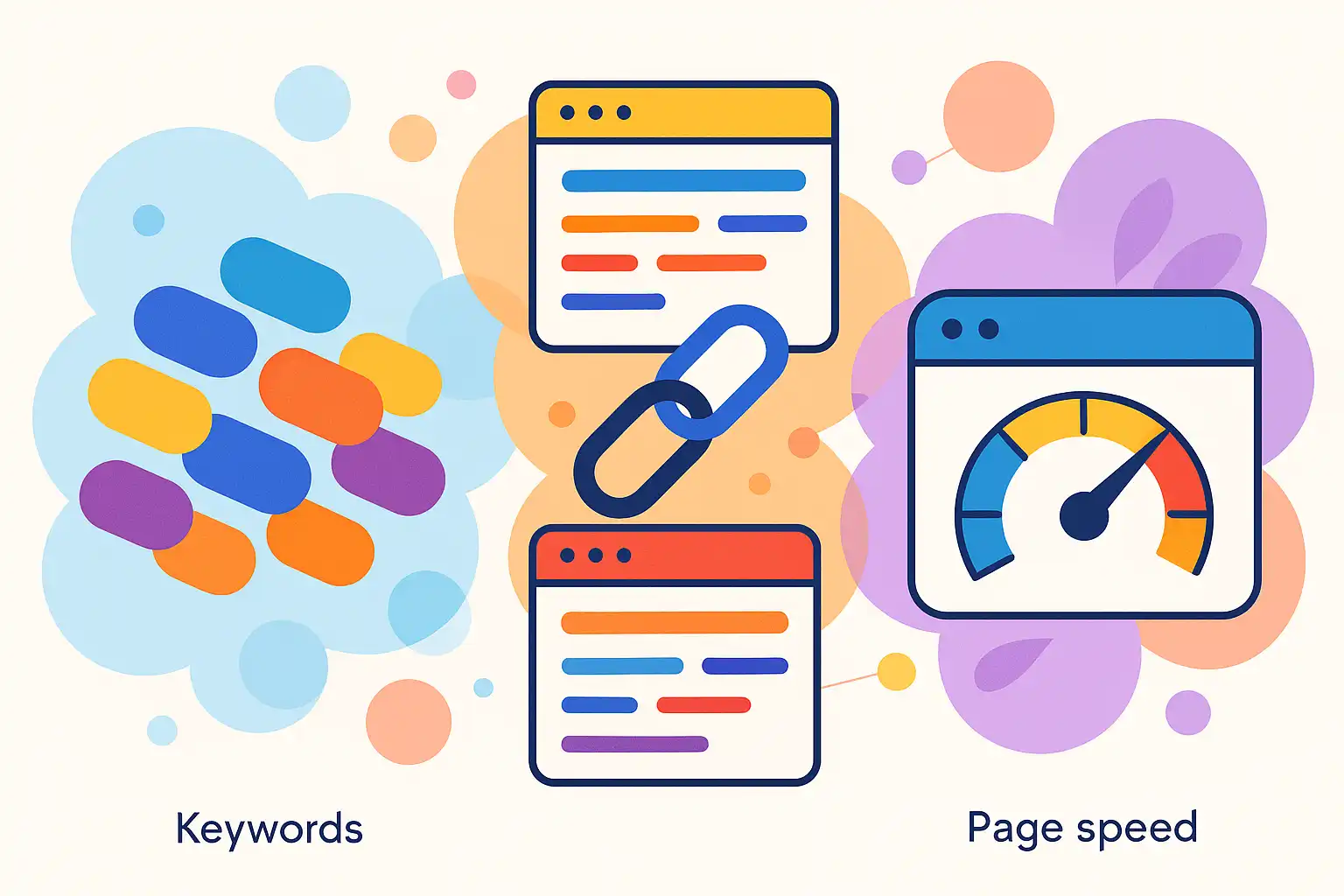
Keywords, backlinks, and page speed are foundational SEO terms that directly influence your ability to rank higher in Google searches.
- Keywords are the phrases people type into Google. Optimizing your content with appropriate keywords helps match your site with relevant search queries. Learn more about efficient Keyword Research approaches.
- Backlinks are links from other websites pointing to your page. High-quality backlinks signal to Google that your content is trusted and authoritative.
- Page speed measures how quickly your site loads. Faster sites provide a better user experience and are favored in Google’s ranking algorithm.
From firsthand experience, focusing on these elements—especially choosing realistic keyword targets and addressing slow load times—can yield meaningful improvements, even for small or newer sites.
Tip: Not all keywords are equally competitive. Targeting lower-competition, highly relevant keywords can help your site move up the rankings faster, especially when starting out.
Why Ranking Higher in Google Matters for Website Owners
Ranking higher in Google searches shapes the visibility, credibility, and growth trajectory of any website. For business owners or personal brands, understanding why this matters is a first step to building a presence that gets noticed, trusted, and chosen online.
Key Benefits: Visibility, Authority, and Growth
Ranking higher in Google directly impacts visibility, authority, and business growth. High-ranked pages appear on the first page of search results, making them more likely to get viewed and clicked by users actively searching for solutions.
- Visibility means more people see your site. The top results on Google capture the majority of search traffic, so being buried on page two or beyond drastically lowers your chances of being found.
- Authority is established when Google places your site at the top, signaling to users that your content is trustworthy and relevant. This trust often leads to higher engagement and credibility in your field.
- Growth is achieved as sustained high rankings direct consistent organic traffic to your site, supporting everything from lead generation to sales, email signups, or audience building.
In practice, sites that focus on how to rank higher in Google searches see more qualified visitors without relying solely on paid ads. Consistently ranking signals that both users and Google value your content, which can have a compounding effect over time as links, mentions, and shares improve your presence further.
Common Use Cases: Ecommerce, Personal Brands, Local Businesses
Higher Google rankings matter across diverse website types, but the effects take different forms.
- Ecommerce sites benefit by appearing when users are searching for products. High rankings can increase product page clicks and improve conversion rates, reducing reliance on costly ads.
- Personal brands gain credibility and wider reach. When someone searches your name or professional focus, a top search position can open doors to partnerships, speaking engagements, or freelance opportunities.
- Local businesses depend on search for discovery by people nearby. Ranking high in local results puts you in front of customers seeking your services in their area, making SEO especially critical for restaurants, service providers, and shops.
Based on common implementation patterns, many website owners notice that improving their ranking often leads to more inquiries, calls, or sales, even without significant changes to their other marketing efforts. The increased “findability” offered by Google visibility can serve as a steady engine for growth.
Info: Sites ranking in the top results typically receive a significant share of search clicks, while those lower down often see far less traffic. Focusing on sustained, gradual ranking improvements is more effective than expecting immediate results.
Core SEO Factors That Influence Your Google Rankings
Achieving higher rankings in Google searches depends on a few core SEO factors. Google’s algorithms assess sites using complex signals, but three elements consistently matter: content quality, user experience, keyword relevance, and backlink authority.
Quality Content and User Experience
Quality content and user experience are essential for ranking higher in Google searches. Google rewards pages that provide accurate, original, and valuable information to users. Content should clearly address the topic, answer common questions, and be regularly updated to reflect the latest in the field.
Additionally, a smooth user experience signals value to Google. Factors such as easy site navigation, fast-loading pages, and mobile responsiveness all contribute. In practice, pages that are straightforward to read—free of intrusive ads, pop-ups, or clutter—tend to keep visitors engaged longer, lowering bounce rates and boosting ranking potential.
From firsthand experience, refining a site’s structure (like improving internal linking or clarifying headings) can result in measurable improvements in engagement. Implementing iterative feedback from real visitors often uncovers small issues—such as confusing menus or slow elements—that, when fixed, directly benefit both users and rankings.
Keywords and Search Intent Alignment
Keywords and search intent alignment means your page addresses what users are genuinely searching for—both the exact terms and underlying questions. For Google, content that closely matches user queries, and reflects intent (informational, transactional, navigational), is more likely to rank well (source: Digital Marketing Institute).
A practical approach is to identify keywords relevant to your audience and analyze the top-ranking results for each. Adjust titles, headings, and content so your page delivers clear answers or solutions. In practice, reviewing real search engine results for target keywords often reveals patterns—such as common subtopics or content formats—that successful pages use. Matching these expectations without copying can help close the gap between your website and competitors. Regularly revisiting keyword targeting ensures your content stays aligned with shifting search behaviors.
- Research primary and secondary keywords
- Analyze intent behind each query
- Adapt content to best serve that intent
Backlinks: Authority and Trust Signals
Backlinks are links from other websites pointing to your pages, and they remain a fundamental authority and trust signal for Google rankings. Google treats backlinks as recommendations—sites with diverse, reputable backlinks tend to earn higher visibility.
Building valuable backlinks often involves outreach, creating reference-worthy content, and establishing industry relationships. In practice, earning links is a gradual process. Not all links are created equal; those from established, relevant sites signal more authority than links from low-traffic or unrelated sources. Monitoring your backlink profile and removing harmful links are also important steps to maintain credibility. Advanced platforms now allow site owners to track their link health, identify new opportunities, and address gaps relative to competitors (Backlinks).
- Focus on acquiring links from credible, niche-relevant sources
- Regularly monitor for broken or spammy links
- Assess competitor backlink profiles to discover opportunities
Tip: Addressing even minor usability issues can help retain more visitors, indirectly supporting higher search rankings over time.
How to Rank Higher in Google Searches: Step-by-Step Process
Climbing the Google rankings requires a structured approach. To help your website stand out and attract more organic clicks, focus on these practical steps. Each action below addresses a foundational aspect of effective SEO and can be adapted to suit sites of all sizes.
1. Perform Thorough Keyword Research
Keyword research is the process of finding relevant words and phrases your target audience is searching for in Google. Understanding which terms have meaningful search volume and attainable difficulty forms the backbone of any successful SEO strategy.
- Choose keywords that match your content topics, are specific enough to target, and have realistic competition for your site.
- Factor in long-tail keywords, which can drive more qualified traffic due to their specificity and lower difficulty.
In practice, many site owners start with broad terms but quickly realize the value in identifying opportunities unique to their niche. Tools that assess keyword volume, intent, and competition help prioritize which phrases to pursue. Building your strategy on researched keywords increases your likelihood of ranking for terms users are actively searching—rather than guessing.
For a streamlined approach to keyword planning, platforms like Keyword Research can automate discovery and classification based on your domain’s current authority.
2. Optimize Content for Search Intent
Optimizing for search intent means aligning your content with what users hope to achieve when they type a query into Google. Search intent generally falls into categories such as informational, navigational, transactional, or commercial investigation.
Start by assessing the top-ranking pages for your chosen keyword to determine what intent Google is rewarding. If users are seeking tutorials, ensure your article thoroughly answers their questions. For product searches, prioritize clear comparisons, reviews, or direct purchase options.
Based on common implementation patterns, content that directly meets user needs—using clear formatting, headings, and examples—tends to outperform generic articles. Matching your tone, depth, and content type to what searchers expect signals to Google that your page offers a complete solution.
3. Improve Technical SEO and Page Speed
Technical SEO is a set of optimizations that ensure search engines can crawl, index, and understand your website effectively. Page speed refers to how quickly your pages load, which directly impacts user experience and rankings.
Common steps include:
- Fix broken links and crawl errors
- Optimize images and use modern formats (e.g., WebP)
- Minimize JavaScript and CSS files
- Monitor and address Core Web Vitals metrics
In practice, small technical errors can quietly block your pages from ranking. Using a technical audit tool often uncovers hidden problems like slow-loading scripts or missing meta tags. Routine technical checks help maintain a solid foundation for your other SEO investments.
Tip: Even modest improvements in load times can have a measurable effect on bounce rates and engagement.

4. Build High-Quality Backlinks
High-quality backlinks are links from reputable websites that point to your pages, signaling trust and authority to Google. Backlinks remain a major ranking factor, especially in competitive niches.
Focus on earning links from:
- Relevant industry sites or blogs
- Sites with recognized authority and engaged readership
- Directories or resource pages valued by your audience
Based on practical experience, outreach that highlights the unique value of your resource or content is more successful than blanket link requests. Analyze competitors to find linking patterns and identify gaps within your own strategy. Tools that monitor your backlink profile allow you to track progress and uncover problematic spam links before they harm your rankings.
5. Boost Mobile-Friendliness and User Experience
Mobile-friendliness refers to how well your site displays and functions on smartphones and tablets. User experience (UX) covers the overall ease and satisfaction visitors have while navigating your content. Google strongly favors mobile-optimized, easy-to-read sites.
Key mobile and UX tasks include:
- Using responsive layouts that adjust to any screen
- Avoiding small fonts and closely packed buttons
- Ensuring pages are easy to scroll and quick to interact with
In day-to-day site management, unexpected technical quirks can frustrate mobile users, even if the desktop version works perfectly. Testing your pages on several devices and using Google’s mobile-friendly test can catch issues early, keeping your rankings protected as search behavior keeps evolving.
Tip: A website that feels intuitive and fast on mobile devices is less likely to lose visitors—and more likely to climb the rankings.
Ranking Higher vs Paid Search Ads: Key Differences
Understanding the difference between organic SEO and paid search ads is crucial when planning how to rank higher in Google searches. Both approaches aim for visibility, but their methods, timelines, and long-term impacts are distinctly different.
How Organic SEO Differs from Google Ads
Organic SEO is the process of improving a site to increase its rankings in the non-paid results on Google. Google Ads, in contrast, are paid placements that show up at the top or bottom of search results for selected keywords.
Organic SEO relies on optimizing site content, building backlinks, and improving user experience to earn higher rankings over time. Paid search ads work by bidding on keywords; your ad appears only as long as your budget allows.
In practice, relying on organic SEO means investing time in creating valuable content and building relationships for backlinks, knowing results may take weeks or months. With Google Ads, traffic can be immediate, but once campaign budgets end, visibility typically disappears.
Short-Term vs Long-Term Results
Short-term results are characteristic of paid search ads, while long-term gains are associated with organic SEO. PPC (pay-per-click) campaigns provide instant visibility, often within hours of launching.
SEO is focused on sustainable, compounding growth. Pages optimized for users and relevance can continue ranking for months or years, bringing consistent traffic as long as searcher needs are met and the site’s authority stands.
Based on common implementation patterns, many startups use paid ads briefly to get traction, then shift resources toward SEO for lasting returns. This dual approach can help balance immediate and future needs when considering how to rank higher in Google searches.
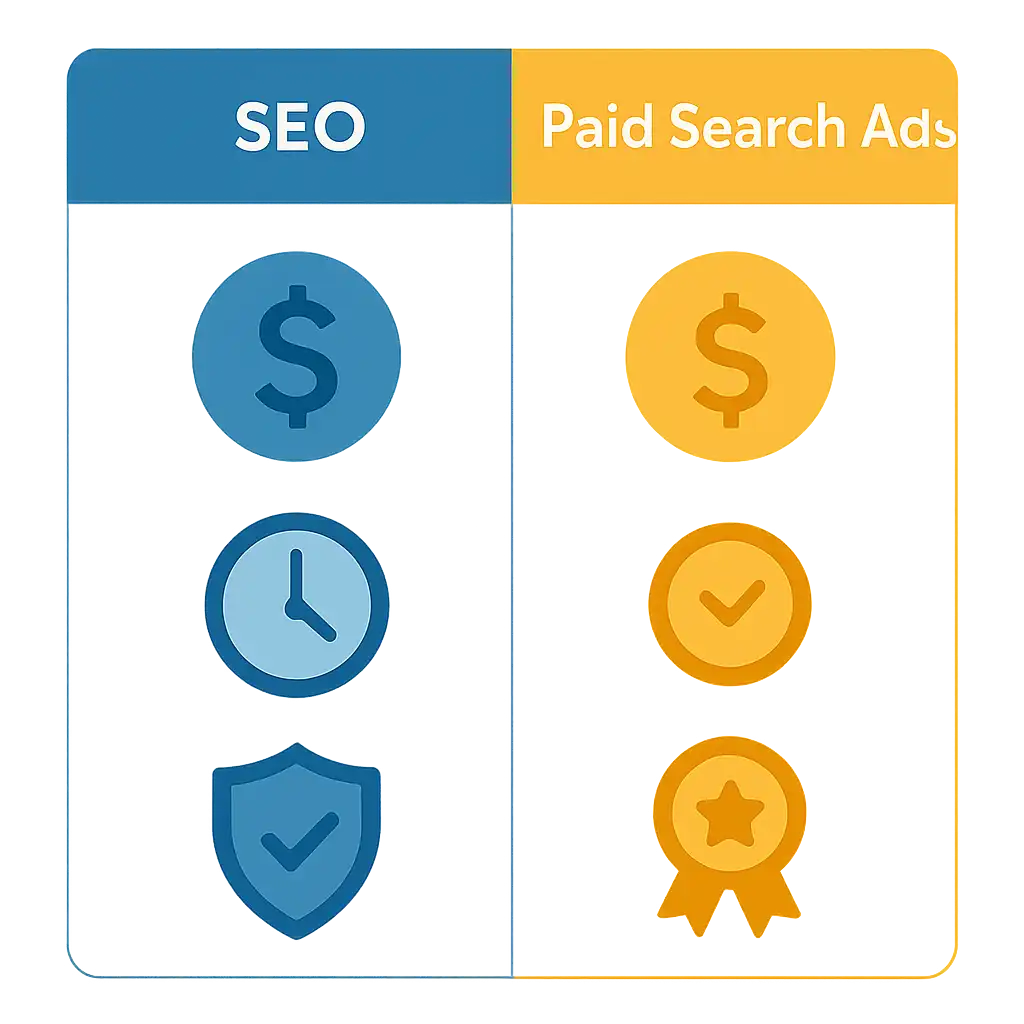
Comparison Table: SEO vs PPC
The table below summarizes key differences between organic SEO and paid search ads for businesses deciding where to invest resources:
| Aspect | Organic SEO | Paid Search Ads (PPC) |
|---|---|---|
| Cost Structure | No direct payment for clicks | Pay-per-click (each visitor costs) |
| Timing | Months to see consistent traffic | Immediate once campaign runs |
| Sustainability | Ongoing results after investment | Ends when budget is depleted |
| Trust & Credibility | Seen as more trustworthy by users | Labeled as “Ad” in search results |
| Management | Requires ongoing optimization | Requires ongoing budget & tuning |
| Skill Set Needed | Content, links, site health focus | Bidding, ad copywriting, analytics |
Tip: Many businesses blend SEO and PPC to cover both short-term and long-term acquisition goals, depending on overall strategy and available budget.
In practice, the most sustainable approach tends to involve optimizing for organic results while using paid search for targeted campaigns, product launches, or time-sensitive offers.
Real-World Examples of Ranking Higher in Google
Understanding the practical side of SEO can make theoretical concepts clearer. Here are three real-world scenarios illustrating how different types of websites have successfully improved their rankings in Google by focusing on key SEO strategies.
Example 1: Small Business Grows Organic Traffic
A small business can grow organic traffic by focusing on local SEO and targeted content. Many local businesses see improved search performance after creating dedicated pages for services or locations, optimizing Google Business Profiles, and encouraging customer reviews.
In practice, prioritizing accurate business information and adding detailed service descriptions helped a small retailer appear in local search packs and attract more nearby customers. Applying keyword research to page titles and meta descriptions ensured their main offerings matched what prospective clients actually searched for.
- Claim and update Google Business Profile
- Build location/service-specific landing pages
- Collect and respond to customer reviews
This approach highlights that addressing search intent and maintaining consistency across listings directly support higher visibility for regional queries.
Example 2: Personal Blog Reaches Page 1
A personal blog can reach Google's first page by publishing high-quality, relevant articles optimized for less competitive keywords. Bloggers who narrow their topics and answer specific search questions tend to see stronger results.
Based on common implementation patterns, a blogger in a niche field improved rankings by thoroughly researching what readers wanted—using forum discussions, Google’s “People Also Ask,” and community feedback to brainstorm topics. They then structured posts around those questions, included internal links to related articles, and consistently updated older content to maintain freshness in the eyes of search engines.
- Identify long-tail keyword opportunities
- Structure articles with headers and clear answers
- Refresh and improve content over time
This demonstrates the value of aligning content closely with user intent for sustainable organic growth.
Example 3: Ecommerce Brand Improves Rankings
An ecommerce brand can improve its rankings by addressing technical SEO issues and building authoritative links. Stores that optimize site speed, fix broken pages, and update product descriptions often experience better rankings and user engagement.
Through experience, one common pattern is prioritizing core product pages for on-page SEO improvements—ensuring each page features unique descriptions, relevant keywords, and clear navigation. Further, obtaining mentions from reputable review sites and industry blogs boosts domain authority and trust signals that Google values.
Steps typically include:
- Optimize product titles and metadata
- Resolve site errors detected in technical audits
- Invest in outreach for quality backlinks
Expert Insight: For many ecommerce sites, regularly monitoring technical health and incrementally updating content is often just as impactful as large-scale link building.
These actions combine to create a solid foundation for higher rankings and improved conversion potential.
Tip: Successful SEO improvements rely on consistent tracking—monitor your traffic and keyword positions so you can refine your approach over time.
Frequently Asked Questions
What is the fastest way to rank higher on Google?
The fastest way to rank higher on Google is to optimize your website for relevant keywords with quality content, improve site speed, and build authoritative backlinks. Focus on technical SEO fixes and user experience to quickly boost rankings. Using tools like SEO Ladders can streamline keyword research, content creation, and backlink management for faster results.
How long does SEO take to improve rankings?
SEO usually takes around 3 to 6 months to show significant improvements in Google rankings. This timeline varies based on factors like competition, website authority, and the quality of optimization efforts. Consistent content creation, backlink building, and technical fixes speed up ranking progress, but SEO is a long-term strategy requiring patience and ongoing work.
Why aren't my Google rankings improving?
Your Google rankings may not be improving due to factors like insufficient keyword targeting, poor-quality or thin content, lack of high-quality backlinks, technical SEO issues, or slow website performance. Consistently updating relevant content, fixing technical problems, optimizing for user intent, and conducting competitive backlink analysis can help boost rankings over time.
Do backlinks still matter for ranking higher?
Yes, backlinks still matter for ranking higher on Google. They signal a website's authority and trustworthiness to search engines. Quality backlinks from relevant, reputable sites boost your site's ranking potential, while poor-quality links can harm it. Combining backlinks with great content and technical SEO forms a strong ranking strategy.
How important is mobile optimization for Google rankings?
Mobile optimization is extremely important for Google rankings because Google primarily uses mobile-first indexing. This means Google evaluates the mobile version of websites for ranking and indexing. A mobile-friendly site improves user experience, decreases bounce rates, and positively impacts SEO performance, helping your site rank higher in Google search results.
How to check most visited websites globally and in a country using analytics tools and traffic ranking tools like Alexa and SimilarWeb?
To check the most visited websites globally or by country, use analytics and traffic ranking tools such as SimilarWeb, Alexa Internet (now retired but still referenced), and SEMrush. These platforms offer rankings, traffic sources, and user engagement metrics. Simply select the region or country on their dashboard to see top websites, or enter specific site URLs to analyze individual traffic data.
Sites or methods to check website traffic ranking and most visited websites worldwide; how to get data for most visited websites traffic statistics
To check website traffic rankings and most visited sites globally, use tools like Alexa, SimilarWeb, and SEMrush. These platforms provide traffic estimates, visitor demographics, and ranking data either globally or by country. For specific site traffic, Google Analytics is ideal but requires site access. Public tools aggregate data from various sources to estimate traffic and engagement.
How to check which keyword gets more traffic comparing keyword traffic analysis tools and search volume?
To check which keyword gets more traffic, compare their search volume using keyword analysis tools like Google Keyword Planner, Ahrefs, or SEMrush. These platforms show how often keywords are searched monthly. Additionally, review estimated traffic and keyword difficulty to gauge potential visits and ranking feasibility.
Conclusion
Ranking higher in Google searches takes clarity, consistency, and a focus on the steps that have genuine impact—not just surface-level tweaks.
- Audit your website for technical health issues and fix anything impacting crawlability.
- Identify realistic keywords that align with your domain authority and audience intent.
- Create authoritative, relevant content targeting those keywords.
- Build credible backlinks and monitor your SEO metrics regularly.
Ready to put these strategies into action? Try SEO Ladders' toolkit to automate content, track rankings, and accelerate your results—sign up instantly here and unlock all-in-one SEO tools for your website.
Take the first step towards transforming your website's performance with actionable SEO insights. Enhance your website's SEO strategy today!
Start for Free