

Table of Contents
TL;DR
- Define essential SEO concepts clearly.
- Explore key benefits for businesses.
- Detailed comparison with alternatives.
- Real-world examples included.
Unlocking Your Business's Potential: A Guide to SEO Best Practices
If you're a SaaS founder or part of a product-led growth team, you've likely faced the frustration of poor search engine visibility. With countless businesses competing for the top spot on search results, you need more than just a good product; you need strategic SEO insights. That's where proven SEO best practices come in. These practices are your roadmap to not only rank higher but also attract the right audience to your business.
By understanding how SEO works and why it matters for your enterprise, you'll equip your company with the right tools to drive organic traffic and ensure discoverability. In this guide, we dive deep into essential SEO concepts, differentiating them from alternative strategies, and showcase real-world examples that underscore their efficacy. With a clearer understanding of SEO best practices, you'll see tangible improvements in your website's performance, ultimately leading to increased customer acquisition and retention.
What Is SEO Best Practices? A Clear Definition
Understanding SEO best practices is fundamental to enhancing a website's visibility and ranking on search engines. These practices encompass a set of strategies designed to optimize a site's relevance and authority. This section explains the core concepts that form the foundation of effective SEO.
Definition
SEO best practices refer to a series of well-established techniques and strategies used to improve a website's search engine ranking. These practices aim to enhance both the visibility and accessibility of a site, making it easier for search engines to understand its content and relevance. The key is to ensure that a website is both technically sound and provides quality content.
In practice, implementing SEO best practices involves a comprehensive approach. This includes optimizing web pages for specific keywords, ensuring mobile-friendliness, improving site speed, and creating high-quality, relevant content that meets user intent.
Expert Insight: Many businesses leverage SEO best practices by regularly updating their content to reflect current trends and ensure accuracy, thus maintaining user engagement and search engine interest.
Key Terminology
Understanding key SEO terminology is crucial for implementing best practices effectively. Familiar terms include:
- Keywords: Words or phrases that users enter into search engines.
- Backlinks: Inbound links from other websites that enhance credibility.
- On-Page SEO: Techniques used to optimize individual web pages.
- Meta Tags: HTML tags that provide structured metadata about a web page.
In practice, knowing these terms allows teams to communicate more effectively and implement strategies with greater precision. Being well-versed in this language is valuable for optimizing a website successfully.
Why it matters:
- Improved Communication: Facilitates collaboration between SEO professionals.
- Enhanced Strategy Implementation: Ensures accurate execution of SEO tasks.
- Informed Decision-Making: Empowers better choices through understanding of terms.
| Term | Definition |
|---|---|
| Keywords | Search engine phrases |
| Backlinks | Inbound site links |
| On-Page SEO | Page-specific strategies |
| Meta Tags | HTML metadata |
Recognizing these terms can significantly advance your SEO efforts.
Expert Insight: Many businesses leverage SEO best practices by regularly updating their content to reflect current trends and ensure accuracy, thus maintaining user engagement and search engine interest.
Why SEO Matters for Businesses
Search Engine Optimization (SEO) plays a vital role in enhancing a business's online presence. By optimizing websites according to search engine algorithms, companies can improve visibility and attract more potential customers. Understanding why SEO is essential can guide businesses in effectively leveraging online platforms to achieve their marketing goals.
Key Benefits
SEO offers numerous advantages that can lead to significant growth for businesses. One of the primary benefits of SEO is increased online visibility, as it helps websites appear higher in search engine results. This visibility can lead to more organic traffic, which often translates into more leads and sales. Moreover, SEO is cost-efficient when compared to paid advertising, providing a higher return on investment over time.
In practice, businesses can experience enhanced brand credibility through improved search rankings. When a company consistently appears on the first page of search results, it is often perceived as an authority in its field, which can increase consumer trust and influence purchasing decisions.
- Enhanced Visibility: More exposure and awareness.
- Cost Efficiency: Long-term savings compared to advertising.
- Increased Credibility: Strengthens brand authority.
Expert Insight: A retail business focusing on SEO was able to increase online sales significantly by restructuring its website hierarchy to align better with search best practices. This realignment helped enhance user experience, which contributed directly to higher rankings and traffic.
Why it matters
- Engages more organic visitors
- Boosts credibility and authority
- Provides better ROI than paid ads
Common Use Cases
SEO finds application across various scenarios tailored to specific business needs. For instance, companies that operate locally can benefit immensely from local SEO practices, which focus on enhancing visibility within specific geographic locations. This is crucial for small businesses aiming to attract nearby customers via regional searches.
For businesses relying heavily on content marketing, SEO can be used to optimize articles, blog posts, and multimedia content. By targeting relevant keywords, businesses can improve content visibility and drive more traffic to their websites.
In practice, companies often integrate SEO with their content strategies by regularly updating and optimizing content to remain relevant and ensure alignment with current search trends. These efforts not only aid in attracting visitors but also in retaining user engagement.
Leveraging SEO allows businesses to cater to distinct regional markets and keep content fresh and aligned with user needs.
Why it matters
- Enhances local customer engagement
- Supports content marketing strategies
- Keeps businesses aligned with customer search trends
Expert Insight: A retail business focusing on SEO was able to increase online sales significantly by restructuring its website hierarchy to align better with search best practices. This realignment helped enhance user experience, which contributed directly to higher rankings and traffic.
Core SEO Concepts You Need to Know
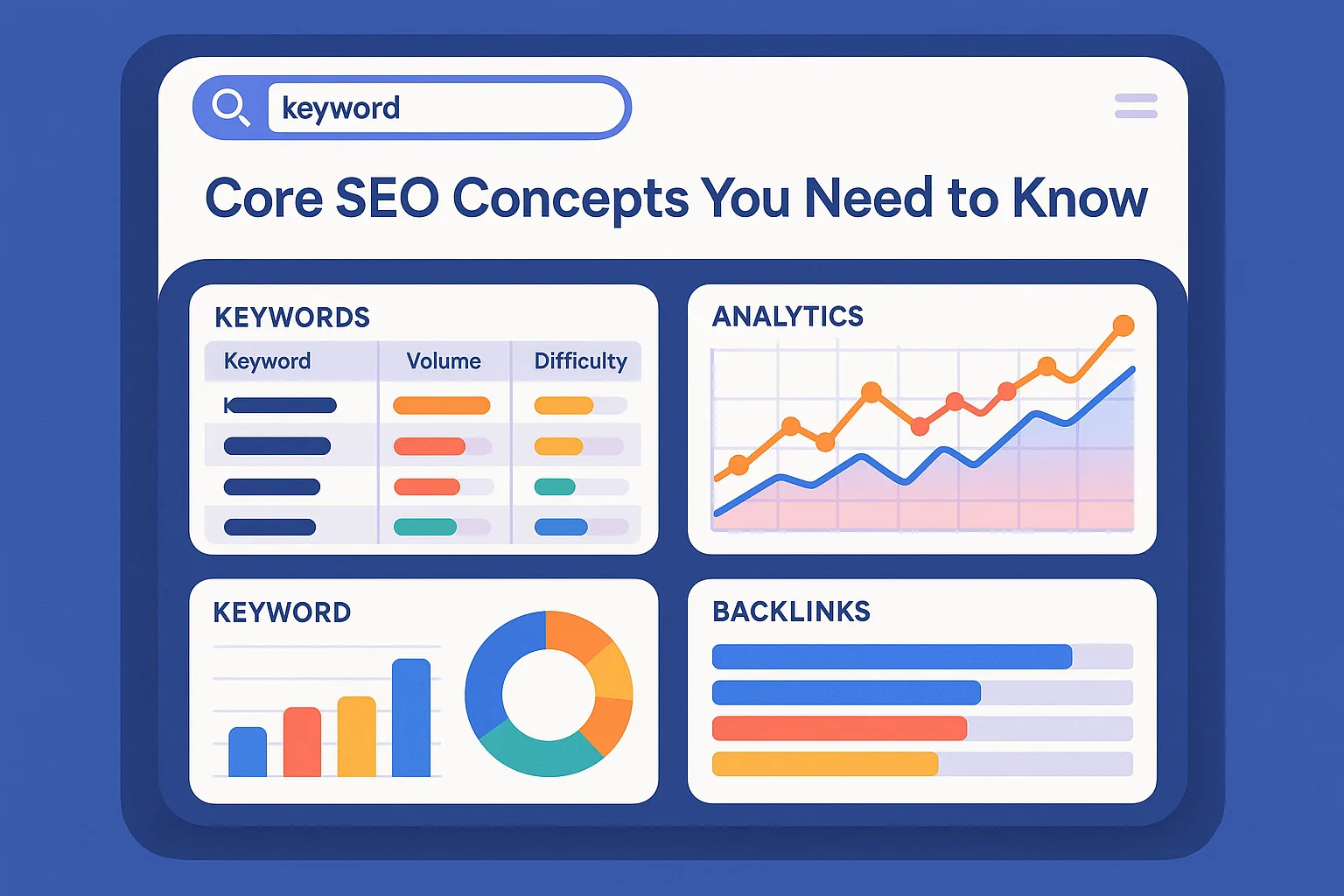
Understanding core SEO concepts is essential for anyone looking to enhance their website's visibility in search engines. By focusing on keyword research, on-page SEO strategies, and backlink creation, businesses can significantly improve their search rankings. These foundational elements form the basis of effective SEO practices.
Keyword Research
Keyword research is the foundation of any successful SEO strategy. It involves identifying the search terms that potential customers use to find products or services similar to yours. By understanding these keywords, you can create content that aligns with user intent and improves search engine visibility.
In practice, keyword research often involves using tools like Google Keyword Planner, SEMrush, or SEO Ladders' keyword research feature to analyze search volume and competition for specific terms. This helps prioritize the keywords that are most likely to drive traffic.
- Why it matters:
- Enhances target audience alignment
- Drives relevant traffic
- Increases content relevance
Expert Insight: A retail business focusing on niche products discovered untapped keyword opportunities by analyzing competitor SEO strategies, leading to a significant increase in organic traffic.
| Aspect | Benefit |
|---|---|
| Search Volume | More traffic potential |
| Competition | Easier keyword ranking |
| User Intent | Matches audience needs |
On-Page SEO
On-page SEO refers to optimizing individual web pages to rank higher in search engines by making them more accessible, relevant, and informative for users. Key elements include optimizing title tags, meta descriptions, headers, and content itself to ensure alignment with targeted keywords.
In practice, on-page SEO also means enhancing user experience by improving website speed, mobile responsiveness, and ensuring clean, readable URLs. Tools like SEO Ladders' technical health monitor can help identify and fix these issues. For instance, a business that improved page speed saw a notable increase in user engagement and lower bounce rates.
- Why it matters:
- Improves search engine visibility
- Enhances user experience and satisfaction
- Boosts engagement metrics
Backlink Strategy
Backlinks are inbound links from other websites to yours and are essential for SEO success. They act like endorsements for your site, signaling to search engines that your content is valuable and credible. A well-planned backlink strategy can dramatically improve your domain authority and search ranking.
In practice, achieving quality backlinks involves content outreach, guest blogging, and leveraging relationships with industry leaders. Using backlink tracking tools can help monitor your progress and identify new opportunities. Businesses often find success by creating shareable content that naturally attracts links from other reputable sites.
- Why it matters:
- Enhances domain authority
- Increases referral traffic
- Builds brand credibility
Expert Insight: A retail business focusing on niche products discovered untapped keyword opportunities by analyzing competitor SEO strategies, leading to a significant increase in organic traffic.
How SEO Works: The Complete Process
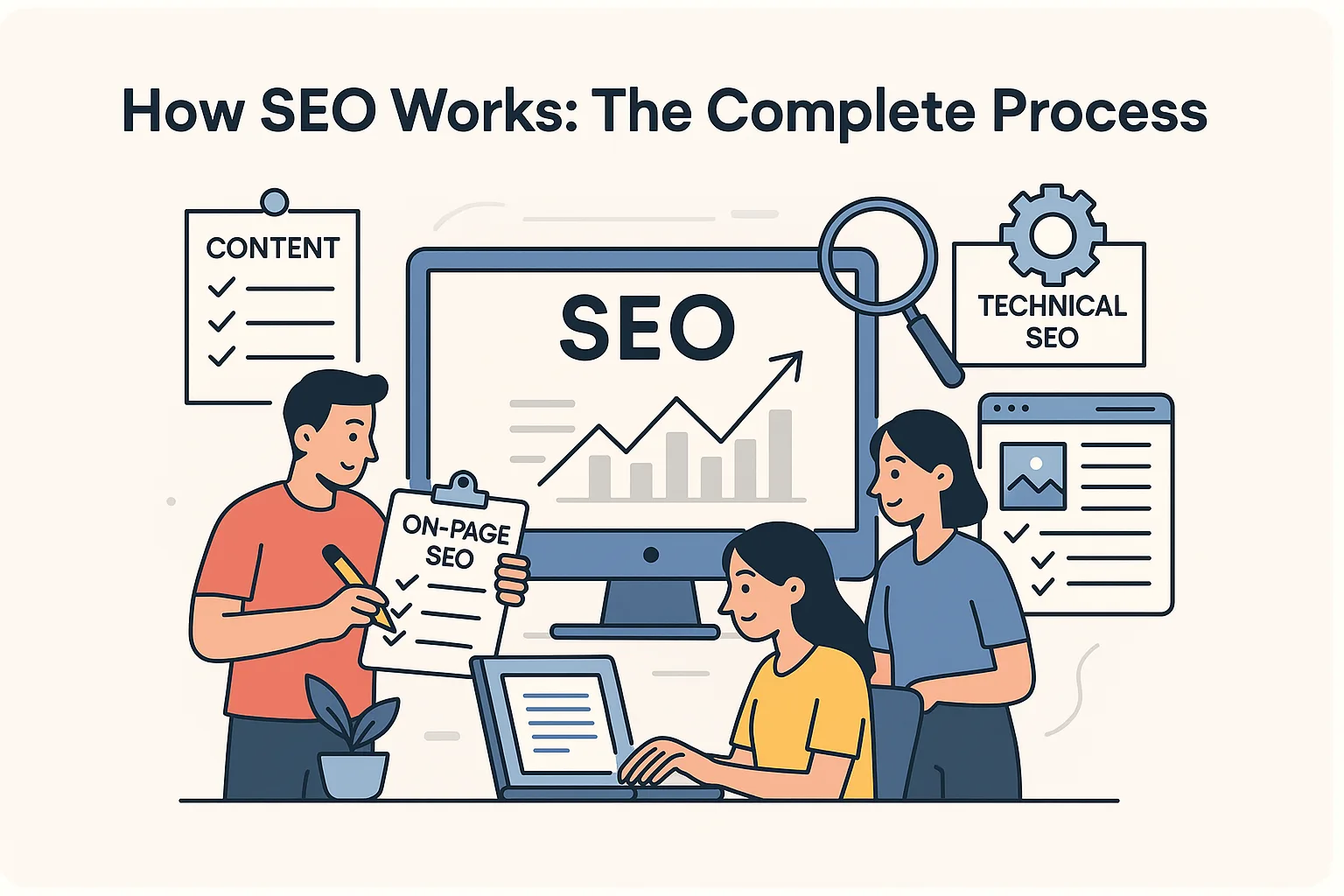
The process of SEO involves several stages designed to improve a website's visibility and ranking on search engines. By understanding and implementing each step, businesses can enhance their online presence effectively. This section covers the key stages—planning, execution, and monitoring—necessary to optimize your strategy according to SEO best practices.
Planning
Planning is the foundational stage of SEO, where goals are set and strategies are devised. This involves conducting thorough research to understand target keywords, audience preferences, and market trends. Identifying relevant keywords helps in aligning content with user intent.
In practice, many businesses start with assessing the existing content and performing a website audit to identify gaps and opportunities. This step sets the groundwork for a clear roadmap toward enhancement.
- Establishes clear objectives
- Involves extensive keyword research
- Requires competitive analysis
Why it matters:
- Sets measurable goals
- Guides strategic focus
- Reduces resource wastage
Execution
Execution involves implementing the planned strategies across various SEO elements. This includes optimizing on-page SEO factors such as meta tags, headers, and content quality. Off-page tactics, such as acquiring backlinks, are also vital components during this phase.
In practice, businesses often find value in periodically adjusting content strategies based on ongoing performance metrics. Engaging tools to streamline processes, such as SEO monitoring tools, can also be beneficial.
- Implements on-page and off-page strategies
- Leverages optimization tools
- Focuses on content quality improvement
Why it matters:
- Directly impacts search rankings
- Enhances user experience
- Bolsters domain authority
Monitoring
Monitoring is an ongoing process that assesses the effectiveness of SEO strategies. This involves tracking metrics such as website traffic, bounce rates, and keyword rankings. Effective monitoring helps in identifying successful tactics and areas needing refinement.
In practice, businesses rely on tools like analytics platforms to gain insights into user behavior and SEO performance. Regular reviews allow for timely adjustments and sustained improvements.
- Regular assessment of SEO performance
- Utilizes analytics tools for insights
- Involves continual strategy refinement
Why it matters:
- Identifies areas for improvement
- Ensures sustained visibility
- Informs strategic adjustments
Expert Insight: In industries where competition is fierce, effective SEO plans often include collaboration between marketing and technical teams to ensure alignment on goals and execution strategies. This holistic approach enables quicker adjustments and sustained impact.
SEO vs Alternatives: Key Differences
In the realm of digital marketing, choosing the right strategy to enhance your online visibility can be complex. SEO offers a sustainable option but isn't the only tool in the marketing arsenal. In contrast, various alternatives may suit different needs. Understanding these differences helps in selecting the right approach for your business.
Comparison Table
To elucidate the differences between SEO and its alternatives, consider the following table:
| Aspect | SEO | Alternative Strategies |
|---|---|---|
| Cost-effectiveness | Generally high | Varies by strategy |
| Sustainability | Long-term impact | Short to medium-term |
| ROI | Potentially high | Variable |
| Implementation Time | Longer setup period | Can be quicker to implement |
In practice, SEO involves a more extended period for noticeable results, whereas paid advertising and social media campaigns might offer quicker outcomes.
Expert Insight: Companies often compare SEO with pay-per-click (PPC) advertising. While PPC might bring immediate traffic, SEO is sought for a slow but steady growth, giving more sustained results if implemented correctly.
When to Choose SEO
Choosing SEO as a primary strategy depends on multiple factors. Businesses seeking long-term growth in organic traffic often prioritize SEO since its benefits compound over time.
In practice, SEO suits companies with a long-term vision rather than those seeking instant results. Establishing authority in a particular niche or growing a brand's digital footprint is often best achieved through consistent SEO practices.
- Business goals: Long-term visibility and authority
- Budget constraints: Less suitable if immediate returns are necessary
- Resource allocation: Commitment to ongoing content creation and optimization
Understanding these aspects ensures businesses make informed decisions aligned with their strategic goals.
Expert Insight: Businesses that invest in SEO often experience more cost-effective long-term growth compared to those relying solely on short-term strategies.
Real-World SEO Examples
Understanding SEO best practices involves analyzing real-world examples of how companies effectively implement strategies to enhance their online presence. These case studies provide practical insights into successfully navigating the ever-changing digital landscape.
Successful Case Study 1
An e-commerce brand sought to improve its search engine rankings to drive traffic and boost sales. By focusing on on-page SEO and optimizing product descriptions, the company saw notable improvements. They did this by ensuring product descriptions were rich in relevant keywords and provided value to the user. This approach improved their ranking on multiple search engines.
In practice, the company also invested in creating engaging blog content, which further strengthened their SEO efforts. Internal linking between product pages and blog articles was used strategically to enhance user navigation and SEO performance. This approach helped in building a coherent content strategy that not only improved SEO but also enhanced user experience.
- Why it matters:
- Enhances product visibility
- Drives organic traffic
- Increases conversion rates
Successful Case Study 2
A local restaurant focused on improving its online presence by optimizing its Google My Business profile. They emphasized high-quality images, regular updates on special offers, and customer engagement to improve local search rankings. By ensuring consistency in their NAP (Name, Address, Phone number) information across the web, they gained better visibility.
Based on common implementation patterns, the restaurant also engaged with customer reviews actively. Responding to reviews not only enhanced their brand reputation but also contributed positively to local SEO. Leveraging location-based keywords in their metadata and content helped cater to nearby customers seeking dining options.
- Why it matters:
- Increases local search visibility
- Boosts customer trust
- Enhances brand reputation
Expert Insight: A key takeaway from both case studies is the importance of aligning SEO strategies with your business goals and audience needs. By focusing on providing valuable content and maintaining an active online presence, businesses can effectively enhance their search visibility and engagement.
Frequently Asked Questions
What are SEO best practices?
SEO best practices include:
- Keyword Research: Identify relevant keywords.
- Quality Content: Create valuable, informative content.
- On-Page Optimization: Use keywords in titles, headers, and meta descriptions.
- Technical SEO: Ensure fast loading speed and mobile-friendliness.
- Backlinks: Acquire high-quality backlinks.
- User Experience: Improve site navigation and design.
These practices help improve search engine rankings and visibility.
How does keyword research impact SEO?
Keyword research is crucial for SEO as it helps identify the terms and phrases your target audience uses. By optimizing content with these keywords, you can improve search engine rankings, increase visibility, and attract more relevant traffic. It ensures your content aligns with user intent, enhancing both user experience and search engine performance.
Why is website speed important for SEO?
Website speed is crucial for SEO because it directly impacts user experience and search engine rankings. Faster sites reduce bounce rates and increase engagement, which are key factors in Google's ranking algorithm. Additionally, Google prioritizes fast-loading sites in its search results, making speed a critical component of effective SEO strategies.
Conclusion
Putting Best Practices Into Action for Higher Rankings
Grasping SEO best practices is your ticket to climbing search engine rankings. To turn knowledge into action, start by clearly defining what SEO practices best serve your goals and why they matter for your business's growth. Immerse yourself in the core concepts of SEO and understand the entire process. Compare SEO with other alternatives and observe real-world applications through insightful case studies.
Concrete steps to get started:
- Define Your SEO Goals: Understand what you aim to achieve and tailor your strategy accordingly.
- Learn Core Concepts: Familiarize yourself with SEO fundamentals to craft an effective approach.
- Analyze Real-World Examples: Study successful implementations to adapt their strategies.
- Monitor and Adjust: Regularly analyze your results and refine your tactics for continuous improvement.
By implementing these practices, you'll set a strong foundation for sustained success.
Take the first step towards transforming your website's performance with actionable SEO insights. Enhance your website's SEO strategy today by checking out our tools and guides. Start your journey towards higher rankings now!
Take the first step towards transforming your website's performance with actionable SEO insights. Enhance your website's SEO strategy today!
Start for Free