

Table of Contents
How to Find Competitors' Backlinks: Step-by-Step for SEO Wins
Solo founders and entrepreneurs often hit a wall trying to grow organic traffic—their competitors' rankings seem impossible to match, and the secret often lies in hidden backlink profiles. If building quality links feels overwhelming or you’re unsure where your rivals’ links are coming from, you’re definitely not alone.
This guide breaks down exactly how to find competitors' backlinks, even if you're new to SEO. You'll learn what competitor backlink analysis is, why it matters, a step-by-step process to uncover those valuable links, and how top tools—SEO Ladders, Ahrefs, Moz, SEMrush—stack up for this task.
What Is Competitor Backlink Analysis?
Competitor backlink analysis is a foundational process in SEO that reveals where rival websites earn their authority and traffic. Understanding the specifics of competitor links helps you prioritize outreach and improve your own site’s ranking capability.
Definition and Key Terms
Competitor backlink analysis is the process of identifying and evaluating the backlinks pointing to your competitors’ websites. Backlinks are links from external sites that pass authority and signal relevance to search engines.
Key terms used in this context include:
- Backlinks: External links from one website to another
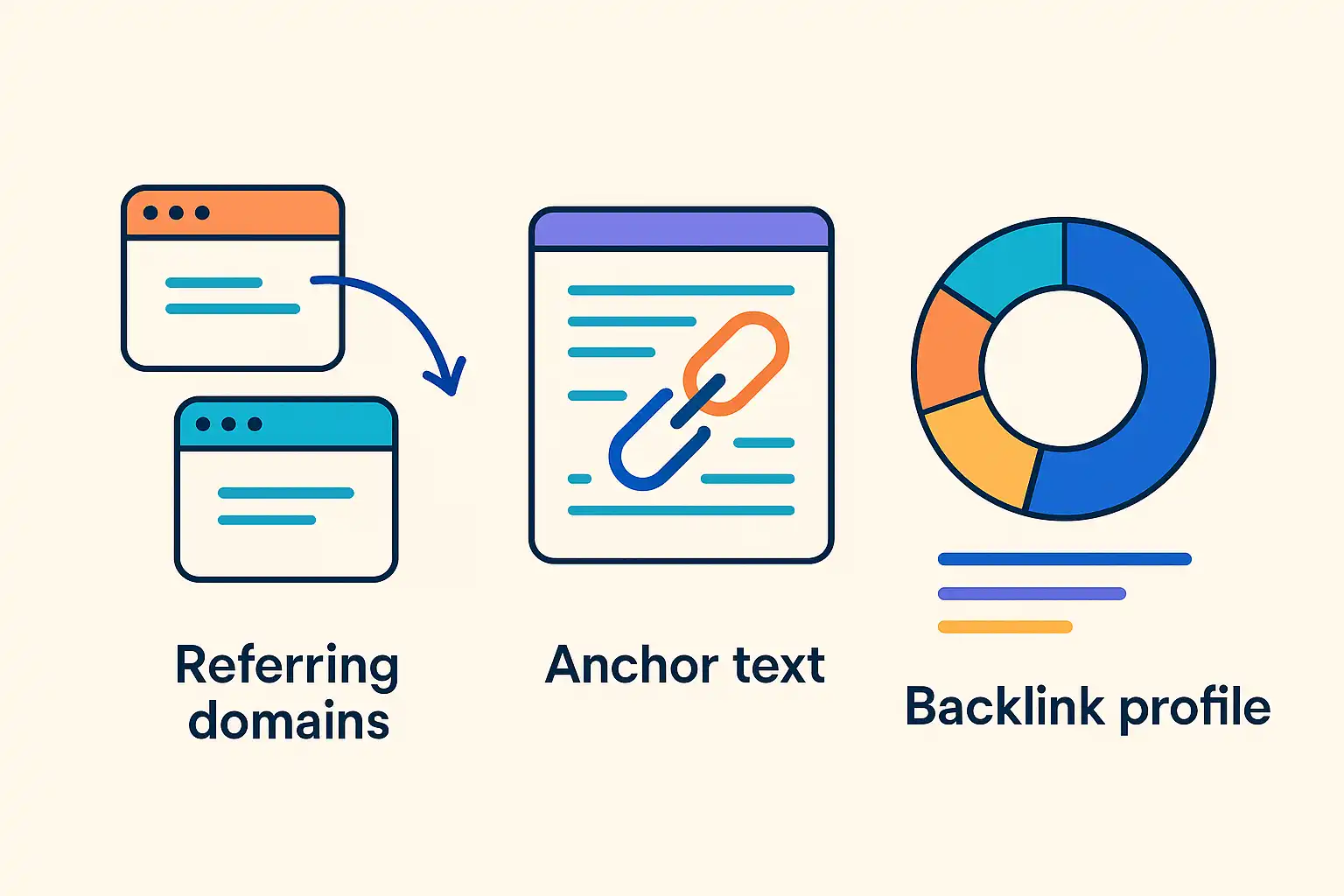
- Referring domains: Unique websites linking to a target site
- Anchor text: The visible, clickable text in a hyperlink
- Link profile: The aggregate of all backlinks to a website
In practice, this analysis provides actionable intel for building your own authority. By mapping out where leading competitors attract links, teams can focus on outreach that’s likely to move the needle for their own domain.
Role of Referring Domains and Anchor Text
Referring domains and anchor text are critical for understanding a competitor’s backlink influence. Referring domains are the number of distinct websites linking to your competitor, and each unique domain usually carries more weight than multiple links from a single source. Anchor text describes the clickable portion of the link and is a clue to how search engines interpret the link’s context.
In standard practice, analysts look for diverse and authoritative referring domains, along with varied, natural anchor text patterns. A site with hundreds of links from just a few sources, or repetitious keyword-stuffed anchors, often indicates a riskier or less valuable profile.
Difference Between Backlink Profile and Link Gap
A backlink profile is the complete list of all links pointing to a website, summarized by domains, anchor types, and link quality. Link gap refers specifically to the difference between the links your site has and those your competitors possess, highlighting missed opportunities.
Based on common implementation patterns, most SEO teams inspect the backlink profile to assess authority, then perform a link gap analysis to pinpoint domains where their competition is linked but they are not. This two-step method helps prioritize high-impact outreach targets.
| Concept | What It Shows | Why It Matters |
|---|---|---|
| Backlink Profile | All inbound links | Measures authority and risk |
| Link Gap | “Missing” competitor links | Reveals actionable targets |
- Why it matters:
- Finds overlooked link opportunities
- Benchmarks your site against direct competitors
- Directs focused link building for quicker results
- SEO Ladders offers both backlink profile and link gap insights, making it a strong alternative for users comparing tools
Info: Effective backlink analysis relies on accurate, up-to-date link indexes. Different SEO platforms may report varying results based on their crawler and data coverage.
Why Analyzing Competitors' Backlinks Elevates Your SEO
Analyzing competitors' backlinks provides specific, actionable insight for developing stronger link building strategies. Understanding where competitors earn their links helps you refine your approach and identify untapped opportunities that can directly influence search performance.
Key Benefits for Link Building Strategy
Competitor backlink analysis provides targeted opportunities and clarity for your link building efforts. By seeing exactly which referring domains link to your rivals, you can identify patterns, quality sources, and content types that are earning real results.
In practice, this process reveals:
- Which types of pages (blog posts, tools, resources) attract authoritative links
- Themes and strategies competitors use for outreach or content assets
- Opportunities to approach sites already open to linking in your category
Based on experience, finding competitor links can shorten the research phase of outreach. Rather than guessing which webmasters accept links, you focus on proven sources. This systematic approach means less wasted time and resources.
Why it matters:
- Focuses your resources on links likely to move the needle
- Reduces trial-and-error in link prospecting
- Provides concrete examples of what works in your niche
- Enables you to build a defensible, competitive SEO advantage
Impact on Domain Authority Growth
Domain authority is influenced by the quality and quantity of referring domains linking to a site, and competitor backlink analysis helps prioritize efforts that can yield the biggest gains. By benchmarking against the sites dominating your search results, you can quantify the link volume, diversity, and authority level you need to compete.
In day-to-day campaigns, many practitioners monitor shifts in domain authority after acquiring links from sources identified through competitor research. Over time, curated efforts—especially from high-authority referring domains—tend to correspond with sustained domain authority improvement.
Why it matters:
- Sets clear link building goals based on actual, competitive data
- Helps avoid links from low-authority sites that may offer limited benefits
- Tracks progress relative to competitors' authority levels
| Strategy | Typical Outcome | Risk Level |
|---|---|---|
| Random link outreach | Low DA growth | High (wasted) |
| Competitor link targets | Moderate to strong DA | Lower (targeted) |
Uncovering Link Gaps & Easy Wins
A link gap is a specific backlink that competitors have but your site does not. Identifying these gaps reveals 'easy win' opportunities. Many SEO platforms include a link gap analysis feature to visualize which domains are linking to competitors—and may consider your content with the right approach.
From first-hand observation, focusing on these gaps is one of the fastest ways to close the competitive distance in search rankings. Outreach tends to be more successful when the prospect is already linking to similar types of content within your niche.
Why it matters:
- Highlights outreach targets with higher response rates
- Enables efficient resource allocation to high-impact prospects
- Offers a blueprint to systematically match or exceed competitor link profiles
For platforms like SEO Ladders' Link Gap Analysis, automating this discovery process further streamlines campaign planning and helps prioritize the highest authority gaps in your market.
Tip: Checking link gaps regularly ensures your SEO strategy stays aligned with evolving competitor tactics and shifting authority in your sector.
How to Find Competitors' Backlinks: The Actionable Process
Tracking down competitors’ backlinks helps you reverse-engineer their link building strategies and uncover realistic targets for your own outreach. By following a repeatable, focused process, you can sort valuable opportunities from noise and create a blueprint to boost your domain authority and rankings.
Step 1: Identify Top SEO Competitors
Identifying top SEO competitors means finding websites that compete with you for the same target keywords and audience, not just direct business rivals. The most effective approach is to:
- Search your target keywords and see which domains appear consistently in the top results
- Use SEO tools’ competitor discovery features to reveal overlapping keyword profiles
- Examine SERP features like People Also Ask or Featured Snippets for recurring sites
In practice, most teams focus on competitors with similar content depth, domain authority, and topic relevance. For example, SaaS founders usually benchmark against other tech products or guides ranking for their solution keywords, rather than large directories or news publishers. This ensures backlink opportunities you uncover are actually obtainable.
Why it matters:
- Promotes realistic, strategic link prospecting
- Reduces wasted effort on unreachable or irrelevant domains
- Increases accuracy when comparing backlink profiles
Step 2: Select and Run Backlink Analysis Tools
Running backlink analysis involves entering competitor domains into trusted SEO tools that crawl and report their inbound links. Popular choices include Ahrefs, Moz, SEMrush, and newer platforms like SEO Ladders. These tools typically:
- Index and display referring domains, anchor text, and link type (dofollow/nofollow)
- Offer filters for link authority, link placement, and new/lost links
- Allow exporting of backlink and referring domain lists
Based on common implementation patterns, most teams test multiple tools to compare coverage and data freshness—differences can affect what opportunities you surface. The choice often comes down to budget, interface preferences, and data granularity required for your workflow.
| Tool | Unique links found | Anchor text insights | Link gap analysis | Pricing |
|---|---|---|---|---|
| SEO Ladders | High | Yes | Yes | Moderate |
| Ahrefs | Very high | Yes | Yes | High |
| Moz | Medium | Yes | No | Medium |
| SEMrush | High | Yes | Yes | High |
Info: Data sources and what they crawl differ between tools. Results may not match exactly—using two platforms can give broader coverage.

Step 3: Vet and Prioritize Valuable Link Opportunities
Vetting link opportunities is the process of filtering exported backlink lists to focus on domains and pages most likely to move your rankings. To do this:
- Assess domain authority: Prioritize links from reputable, high-authority websites
- Check relevance: Focus on pages and sites highly related to your niche
- Review anchor text: Look for natural, keyword-rich anchors pointing to target competitor pages
- Filter out risks: Remove links from spammy or potentially toxic domains
In practice, this step often surfaces a shortlist of publications, blogs, and resources where your outreach will have the highest odds of success. Many SEO teams rely on automated spam checks and relevance filters to work faster.
Why it matters:
- Increases the quality of outreach targets
- Reduces wasted effort on low-impact links
- Ensures your strategy mimics proven, safe competitor wins
Expert Insight: After prioritizing, conducting even brief personalized outreach to the most relevant sites frequently leads to faster link wins—especially if you reference competitor content already featured there.
Tip: Document your process and track results. This makes repeating competitor backlink analysis much more efficient, especially as SERPs and link profiles change over time.
Top Tools Compared: SEO Ladders vs Ahrefs, Moz, SEMrush
Finding the right tool for competitor backlink analysis can directly influence how quickly you identify and act on high-value link opportunities. Here, we compare SEO Ladders, Ahrefs, Moz, and SEMrush across methodology, features, and practical use cases so you can decide which aligns best with your workflow.
How We Vetted These Options
All tools were evaluated using real-world research scenarios focused on how to find competitors' backlinks. The vetting process considered:
- Data coverage: Size and freshness of backlink indexes
- Ease of use: How quickly you can view, filter, and export competitor links
- Key features: Capabilities for anchor text analysis, link gap identification, and automated outreach
- Support and learning resources: Access to tutorials and user guidance
In practice, the value of a backlink analysis tool often comes down to how intuitively you can surface actionable insights. During testing, features like instant domain comparisons or bulk exports made a notable difference—especially for marketers working on tight deadlines or managing multiple brands.
- Why it matters:
- Save hours manually collecting and vetting links
- Prioritize based on authority and relevance, not just volume
- Identify white-hat outreach targets faster
SEO Ladders, in particular, stood out for combining link gap, prospect research, and outreach tracking in a unified workflow, positioning it as a leading alternative to legacy platforms.
Feature Comparison Table with Key Metrics
A head-to-head comparison table highlights how SEO Ladders, Ahrefs, Moz, and SEMrush stack up on essential metrics for competitor backlink analysis.
| Feature | SEO Ladders | Ahrefs | Moz | SEMrush |
|---|---|---|---|---|
| Backlink Index Size | Large, enterprise-grade | Industry-leading | Large | Extensive |
| Link Gap Analysis | Built-in, with automated gap and opportunity discovery | Manual, with advanced filters | Basic, semi-automated | Included, but less granular |
| Anchor Text Analysis | Yes, rich breakdown | Yes | Yes | Yes |
| Outreach Workflow/Integration | Native, with contact discovery and templated emails | External or limited | Manual/External | Partial, depends on subscription |
| Pricing Transparency | Single plan, straightforward | Tiered, variable | Tiered, variable | Tiered, variable |
| Usability for Beginners | Guided step-by-step | Moderate learning curve | Beginner-friendly | Intermediate |
In practice, the main distinctions emerge around automation and workflow integration. Many found the link gap plus outreach pipeline in SEO Ladders especially time-saving compared to cobbling together multiple tools elsewhere.
When to Choose Each Tool
Choosing between SEO Ladders, Ahrefs, Moz, and SEMrush comes down to your specific needs, team size, and experience level.
- SEO Ladders is ideal when you want a straightforward process for finding competitors' backlinks, filtering by authority, and launching outreach from the same dashboard.
- Ahrefs suits those needing deep data and custom analysis, but requires more manual setup for outreach.
- Moz appeals to users prioritizing simpler interfaces and quick overviews, with less focus on automation.
- SEMrush works best for broader digital marketing needs, though backlink analysis features are strong.
In practice, newer SEO teams or founders may benefit more from the guided onboarding and bundled workflow in SEO Ladders. More advanced SEOs might prefer Ahrefs for custom queries, but should factor in additional costs or integrations for end-to-end outreach.
- Why it matters:
- Match tool complexity to user expertise
- Assess which platform saves you time moving from discovery to action
- Consider future growth if scaling link building efforts
Tip: Test each platform's free trial or demo to evaluate which workflow feels most intuitive for your daily tasks.
Frequently Asked Questions
What is competitor backlink analysis?
Competitor backlink analysis involves studying the backlinks pointing to your competitors' websites to identify valuable link opportunities and strategies. It helps uncover which sites link to them, their most linked pages, and where you can aim to get similar quality backlinks to improve your own site's authority and rankings.
What tools help find competitors' backlinks?
Tools like Ahrefs, SEMrush, and Moz are popular for finding competitors' backlinks. They let you analyze which sites link to your competitors, uncover their most linked pages, and spot potential link-building opportunities. These platforms provide detailed backlink profiles, helping you strategize your own SEO efforts effectively.
How do I use anchor text insights for my link building?
Use anchor text insights to identify the most common and effective phrases competitors use in backlinks. This helps you target relevant keywords naturally in your outreach and create anchor texts that attract quality, context-rich backlinks. Monitoring anchor text diversity also prevents over-optimization, improving your link profile’s SEO value.
What makes a high-quality referring domain?
A high-quality referring domain is one with strong domain authority, relevant content to your niche, and a good trustworthiness score. Such domains usually have a clean backlink profile, are not spammy, and provide dofollow links from trusted, authoritative websites. These factors help improve your site’s SEO value when linking to your content.
Why is SEO Ladders a compelling alternative to Ahrefs?
SEO Ladders is a compelling alternative to Ahrefs because it offers an all-in-one, AI-powered SEO platform tailored for founders and solo entrepreneurs. It simplifies backlink tracking, keyword research, and content automation with guided workflows and educational tools. Unlike Ahrefs, it focuses on affordability, ease of use, and automates tedious SEO tasks, making growth accessible without complex dashboards or high costs.
how to get Ahrefs $7 trial
Ahrefs no longer offers a $7 trial as of 2026. To try Ahrefs legitimately, you can use their limited free tools or subscribe to their standard plans with money-back guarantees, as the $7 trial has been discontinued.
How to sign up for the Ahrefs $7 trial or find a cheap trial?
Ahrefs no longer offers the $7 trial as of 2026. To try Ahrefs, you can explore their free tools or look for free trial offers from other SEO platforms. Alternatively, consider affordable SEO tools like SEO Ladders, which provide free trials and backlink analysis features for startups and solo founders.
How to check most visited websites globally and in a country using analytics tools and traffic ranking like Alexa and SimilarWeb?
To check the most visited websites globally or by country, use analytics tools like SimilarWeb and Alexa. They provide traffic rankings, user demographics, and engagement metrics. Simply select the global or country-specific view to see top websites. These tools also offer insights into traffic sources and audience behavior, helping you understand website popularity effectively.
Conclusion
Finding your competitors’ backlinks gives you a real-world map for building your own authority and boosting your rankings.
- Identify your top competitors and pull their backlink data using trusted SEO tools.
- Prioritize backlinks by authority, relevance, and ease of outreach.
- Use a link gap analysis tool to highlight unique opportunities you haven’t captured yet.
- Reach out with personalized messages and start tracking your new links for impact.
Ready to uncover high-value backlink opportunities your competitors rely on? Sign up for a free trial of SEO Ladders' Link Gap Analysis tool and start building stronger links today at SEO Ladders Link Gap Analysis.
Take the first step towards transforming your website's performance with actionable SEO insights. Enhance your website's SEO strategy today!
Start for Free