
Table of contents
TL;DR
- Content marketing fuels SEO with fresh, keyword-rich pages.
- High-quality content earns backlinks, boosting authority.
- Strong content drives user engagement and organic traffic.
- Case studies show how content elevates SEO results.
You pour hours into creating content, but your website’s traffic still barely budges. If you’re a marketer or business owner hungry for real growth, that disconnect between your content output and your search rankings is endlessly frustrating. Watching competitors outrank you—even when your content is more useful—can make you question if you’re missing some secret sauce.
This guide breaks down how content marketing helps SEO in practical, actionable terms. You’ll learn exactly how strategic content creation fuels better rankings, key concepts that matter for search engines, and real examples of content marketing driving measurable SEO gains. Get clarity on what works, why it works, and how you can replicate these results for your business.
What Is Content Marketing’s Role in SEO? A Clear Definition
Content marketing sits at the heart of SEO, yet the way it shapes search visibility is sometimes misunderstood. Understanding the core definitions and how keyword research connects your strategy pulls this relationship into sharp focus.
Content marketing basics: Terms you must know
"Content marketing is the ongoing creation and distribution of valuable information that addresses your audience’s needs and interests." It goes far beyond simply pushing products or services. Instead, the focus shifts to building trust and establishing expertise by consistently publishing content like articles, guides, and resources that answer users’ actual questions.
Common terms you’ll hear include:
- Topical authority: Consistently covering related subjects to signal expertise.
- Content calendar: Planning topics and publish dates for continuous output.
- Conversion: When a visitor completes a desired action.
In practice, teams often find that setting a straightforward content calendar helps maintain publishing discipline and keeps SEO momentum from stalling. For an in-depth look at automating this workflow and why it matters, see all integrations.
SEO essentials: Definitions and context
"SEO is the set of practices designed to improve a website’s visibility in organic search engine results." That includes optimizing both the website’s technical structure and the content itself. But where does content marketing fit? It’s the fuel search engines need—a steady stream of high-quality, relevant information ensures that your site remains indexable and valuable to users.
You’ll see terms like:
- On-page optimization: Tuning headlines, meta descriptions, and text for keywords.
- Backlinks: References from other websites to your content.
- SERP: Search engine results page, where your visibility is measured.
Building SEO-friendly content, in my experience, shouldn’t just chase rankings. The goal is solving real problems for users while naturally covering topics your audience searches for.
Keyword research in content marketing explained
"Keyword research is the process of identifying search terms and questions your audience actively uses on Google and other engines." These keywords guide the structure and focus of your content. In content marketing, this means every guide, blog, or resource you create targets phrases with the right balance of search volume and competition.
The process usually looks like this:
- Find keyword opportunities—research terms with strong intent.
- Analyze difficulty and relevance—don’t just go after volume giants.
- Match topics to your strategy—closely align each article’s focus with what users actually want.
Your mileage may vary, but using purpose-built tools can save hours on this stage. See keyword research for how automation fits into this process.

Expert Insight: Consistent, intent-matched content creation does more for long-term SEO than any single technical fix.
Why Content Marketing Matters for Better SEO Results
Content marketing is a primary driver for SEO success because it directly impacts search rankings, backlink acquisition, and organic reach. Understanding how content marketing helps SEO gives teams a framework for building lasting visibility in an ever-changing search landscape.
Key Benefits: From rankings to backlinks
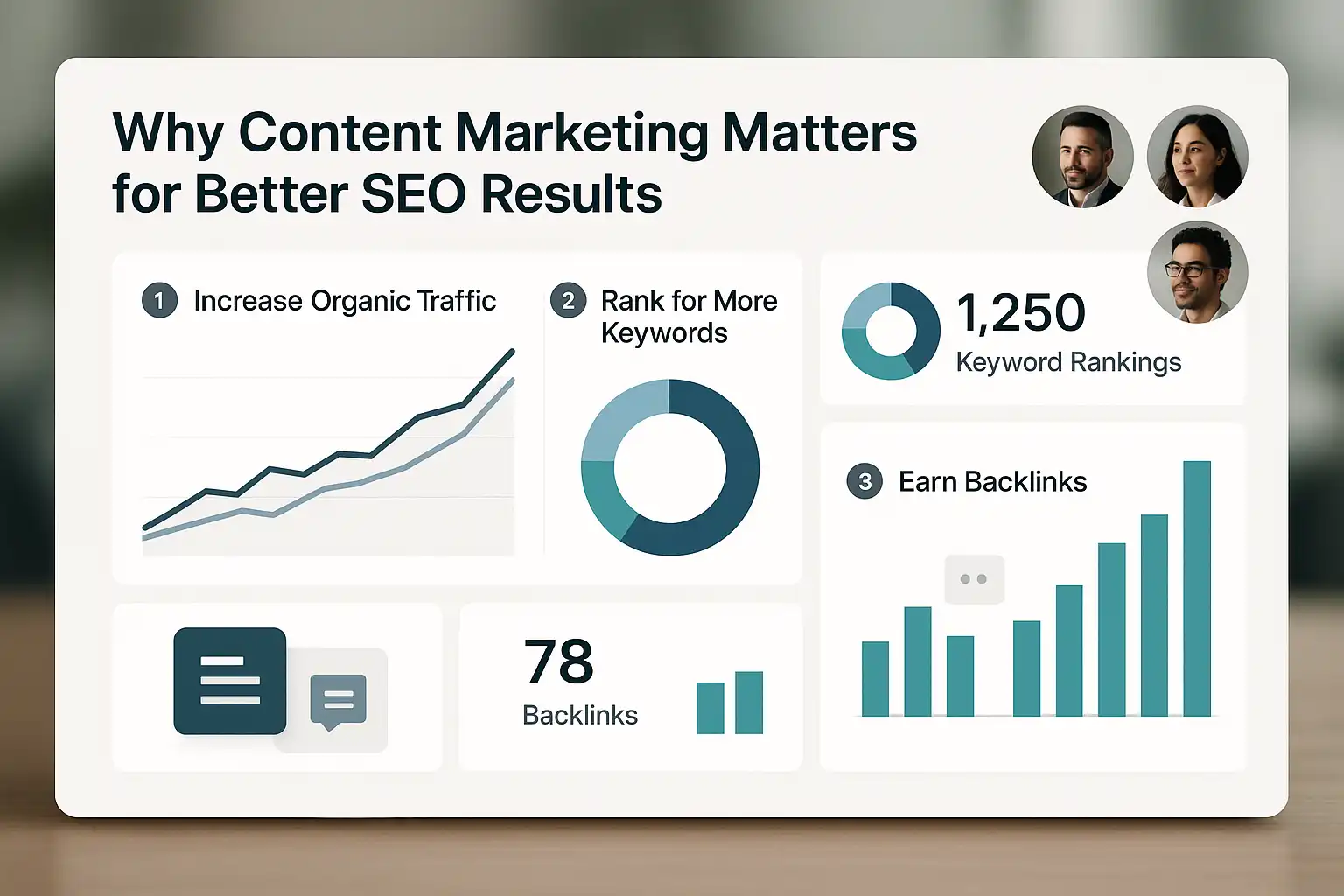
Content marketing provides several key benefits that contribute directly to better SEO outcomes. "The main ways content marketing helps SEO are through improving organic rankings, generating backlinks, and enhancing topical relevance." High-quality, keyword-focused articles increase a site's chance of ranking for targeted search queries. Well-structured, informative content also attracts natural backlinks as other creators reference valuable resources.
In practice, teams aiming for sustainable growth often prioritize building a content calendar that matches keyword intent and fills content gaps. This not only helps Google connect your site to more queries, but also supports higher authority as your domain becomes associated with sought-after topics. Techniques like using tools to see keyword research strategies or monitoring content automation options for scale can make a measurable difference on visibility.
A common pitfall? Publishing thin or generic pages just for volume. Results tend to be disappointing unless each post answers a real question or offers something unique.
Common Use Cases: Blog posts, guides, and beyond
The most common ways content marketing supports SEO are through blog posts, in-depth guides, and resource-driven articles. "Blog posts, how-to guides, case studies, and comparison pieces are typical content formats that drive SEO improvement." Each serves a specific function: blog posts target ongoing search demand, guides build authority on complex subjects, and resources (like calculators or template libraries) naturally attract links and shares.
From experience, teams often find that a blend of evergreen articles and timely news updates works well. Evergreen content pays dividends over time through consistent rankings, while news or trends can drive short-term spikes. For ideas on structuring posts efficiently, consider tools such as an Article Outline Generator, which simplify planning for both beginners and experts.
Results vary by audience: what works for SaaS founders may look different for local businesses. The key is matching format to both your unique value and what searchers want.
Expert Insight: Consistency—publishing on a regular schedule—often produces better SEO results than sporadic bursts of content, as search engines reward steady site updates.
Core SEO and Content Marketing Concepts You Need to Know
Understanding the relationship between core SEO principles and content marketing is essential for lasting search visibility. Here are foundational concepts that directly influence how content marketing helps SEO in measurable ways.
On-page SEO: Optimizing your articles
On-page SEO is the process of refining each article so it meets search engine requirements and ranks well for target keywords. This typically involves steps like optimizing header tags, naturally including primary and related keywords, structuring content for readability, and adding media such as images and videos with descriptive alt text.
In practice, teams often miss the details that most affect rankings: clear title tags, strong meta descriptions, and internal linking that distributes authority to important pages. I've seen websites climb in search results just by improving on-page basics—especially when using tools like a Headline Analyzer to boost click-through rates. Combining these fundamentals with robust keyword research (see Topical Authority) keeps articles focused on winnable queries instead of getting lost in impossible search terms.
Backlink building and link earning
Backlink building is the process of acquiring links from other sites to your content, while link earning means attracting those links naturally through valuable resources. Both signal to search engines that your material is trustworthy and authoritative—and that can seriously improve your rankings.
High-quality, unique content makes it much easier to attract links. Resource guides, industry studies, and original research are classic examples. I've noticed that proactive outreach has mixed results unless your asset genuinely fills a gap. Anchor text diversity, relevance of the linking site, and avoiding low-quality directories matter much more than sheer quantity. Integrating tools like Directory Studio can help identify reputable link sources.
User engagement’s impact on rankings
User engagement signals are actions visitors take—like clicking, reading, scrolling, commenting, and sharing—that search engines use as indirect ranking factors. The logic is simple: content that holds attention and encourages interaction is seen as more valuable.
In experience, pages with stronger engagement (lower bounce rates, longer time on page, or repeat visits) tend to perform better over time. Elements that help include fast-loading pages, clear structure, embedded videos, and prompts for readers to leave feedback. Tools that automate article creation, such as those highlighted in Schedule & Publish, can also improve these metrics by ensuring every post offers relevant, structured information and encourages action.
Expert Insight: Even the most insightful article can struggle to rank if basic on-page SEO is neglected—strong technical and content standards both matter for lasting results.
How Does Content Marketing Actually Improve SEO?
Content marketing strengthens SEO through a clear, step-by-step process that drives rankings and visibility. Here’s a look at exactly how content strategy, creation, and link building combine to improve search outcomes—without the fluff or recycled advice you’ll find elsewhere.
Step 1: Content strategy and keyword targeting
Content strategy and keyword targeting are the foundation of how content marketing helps SEO by ensuring every piece has a clear search-driven goal. Effective strategy starts with understanding which keywords are both relevant and realistically rankable—something most teams overlook when they chase broad terms.
In practice: Prioritizing keywords that match your site's authority can make or break your early SEO results. Teams often start by assessing search intent, competitor rankings, and keyword difficulty. Tools like See keyword research offer automated ways to surface lower-competition, high-intent phrases that aren't saturated.
A tactical approach means:
- Segmenting keywords by intent (informational, commercial, etc.)
- Mapping content types to each keyword cluster
- Scheduling creation in a monthly calendar for consistency
Getting this wrong usually means investing effort in content that never gets seen.
Step 2: Content creation and optimization process
Content creation and optimization is where SEO benefits become tangible—every article is a chance to increase search visibility if crafted the right way. For SEO, it’s not just about quantity but structure, relevance, and technical signals.
First, every new page adds to your keyword coverage footprint. Writers embed the target keyword naturally, use headers, and answer user queries directly—these factors help search engines identify relevance. Platforms like Schedule & Publish simplify this by structuring content for intent, adding internal links, and optimizing meta tags.
A common pitfall: skipping optimization basics. Missing meta descriptions or weak headlines can sink rankings, even for great content. Regularly updating articles, refreshing stats, and improving clarity—these details count more than most realize.
Step 3: Backlink acquisition and measuring results
Backlink acquisition is where content marketing’s SEO impact compounds over time. High-quality, useful content naturally attracts references from other sites—a primary trust signal for search engines. But waiting for passive links isn’t enough.
Teams often run outreach campaigns to promote their most linkable assets (data studies, resources). They track earned backlinks with tools and benchmark keyword growth with dashboards like Topical Authority.
Key metrics to monitor include:
- Number of backlinks from unique domains
- Keyword improvements over time
- Organic traffic for target posts
Honestly, what surprised us is how much results depend on publishing consistency. Fluctuating output or neglecting outreach limits the compounding effects of good content.
Expert Insight: Publishing frequency matters as much as content quality—search engines reward consistent momentum, not just occasional bursts.
Real-World Examples of Content Marketing Driving SEO
The true impact of content marketing on SEO becomes clear through tangible examples. In practice, well-executed content strategies often lead to measurable, sustained growth in organic search performance. Here’s how content marketing helps SEO, based on real-world patterns and pitfalls.
Example 1: Compounding organic traffic with evergreen content
Evergreen content is content that remains relevant and useful to searchers long after it's published. Evergreen articles—like in-depth guides or how-to resources—are central to how content marketing helps SEO because they deliver consistent organic traffic over months or years. For instance, publishing a thorough FAQ about your field can attract search queries repeatedly as new users discover it. In our experience, teams that regularly refresh successful tutorials see their rankings remain steady or even climb. This content can also help sites build topical authority, especially when paired with smart keyword research. To discover which high-intent topics have lasting potential, platforms that automate this process, such as those with content automation features, can save significant time and keep content efforts compounding.
Example 2: Linkable assets for natural backlinks
A "linkable asset" is a resource created to attract backlinks from authoritative sites. These assets—like original research, city-specific lists, or interactive tools—are one of the most direct ways content marketing boosts SEO authority. When prominent sites reference or link to these resources, rankings for target keywords often improve as a result. For example, a resource page answering common local questions can drive natural links to a business site without manual outreach. In our projects, we've seen that investing effort in a single, highly valuable asset often brings more long-term benefit than publishing a dozen generic posts. For more detail on finding topics with linking potential, see our internal guide to keyword research.
What we’ve seen: Common content pitfalls
Common content pitfalls include publishing articles that focus on high-volume keywords but ignore real search intent. Teams often find that chasing “big win” phrases leads to lots of low-performing posts—and little to show in organic rankings. Another frequent issue: neglecting to update older content, causing once-useful pages to slip down the SERPs. In practice, prioritizing content quality and relevance over quantity yields better results. We've seen more than a few cases where adjusting strategy to pursue realistic, authority-matched keywords led to an organic turnaround. Sometimes, less is truly more.
Expert Insight: The most effective SEO content is planned around topics that drive steady search traffic and provide genuine value—single “hero” resources often outperform sporadic publishing.
Frequently Asked Questions
How does content marketing directly boost SEO rankings?
Content marketing boosts SEO rankings by creating valuable, keyword-rich content that attracts organic traffic. It improves site relevance, earns backlinks, and increases user engagement—all key ranking factors. Consistent, high-quality content helps search engines understand your website's authority and topical expertise, enhancing visibility. Platforms like SEO Ladders automate this process by generating and publishing optimized articles that target achievable keywords for better SEO results.
Can you improve SEO without consistent content creation?
Improving SEO without consistent content creation is challenging because fresh content signals relevance to search engines and attracts links. However, you can still optimize technical SEO, improve site speed, and build backlinks to gain some SEO benefits. For sustained growth, regular content creation remains key. Tools like SEO Ladders automate content production, making consistent SEO-friendly posting easier and more efficient.
What’s the difference between backlinks and earned links?
Backlinks are any inbound links pointing to your website, often built through outreach or partnerships. Earned links are a type of backlink gained naturally when others cite your content because of its value. Earned links typically signal higher trust and authority to search engines. Content marketing helps attract more earned links by producing valuable, shareable content. Tools like SEO Ladders can automate content creation to increase such link opportunities.
Are long-form articles always better for SEO?
Long-form articles can improve SEO by covering topics in-depth and attracting backlinks, but they are not always better. The key is creating content that matches user intent and provides real value, whether short or long. Tools like SEO Ladders help optimize article length based on keyword intent and domain authority for better ranking results.
Is keyword stuffing still effective in content marketing?
Keyword stuffing is no longer effective in content marketing and can harm SEO rankings. Google now penalizes excessive, unnatural keyword use. Instead, focus on natural keyword placement, quality content, and user intent. Tools like SEO Ladders help create well-optimized content that balances relevant keywords without overstuffing to improve organic traffic.
Conclusion
Great SEO isn’t just about keywords—it’s about publishing targeted, high-value content that search engines and real users actually want.
Here’s how you can act on what you’ve learned:
- Map your primary keywords to specific, genuinely useful articles for every stage of your customer journey
- Audit your current content for outdated information or gaps and refresh or fill fast
- Build robust internal links between related articles to strengthen topical authority
- Regularly analyze your content for ranking performance and adapt your strategy accordingly
Now’s the time to turn your blog into your biggest SEO asset. ↑ Back to top
Ready to put these strategies into action and see your rankings rise? Start for free with SEO Ladders and let AI content marketing power your SEO climb.
Want this done for you? SEOLadders finds the topics, writes the articles, and gets you cited by AI and ranking on Google, on autopilot.
7-day free trial · Cancel anytime