
Table of contents
TL;DR
- SEO content marketing combines keyword research with valuable content.
- Effective strategies grow long-term organic traffic.
- Understanding user intent is critical to ranking.
- Real examples show tactics in action.
You spend days creating blog posts, but your site’s traffic graph barely moves. For website owners and digital marketers, pouring energy into content that never ranks—or worse, never gets found—can feel brutally demoralizing.
This guide answers the real question: what is SEO content marketing, and why does it matter for organic growth? You’ll get clear definitions, see why this approach outperforms random blogging, and walk through core concepts and real-life strategies you can use to actually move your business forward.
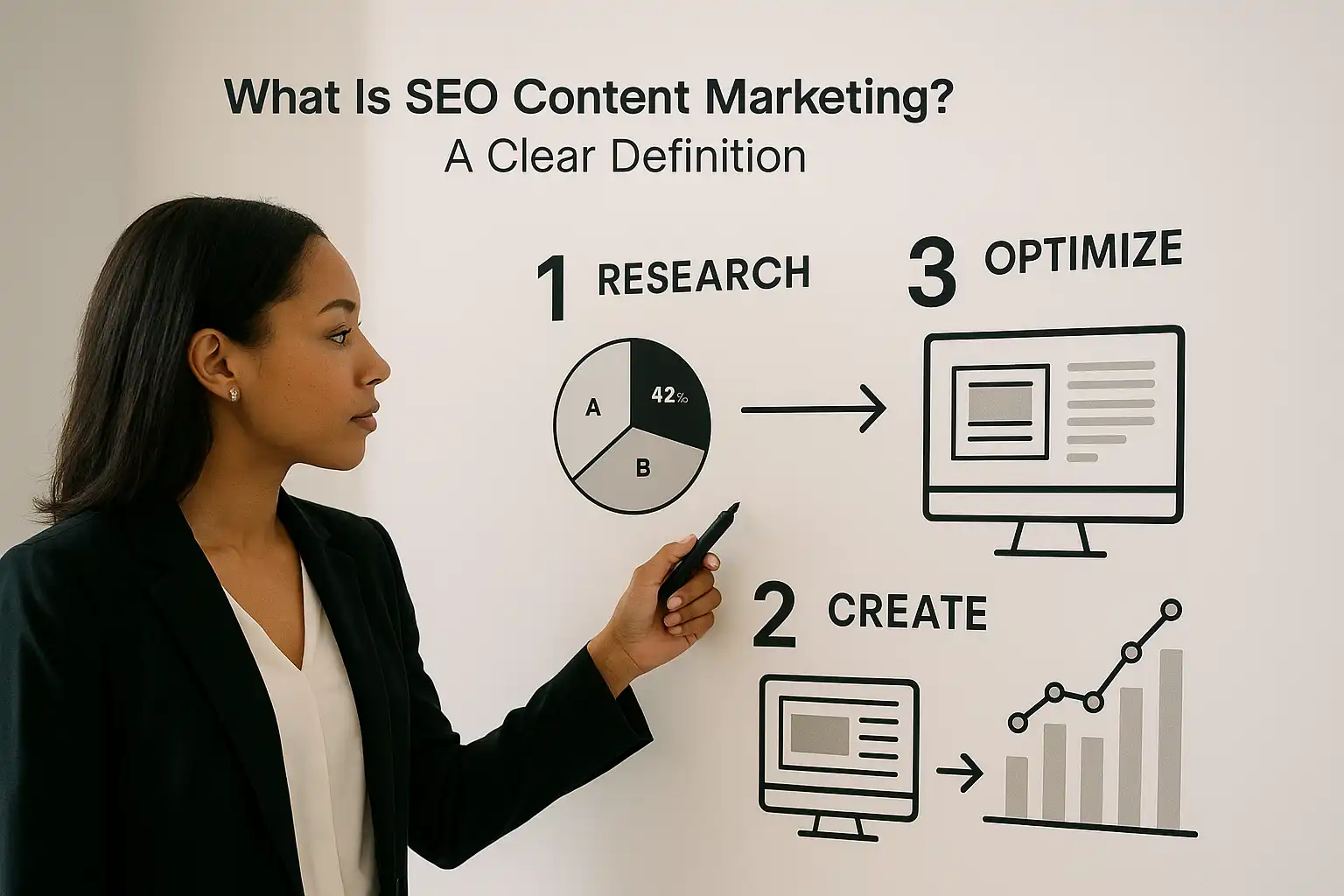
What Is SEO Content Marketing? A Clear Definition
SEO content marketing means creating and optimizing content so it attracts—then engages—people from search engines. For businesses, it’s the strategy behind ranking high and earning organic traffic that actually matters. Let’s clarify these terms and see how they work together.
SEO vs. Content Marketing: Clarifying the Terms
SEO content marketing is the blend of search optimization and valuable content creation to drive organic website growth. SEO is the discipline of improving a site’s visibility in search engines by optimizing technical, on-page, and off-page factors. Content marketing describes producing informative or entertaining material intended to attract, educate, and retain an audience. According to Emeritus, effective SEO involves both keyword targeting and user-focused writing.
In practice, teams sometimes treat these as separate efforts. But real results come from making SEO part of your content process, not an afterthought. Businesses using content automation often find their articles perform better when SEO and content strategy are developed together.
Related Terminology: On-Page SEO and User Intent
On-page SEO is the process of optimizing individual content pieces for search engines and readers. On-page SEO is adjustments to headlines, structure, and internal links to help search engines understand your page. A related concept—user intent—means why someone searches for a term in the first place. If your content doesn’t satisfy what searchers want, rankings rarely stick.
In experience, missing user intent is a common pitfall. Teams often focus on keywords but overlook what the visitor is truly after. This is where aligning your topics with keyword intent becomes more important than just repeating search phrases.
Keyword Research: The Foundation
Keyword research is the process of finding the words and phrases your audience types into search engines. Keyword research is the foundation of any SEO content marketing strategy. It’s how you identify what people are searching for and what’s realistically possible for your site to rank for.
A thorough approach includes:
- Analyzing search volume and difficulty
- Categorizing keywords by intent (informational, commercial, etc.)
- Prioritizing topics with achievable ranking potential
Many teams use dedicated tools to uncover gaps and opportunities. Without solid research, even the best-written content can get buried—something we’ve seen firsthand when auditing underperforming blogs.
Expert Insight: Even with high-quality content, ignoring keyword research or user intent often results in low visibility—strategy is as important as execution.
Why SEO Content Marketing Matters for Business Growth
Businesses turn to SEO content marketing because it’s a repeatable way to drive long-term growth. Understanding what SEO content marketing does—and the ways teams apply it—reveals why it’s core to sustainable digital success.
Key Benefits
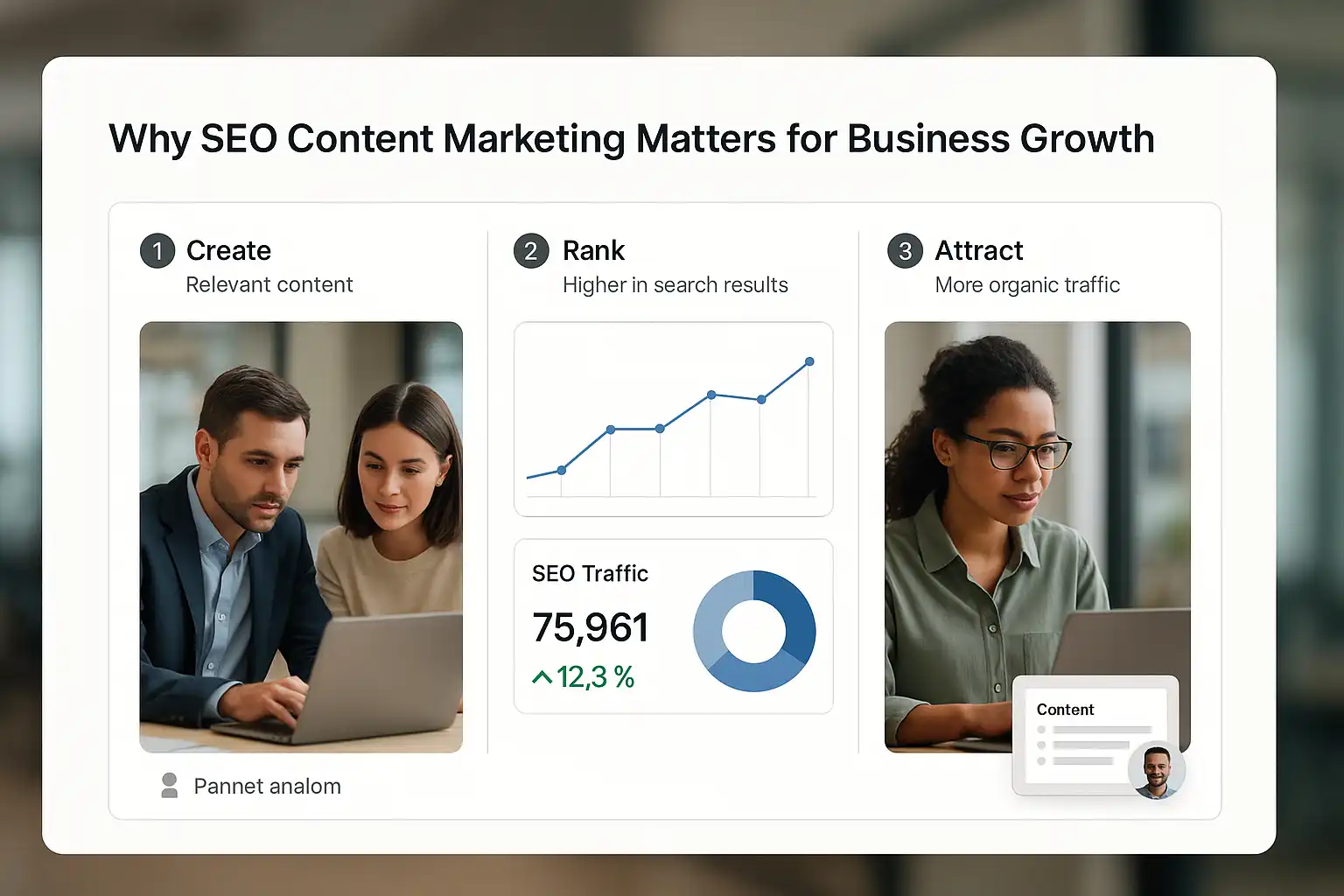
SEO content marketing delivers measurable impact for business growth. According to Digital Monk Marketing, SEO strategies help brands increase visibility, attract relevant traffic, and position themselves as trusted authorities. When content is consistently optimized for search intent, it naturally grows organic reach over time—not just in bursts.
Some key benefits include:
- Lower ongoing acquisition costs compared to paid channels
- Continually compounding traffic from evergreen content
- Higher quality visitor engagement, leading to improved conversions
In practice, teams often discover that SEO content marketing surfaces real search demand. It frees them from “one-hit wonder” campaigns and builds a traffic foundation that lasts. When clear metrics for rankings and engagement are set, performance is trackable—making SEO content one of the rare channels where you can actually see growth compounding month-to-month. See how smart keyword research tools make this process easier for teams that want proof, not promises.
Common Use Cases
The most common use cases for SEO content marketing are tailored to unique business goals but share fundamental tactics. "SEO content marketing use cases include audience growth, inbound lead generation, and local customer acquisition." For example, many e-commerce brands rely on SEO articles and optimized product pages to attract buyers actively searching for their items. Service businesses target local keywords to capture interest from people nearby (think plumbers or consultants aiming for city-name searches).
Another major use case is building authoritative resource hubs: B2B companies and educators often produce guides, how-tos, and FAQs targeting longer-tail queries that show buyer research intent. In our experience, teams who automate content creation and publishing—by integrating workflows like content automation—accelerate growth while spending less time on repetitive manual work. The downside? For highly competitive niches, ranking takes longer unless you regularly update and expand your content footprint.
Expert Insight: SEO content marketing compounds over time—the earlier you start, the sooner you benefit from snowballing organic results.
Core SEO Content Marketing Concepts You Need to Know
Understanding the foundational principles of SEO content marketing is essential for achieving sustainable results in organic search. Let’s break down three critical concepts—aligning content with user intent, optimizing on-page elements, and building authority with backlinks.
Matching Content to User Intent
User intent is the type of information a searcher expects to find when they enter a query into Google. According to Grow and Convert, successful SEO content marketing focuses first on matching articles and landing pages to what users actually want to see in search results.
There are three main types of search intent:
- Informational: Looking to learn something (e.g. guides, definitions)
- Navigational: Trying to reach a specific page or brand
- Transactional: Ready to buy or take action
In practice, teams often misjudge intent—publishing “how-to” posts for high-commercial queries or vice versa. Using a keyword research tool that shows intent can help guide the structure and format of each article. The stronger the alignment, the better your chances of ranking and driving qualified visits.
Structure and On-Page SEO Essentials
On-page SEO includes all the elements you control within your content. On-page SEO is the practice of optimizing page content and HTML tags to improve search visibility and relevance.
Key components include:
- Keyword-focused title (with the primary phrase early)
- Logical headings (H1, H2, H3 structure)
- Readable URL slugs
- Internal links to related topics, like the Content Automation feature
- Descriptive meta descriptions and schema markup
In our experience, skipping structured headings or meta descriptions can leave content stuck on page two. Forbes highlights that even great writing needs technical optimization to stand out in competitive search spaces.
Building Backlinks for Authority
Backlinks are external links from other websites pointing to your content, and Google treats them as trust signals. Backlinks are links from external websites, and they play a significant role in determining site authority and search rankings.
The most sustainable SEO content marketing campaigns prioritize:
- Earning mentions from industry sites and publications
- Submitting to reputable directories like Directory Studio
- Creating original resources that others want to reference
One real-world challenge: new sites struggle to attract links because they lack visible authority. Outreach, partnerships, and quality guides can help build the first credible backlinks. Remember, not all links are equal—focus on those from relevant, trustworthy sources.
Expert Insight: Matching user intent is the single most common success factor for articles that rank on page one—get this right before obsessing over minor technical tweaks.
How Does SEO Content Marketing Work? The Complete Process
SEO content marketing follows a systematic path to turn search demand into sustainable organic growth. Every step matters, from initial research to ongoing performance tracking—missing a link in this process often means missing out on results.
Step 1: Keyword Research and Topic Selection
"Keyword research and topic selection is the foundation for effective SEO content marketing." This stage uncovers what your audience actually searches for and highlights topics worth your effort.
Keyword research involves identifying queries with the right mix of intent, search volume, and realistic competition. According to Digital Marketing Agency in Lahore, comprehensive keyword research is critical for targeting the terms most likely to deliver organic traffic. Tools can help, but manual review beats pure automation—some keyword gaps never show up in spreadsheets.
In practice, teams often start with a broad list, then refine by:
- Filtering by search intent (informational, transactional, navigational)
- Analyzing keyword difficulty relative to your domain
- Mapping topics to the user journey
For a streamlined way to find winnable topics, see the Topical Authority workflow on SEO Ladders.
Step 2: Content Creation & Optimization
"Content creation and optimization translates keyword research into assets that can rank and deliver value." Once you pick a topic, crafting a piece that actually answers the searcher’s question is a different challenge.
Good SEO content balances:
- Clear answers to primary and related queries
- On-page SEO (titles, meta descriptions, internal linking, schema)
- Readability and formatting (short paragraphs, bullet points)
From experience, rushed drafts miss interlinking or basic optimization steps—costly mistakes that can take hours to fix later. Using AI-assisted tools makes it easier to ensure every article includes proper headings, schema markup, and keyword coverage. Try generating structured outlines with the Article Outline Generator to keep the draft on track.
Step 3: Promotion, Backlinking, and Measurement
"Promotion and backlinking ensure your SEO content gains visibility, while measurement closes the feedback loop." Hitting "publish" is just halfway. Even exceptional content needs earned links or it might never reach page one.
- Backlink outreach (directories, guest posts, partnerships)
- Internal linking from related articles
- Ongoing updates based on performance data
In our experience, regular rank tracking uncovers surprising wins—and unexpected drops. You might find outdated posts that lost ground, or new ones climbing quickly. Using tools like Topical Authority simplifies this, letting you act before traffic drops. Keep iterating; SEO content marketing is never “set and forget.”
Expert Insight: Skipping keyword research or link building almost always leads to wasted effort—even a perfectly written article needs both to rank and perform.
Real-World SEO Content Marketing Examples
Concrete examples show how SEO content marketing actually works across different business types. Here’s what these approaches look like in the wild, each illustrating unique tactics and lessons.
Informational Blog Post Case
An informational blog post is a core SEO content marketing example that builds long-term organic traffic by answering common questions.
Informational blog posts are articles designed to target user search intent—for example, someone asks “what is SEO content marketing?” The best posts map their headline and structure to how people search, so search engines surface them for relevant queries.
According to JSXDOM Content Marketing, focusing on audience intent and addressing specific pain points drives higher engagement on informational posts. In practice, most teams find that:
- Keyword research shapes the topic’s angle
- Clear, skimmable formatting boosts dwell time
- Citing reputable sources (industry studies, expert opinions) makes posts more shareable
A common pitfall is writing generic content with no SEO focus—it rarely ranks. Targeted, well-optimized blog content consistently outperforms this approach. For additional workflow tips, check the Blog for new SEO content ideas.
E-commerce Product Landing Page
E-commerce SEO content marketing succeeds when each product landing page is designed to rank for transactional keywords people actually search.
E-commerce product landing pages are web pages optimized with keyword-targeted product descriptions, unique benefit statements, and frequently asked questions.
Successful pages intertwine user questions with on-page SEO—think of aligning product specs with FAQs (“how does sizing run?”) and making reviews crawlable. In our experience, optimizing these elements, plus smart internal links to related products or category pages, directly correlates with better visibility and sales. Check Schedule & Publish for how automated SEO can power these pages at scale.
The downside? Thin or duplicate manufacturer content usually gets filtered out by Google, so take the time for unique details and genuinely helpful copy.
Local SEO for Service Businesses
Local SEO for service businesses is the practice of optimizing web content to attract customers searching within a specific geographic area.
Service businesses—think plumbers, dentists, or consultants—typically build pages or posts for each target service and location combination. Real success comes from:
- Including city names in titles, headers, and metadata
- Creating unique content for each area, not just swapping city names
- Embedding Google reviews and location-specific testimonials
Teams often overlook structured data or forget to update NAP (name, address, phone) details, hurting their rankings. In our experience, using tools like Local Seo features streamlines this optimization and keeps details accurate as service areas evolve.
Localized content and review integration are what separate page-one listings from the pack.
Expert Insight: The most effective SEO content is routinely updated and aligned with evolving user intent—even evergreen articles lose ranking power if competitors refresh their content first.
Frequently Asked Questions
Is SEO content marketing different from regular blogging?
Yes, SEO content marketing is different from regular blogging. It focuses on creating and optimizing content specifically to improve search engine rankings and attract targeted organic traffic. Regular blogging may prioritize topics or personal expression without strategic keyword targeting or SEO techniques. Tools like SEO Ladders help automate SEO content marketing by generating optimized articles that align with your site's authority and keyword opportunities.
How long does SEO content marketing take to show results?
SEO content marketing typically takes 3 to 6 months to show noticeable results in search engine rankings and traffic. This timeline depends on factors like competition, content quality, and existing domain authority. Tools like SEO Ladders help speed this process by automating keyword research and publishing SEO-optimized content that aligns with your site's authority, improving your chances for quicker gains.
Do I need backlinks for SEO content marketing to work?
While backlinks aren't absolutely required, they greatly enhance the effectiveness of SEO content marketing by improving your site's authority and search rankings. Without backlinks, high-quality content alone can rank but usually with less impact. Tools like SEO Ladders help create optimized content that attracts backlinks naturally, boosting organic traffic and search visibility.
What's the biggest mistake in SEO content marketing?
The biggest mistake in SEO content marketing is creating content without targeting the right keywords or understanding your audience’s intent. This leads to low visibility and engagement. Successful SEO content focuses on relevant, well-researched keywords matched to domain authority and user needs. Tools like SEO Ladders help automate keyword research and generate optimized content to avoid this pitfall.
Can AI tools replace human-written SEO content?
AI tools can effectively generate SEO content that is keyword-optimized and scalable but cannot fully replace human writers due to the need for creativity, nuanced understanding, and brand voice. Tools like SEO Ladders automate SEO article creation and publishing, easing workload, yet human oversight ensures accuracy, engagement, and authenticity.
Conclusion
SEO content marketing boils down to creating purposeful, keyword-focused content that turns search engines into a steady source of targeted visitors. Here’s what you should do next:
- Audit your existing blog posts for search intent, keyword targeting, and optimization gaps
- Research and prioritize low-competition, high-impact keywords for your domain authority
- Build a repeatable content workflow that includes creation, on-page SEO, and internal links
- Study successful examples—then apply those frameworks to your next articles
Fresh, focused SEO content is what separates websites that grow from those that get lost. ↑ Back to top
Ready to automate your SEO content and watch your traffic climb? Explore how Schedule & Publish can help you publish keyword-optimized articles on autopilot—without hiring an agency or burning out your team.
Want this done for you? SEOLadders finds the topics, writes the articles, and gets you cited by AI and ranking on Google, on autopilot.
7-day free trial · Cancel anytime