
Table of contents
TL;DR
- Get SEO clients with niche targeting, outreach, proposals, pricing, and relationship building.
- Avoid common mistakes with real-world acquisition methods.
- Includes step-by-step process for digital agency growth.
You cold-emailed 100 business owners last month and heard crickets. For agency founders and freelance SEOs, figuring out how to get SEO clients is more than a growth challenge—it's the difference between thriving and constantly hustling for rent. Relying on outdated pitch templates just leads to more frustration and empty pipelines.
This guide is different: you’ll learn why typical “how to get SEO clients” advice falls flat, how to spot and attract clients who actually value results, and which outreach tactics are landing signed contracts right now. We’ll break down real-world wins, pricing strategies, and practical frameworks you can use to sign more (and better) clients—starting this week.
What Does Getting SEO Clients Really Mean?
Getting SEO clients isn't just about making a sale—it's about creating real business relationships that drive consistent, measurable value. For most agencies, the process starts way earlier than a signed contract and stretches long after onboarding. Here’s what actually counts as “getting” a client in the SEO world.
Client Acquisition: The SEO Context
Client acquisition in SEO is the strategic process of transforming prospects into paying clients and, ideally, recurring partners. This goes well beyond initial outreach or pitching—it's an entire system that spans from the first interaction to building trust and setting clear expectations.
According to The Content Factory, agencies that systematize acquisition tend to attract clients that are better fits and retain them longer. In practice, many SEO professionals discover that the real work isn’t done when the lead says “yes”—it’s about maintaining clarity and momentum. If you rely only on scattered emails or ad hoc calls, clients may lose faith before real collaboration starts. Sustainable acquisition involves:
- Defining your ideal client
- Outlining your processes up front
- Aligning deliverables with client expectations
For a view into how automation supports this, you can see all integrations that streamline the handoff and management process.
Key Terminology Explained
Key terms in client acquisition often get mixed together, but consistency matters for agencies and freelancers alike. Lead is a potential prospect who’s shown interest in your service, often through a form or inquiry. Prospect refers to someone you've qualified—meaning they have a need for SEO, the budget, and are considering engagement. Client is what you call them after they’ve signed on for paid SEO services.
People often confuse these terms and risk miscommunication when describing their pipeline. In our experience, clearly distinguishing between a lead, a warm prospect, and a signed client helps avoid confusion when tracking performance or delegating work. Clarity in language translates to better internal alignment—and, frankly, less admin chaos. You can see how keyword-focused tools aid pipeline clarity via Topical Authority.
Differentiating Lead Generation from Client Onboarding
Lead generation and client onboarding are distinct phases in the process of getting SEO clients. Lead generation is the set of activities that sparks initial interest and identifies businesses or individuals who might need SEO services. Client onboarding starts only after someone commits—think contracts signed and first payment arranged.
A common pitfall is treating everyone in your funnel as equal. Teams often find that mixing these phases leads to either losing warm prospects or overwhelming internal systems. Segmentation matters: automate outreach for cold leads, but personalize every step after they convert.
Here’s a quick table summarizing the contrast:
| Stage | Activities | Outcome |
|---|---|---|
| Lead Generation | Outreach, qualification | Prospects identified |
| Client Onboarding | Intake, kickoff meetings | Relationship, project launch |
Tip: Don’t confuse a promising lead with an acquired client—clarify definitions within your team and with clients to prevent mismatched expectations.
Why Most “How to Get SEO Clients” Advice Fails
Most guides on how to get SEO clients focus on tactics that used to work, but don’t deliver consistent results now. The real world is full of missed opportunities and outdated scripts that don’t speak to what clients want today.
Overused Approaches That No Longer Convert
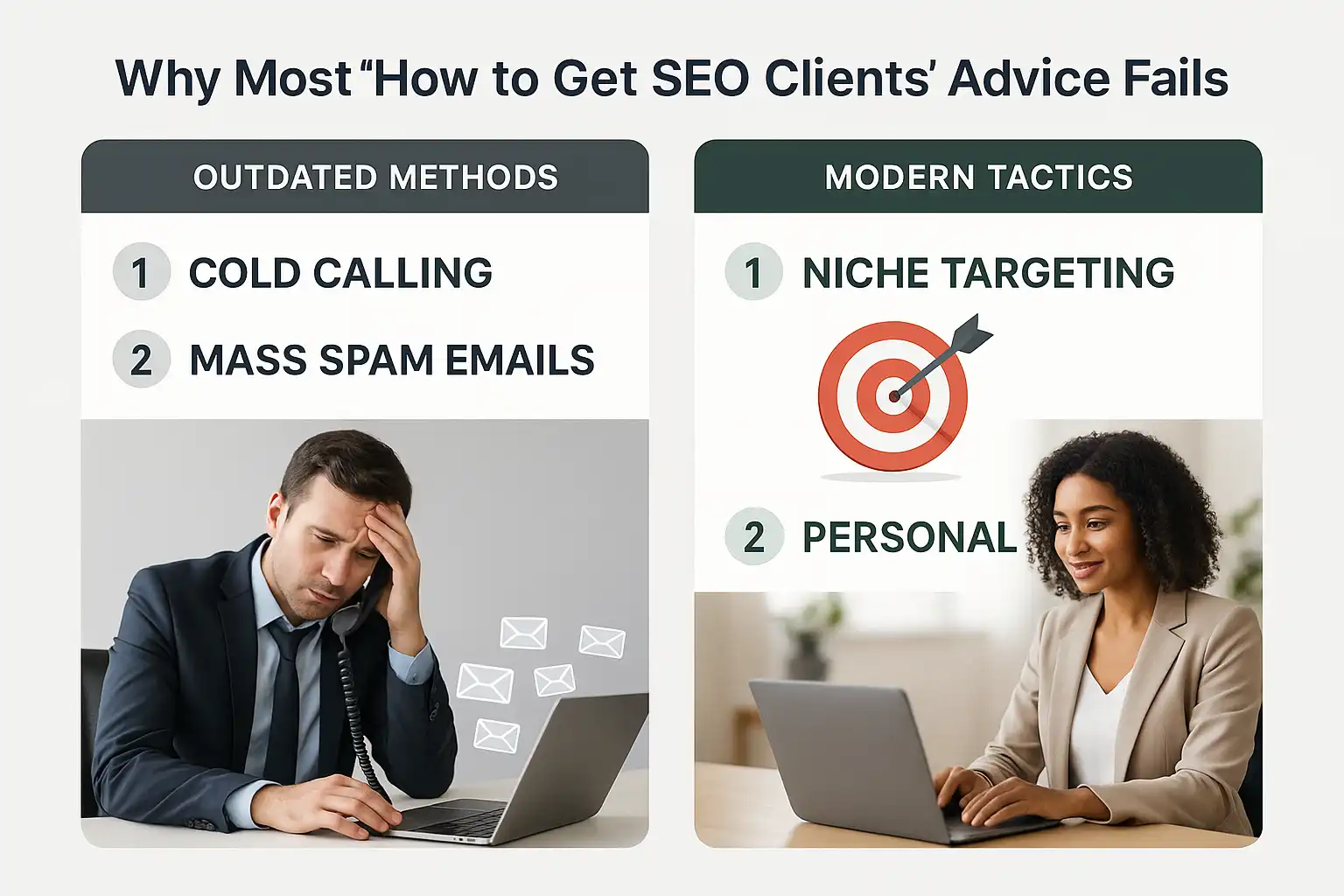
The most common advice for getting SEO clients—mass cold emails, generic outreach templates, and bulk directory submissions—rarely leads to warm leads today. According to Search Engine Watch, buyers increasingly ignore offers that look or feel scripted. If everyone is using the same pitch, it stops working almost immediately.
In practice, agencies that copy-paste templates see diminishing returns. Clients want to feel understood, not like a number. Relying solely on "spray and pray" outreach often just burns your cold leads list and makes genuine conversations less likely later. What actually delivers now? Personalization—and it requires effort most new agencies skip.
The Missed Opportunity in Niche Targeting
Niche targeting is focusing your client acquisition on a specific industry or business segment. Most “how to get SEO clients” guides mention niches but treat them as optional, not essential. That’s a mistake.
In our experience, agencies trying to win every kind of client spread themselves thin and never build real authority or word-of-mouth. When you can demonstrate expertise in, say, legal SEO or e-commerce, your outreach gets attention because you speak their language. See keyword research tools can help identify winnable topics in a niche—helpful when cold email traction dries up.
What We've Seen Work in Real Campaigns
Actual client campaigns that succeed usually combine targeted personalization and a clear ICP. Cold emails convert when they mention a prospect’s business by name and reference specific challenges. We’ve seen teams win clients by referencing a recent Google algorithm update or pointing to real ranking drops in a prospect’s industry.
Sometimes, research beats volume. Reviewing their current keyword set—using a free keyword ideas generator—lets you tailor a pitch with specifics. The downside? It’s more work at the start, but closes more deals and starts long-term relationships. Generic templates almost never do.
Tip: Treat your email list like gold—burning contacts with bulk templates can poison referral opportunities for months.
How to Identify and Attract Ideal SEO Clients
Attracting the right SEO clients starts with knowing who you serve best. To build a sustainable pipeline, agencies need to clearly define their target and use focused outreach that prioritizes fit over volume.
Defining Your Niche and ICP (Ideal Client Profile)
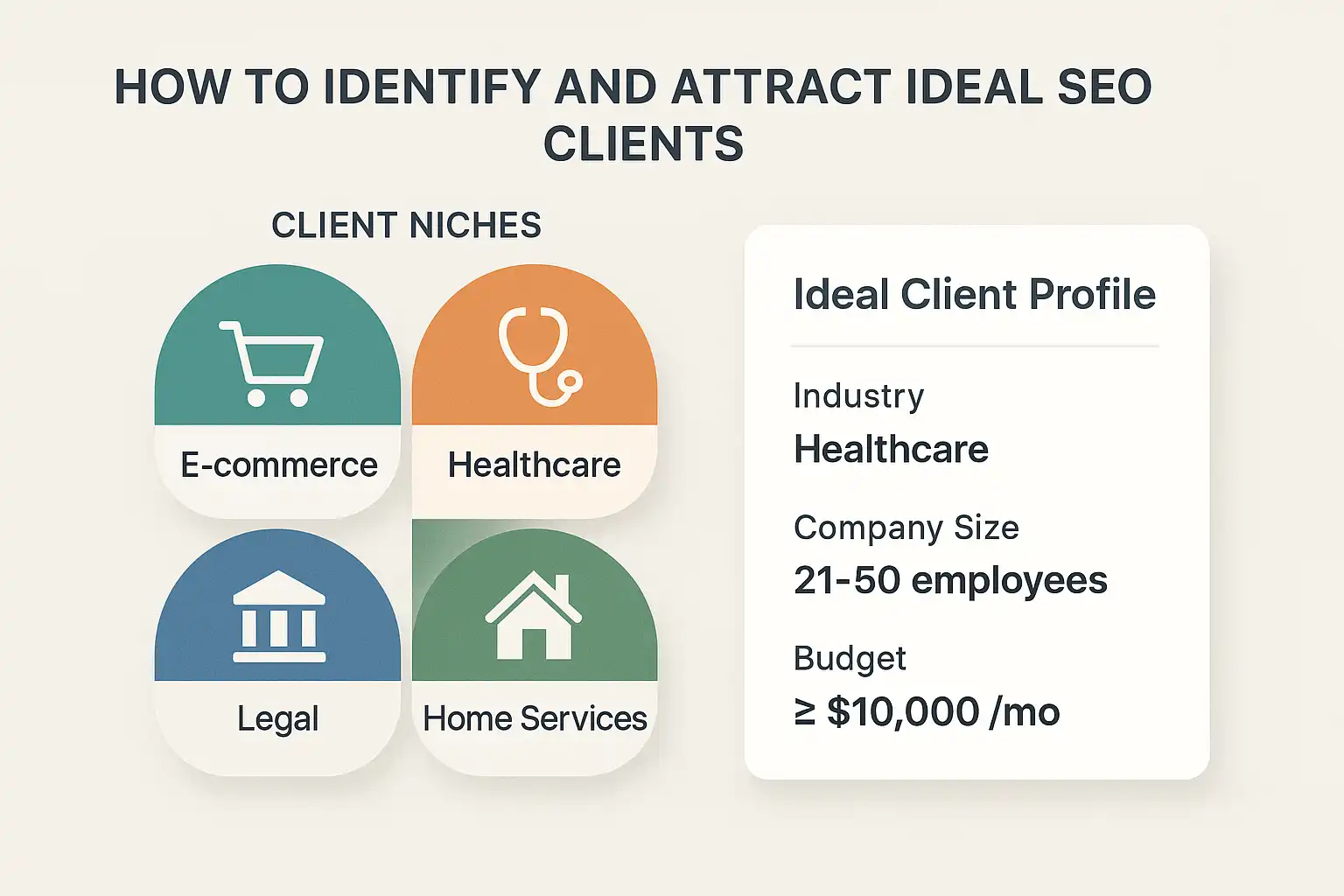
“Defining your niche and ICP is the foundation for getting SEO clients who see value in your work.” An Ideal Client Profile (ICP) is a detailed description of the type of client most likely to succeed with your services.
This often includes:
- Industry or vertical (e.g., SaaS, local retail, health services)
- Typical business size and budget
- Decision-maker roles (CEO, marketing manager)
- Common pain points (lack of SEO infrastructure, old content, slow growth)
According to WP Tech Online, agencies that select a specific niche stand out faster and find leads who already understand the value of SEO. In practice, segmenting your offers and messaging for your chosen ICP keeps your pipeline focused and lets you refine processes—this beats a one-size-fits-all approach every time. If you need to build a list of target keywords by industry, start with a tool like Topical Authority to assess opportunity size and match to your ideal market.
Lead Generation Methods: Digital and Offline
“Lead generation for SEO clients uses both digital and offline strategies, depending on where your ICP is most active.” Online, tactics include inbound approaches like producing guides, optimizing for target queries, and hosting webinars. Paid ads, active LinkedIn outreach, and participating in groups or communities also help.
For offline, consider in-person workshops, attending industry networking events, or collaborating with local chambers of commerce.
Here’s what usually gets real engagement:
- Webinars breaking down local SEO tactics (bring in your niche knowledge)
- Participation in Q&A forums (sometimes overlooked)
- Local meetups, which aren’t scalable but build trust
Most agencies combine digital tools for cold outreach with relationship-building tactics. Over time, you’ll see which channels attract the right mix of clients for your ICP. If you want to systematize digital outreach with less manual effort, it’s worth exploring platforms that handle content automation to keep publishing frequent, keyword-targeted assets.
Qualifying Prospects for High Retention
“Qualifying SEO prospects is about spotting red flags and confirming fit before onboarding.” The best clients don’t just sign—they stay and refer others. Good qualification means:
- Assessing Expectations — Do they understand that SEO takes months, not weeks?
- Budget Check — Is the budget aligned with realistic deliverables?
- Needs and Goals Review — Do their business goals map to outcomes SEO can realistically influence?
A common pitfall? Skipping hard conversations about budget or timeline—these usually surface later and damage trust. Research from WP Tech Online shows that agencies retaining clients the longest set clear expectations from day one. In our experience, creating a qualification checklist (before proposals go out) drastically reduces churn and lets you invest attention where it matters. Not every lead is a fit, and that’s fine.
Expert Insight: Documenting your ICP—and updating it as you work with more clients—prevents wasted effort and sharpens your outreach over time.
What Outreach Strategies Win SEO Clients Today?
Winning new SEO clients in 2024 requires more nuanced outreach methods than ever before. Successful agencies blend digital personalization, real-life networking, and genuine authority to stand out in a crowded field.
Personalized Email and LinkedIn Messaging
Personalized outreach through email and LinkedIn is the go-to strategy for agencies seeking to get SEO clients today. According to Adapts Media, highly targeted, relevant messages consistently outperform mass mailers when it comes to setting meetings with decision-makers. In practice, this means:
- Researching each prospect’s website and digital footprint
- Referencing specific pain points or recent business news
- Suggesting actionable improvements (not generic pitches)
Teams often find that leveraging AI tools for keyword research or content gap analysis lets them offer immediate value up front. Even brief but personalized notes can break through the noise—especially when tied to a recent article, accolade, or clear point of relevance. The downside? Crafting unique messages takes longer, but the resulting conversation rates justify the extra effort.
Networking Events and Partnership Playbooks
Attending networking events and developing partnership playbooks are effective ways to expand your reach and obtain SEO clients today. Building rapport in person establishes trust faster than digital-only communication. Veteran consultants know that events—whether industry meetups or local business lunches—open organic opportunities for introductions.
A typical playbook includes:
- Identifying relevant local or virtual events
- Preparing elevator pitches focusing on outcomes, not just tactics
- Following up fast with meaningful next steps
Many teams combine networking with long-term referral partnerships, such as collaborating with web designers or content agencies. This approach usually delivers more qualified leads than cold outreach. For additional tools to automate follow-ups, see Schedule & Publish.
Building Authority with SEO Proposals and Thought Leadership
Building authority through detailed SEO proposals and thought leadership pieces is a proven method to win over skeptical clients. Strong proposals don’t just outline deliverables; they demonstrate insight into the prospect’s real challenges and competitive landscape.
Industry practitioners often publish case studies or how-to guides to showcase their expertise. Sharing results or unique perspectives on your blog often establishes credibility that cold outreach methods just can’t match. Honestly, clients are far more likely to engage when they see actionable, specific solutions—not broad promises—in your materials. Teams experienced in this space notice their conversion rates climb when they pair data-driven proposals with visible thought leadership content.
Expert Insight: Personalization and face-to-face rapport both matter, but real results come when agencies connect their expertise to a prospect’s unique business context—not just industry best practices.
How Should You Price and Present Your SEO Services?
Setting clear pricing and presenting your SEO offers effectively is essential for winning and retaining high-quality clients. The right approach not only builds trust, but also helps you stand out in a crowded market. Here’s how industry pros tackle it.
Pricing Strategies: Packages, Value-Based, and Retainers
Pricing strategies for SEO services include packaged options, value-based pricing, and monthly retainers—all designed to align with client expectations and agency objectives. Packages are preset offerings (for example: "Starter", "Growth", "Pro") bundling core deliverables at fixed rates. According to Affordable SEO LLC, this approach provides transparency, making the decision easier for clients who seek clear outcomes.
Value-based pricing ties costs to the client’s perceived business impact, which often works better for experienced consultants or agencies targeting larger businesses. Retainers offer ongoing monthly support, appealing to clients seeking consistent improvements and reporting. In practice, agencies often start with simple packages, then move toward retainers once results are demonstrated. You’ll find examples of these models and a detailed comparison on the Pricing page.
Writing Compelling SEO Proposals and Case Studies
Winning proposals and strong case studies demonstrate expertise and foster client trust from the first touchpoint. A compelling SEO proposal clearly outlines scope, deliverables, and expected results—while using relevant metrics and simple visuals. Best practice: tailor each proposal to the client’s niche and mention specific growth opportunities based on their market or competitors.
Effective case studies showcase before-and-after snapshots, focusing on measurable outcomes like ranking improvements and increased traffic. Tools like the free Article Outline Generator make it easier to structure your case studies and proposals for maximum clarity. In real client pitches, referencing similar success stories often makes all the difference.
Relationship Building: The Key to Repeat Clients
Relationship building is what turns project-based SEO work into long-term, profitable accounts. Ongoing communication—with reports, check-ins, and transparent results—cultivates trust over time. Your first deliverable isn’t a report, it’s setting expectations and sharing how you approach problems when challenges arise.
In practice, teams that prioritize relationship management see more referrals and less churn. Think: regular calls, quick responses, and sharing small wins (not waiting for huge launches). For more on maintaining your reputation and turning one-off projects into repeat bookings, see tips on managing and responding to customer reviews.
Expert Insight: Pricing confidence grows over time. Start simple, but document every project—you’ll build a library of materials for stronger proposals and recurring client conversations.
Real-World Examples of SEO Client Wins
Direct experience trumps theory when learning how to get SEO clients. This section examines real-life lessons, focusing on what agencies actually did to win, lose, or turn around client engagements.
Case Study: Local Business Lead Generation
A real-world local business lead generation win starts with precise targeting and measurable outcomes. Local SEO is the practice of optimizing a business to rank within its specific city or region for relevant searches. For example, a small law office struggling with visibility saw significant results after shifting focus to neighborhood-specific keywords and updating Google Business profiles weekly.
In practice, campaigns often combine citation building, review management, and local content creation. Results aren’t always instant, but most local agencies see movement within a few months. According to Khalsa Website Designers, winning local SEO clients often hinges on delivering real foot traffic rather than just rankings. Teams find that focusing on hyperlocal intent, regularly checking where to view Google reviews, and keeping listings accurate builds long-term trust.
This kind of case isn’t about technical brilliance alone. It’s about small improvements stacking up—often through simple, repeatable systems instead of huge overhauls.
Agency Wins Through Strategic Outreach
Strategic outreach is the set of processes agencies use to identify, connect with, and secure SEO clients. Winning pitches typically start with tailored email or LinkedIn messages, grounded in research on the prospect's online presence. Agencies that personalize each outreach note—mentioning specific site issues or suggesting realistic keyword targets—see far higher response rates than generic blasts.
Many teams streamline follow-up using workflow tools or content automation platforms so their proposals remain timely without manual chasing. In our experience, mixing digital outreach with an offer like a free mini audit or direct demonstration gives prospects a tangible taste of value, dramatically increasing close rates. This tactic may take extra setup but pays off as it lets agencies filter for serious clients while building trust from day one.
Lessons from Failed and Successful Pitches
Lessons from failed and successful SEO client pitches often come down to clarity, credibility, and fit. Agencies lose deals when proposals are vague or fail to address client pain points in concrete terms. Successful pitches, on the other hand, show clearly how the agency’s work connects to bottom-line improvements such as leads or online visibility.
For example, many agencies stumble by ignoring the client’s unique local challenges—such as seasonal demand or heavy competition on high-intent keywords. It’s not always about who has the shiniest proposal. Sometimes, it’s who listened best and reflected that in both the strategy and pricing (see pricing strategies for SEO services).
Honestly, the most counterintuitive lesson? Sometimes saying no to misaligned leads preserves reputation and creates future referral opportunities.
Expert Insight: Sharing specific client win stories—both successes and failures—helps future clients understand an agency’s approach and builds trust before signing a contract.
Frequently Asked Questions
What is the best way to get SEO clients with no experience?
The best way to get SEO clients without experience is to build credibility through free or discounted work, showcase real results from small projects, and network actively in online forums and local business groups. Starting a blog or website using tools like SEO Ladders to create automated, SEO-optimized content can demonstrate your skills and attract clients.
How do you approach pricing for a new SEO agency?
Start pricing by assessing your costs, market rates, and client budgets. Use tiered packages based on service scope, such as monthly retainers, hourly rates, or project fees. Offering flexible plans and demonstrating clear ROI can attract clients. Using tools like SEO Ladders helps streamline your service delivery, making competitive pricing easier while maintaining quality.
Can cold emailing still work for SEO client acquisition?
Yes, cold emailing can still work for acquiring SEO clients if done thoughtfully. Personalizing messages, targeting the right businesses, and clearly demonstrating SEO value increase response rates. Combining cold emails with tools that streamline outreach and content creation, like SEO Ladders, can boost effectiveness by automating personalized follow-ups and showing proven SEO results.
Why do most new agencies struggle with lead generation?
Most new agencies struggle with lead generation due to limited brand recognition, lack of established networks, and unclear value propositions. Without a strong online presence or proven case studies, attracting clients is challenging. Tools like SEO Ladders can help by automating SEO content creation to build authority and generate consistent organic leads.
What is a common misconception about outreach in SEO?
A common misconception is that outreach is all about mass emailing as many potential clients or sites as possible. In reality, successful SEO outreach focuses on personalized, targeted communication to build genuine relationships and authority. Tools like SEO Ladders can help identify relevant, high-quality keywords and sites to optimize your outreach efforts effectively.
Conclusion
Growing your agency comes down to attracting the right SEO clients and connecting with them through focused, thoughtful strategies—not cold spam and wishful thinking. To land more clients:
- Nail your service pitch: Be clear, upfront, and tailor each offer to match client pain points.
- Identify your best-fit clients: Build targeting lists based on real data, not just broad industries.
- Use personalized outreach: Combine smart research with bold, honest messaging that stands out in the inbox.
- Show proof, not just promises: Share specific wins, before-and-after results, and transparent pricing.
Think strategically, move fast, and remember—your client pipeline is only as strong as your process. ↑ Back to top
Ready to win more SEO clients and make outreach effortless? Start for free with SEO Ladders and see how automating your content and prospecting can supercharge growth.
Want this done for you? SEOLadders finds the topics, writes the articles, and gets you cited by AI and ranking on Google, on autopilot.
7-day free trial · Cancel anytime