
Table of contents
TL;DR
- Use research tools to identify keyword ideas.
- Prioritize low difficulty with strong search volume.
- Analyze competitors to spot easier opportunities.
- Apply these steps to gain real traffic fast.
You spend days creating new content, but your blog traffic barely moves. For busy website owners and marketers, it’s frustrating to watch competitors leap ahead in Google rankings—even when your content is just as good.
This guide makes sense of the buzz around “how to find low competition keywords with high traffic.” You’ll learn exactly what these keywords are, why they matter for your growth, and step-by-step methods (with real examples) to uncover them so your content actually ranks and pulls in more visitors.
What Are Low Competition Keywords with High Traffic?
Low competition keywords with high traffic are terms people search for frequently but aren't heavily targeted by other websites. Understanding the details behind “competition,” “traffic,” and how they interact is the first step in building a successful SEO strategy that delivers results faster.
Key Terms: Competition, Traffic, and Volume
"Competition," "traffic," and "volume" describe how hard a keyword is to rank for and how much search visibility it provides. Competition refers to the number and strength of websites already targeting a keyword. Traffic means the potential visits from people searching that term, while volume is the specific monthly average of those searches.
A keyword with high volume but low competition represents a sweet spot—lots of people search for it, but few strong sites are competing. Realistically, these combinations are rare and often change as trends shift or more sites spot the opportunity. According to Writesonic, mixing volume with analysis of competitive sites is key to identifying true low competition keywords. For context, tools often report the number of results, page authority of ranking sites, and backlink counts to gauge this.
If you’re exploring more keyword concepts and want quick ideas, the Keyword Ideas tool can help you brainstorm and filter by difficulty and volume in one place.
How Keyword Difficulty is Measured
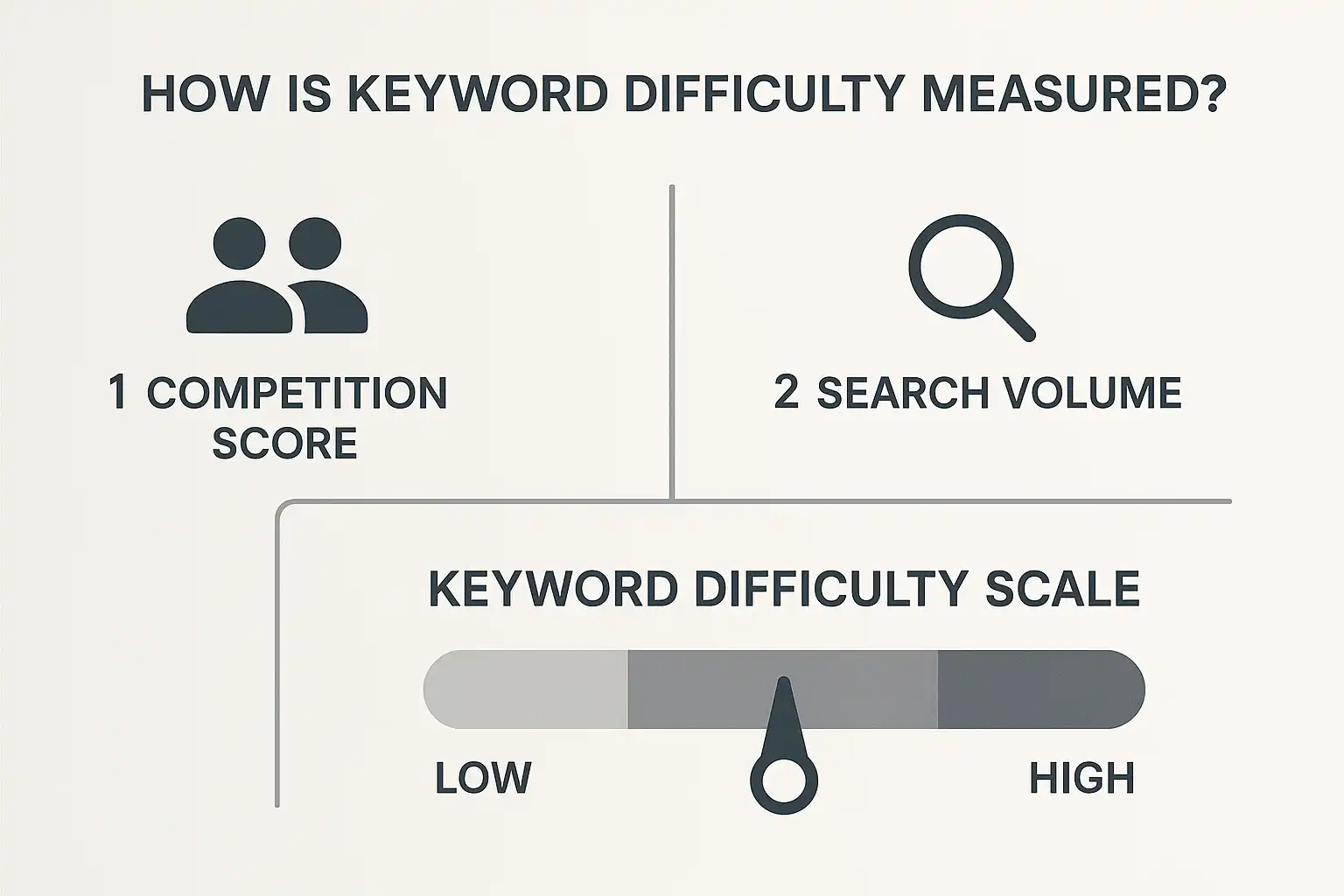
Keyword difficulty is measured by assessing how challenging it is to rank in the top search results for a term. Most SEO tools assign a keyword difficulty score—a calculated value based on metrics like the authority of current ranking pages, the quality and number of referring domains, and sometimes on-page optimization.
In practice, these scores are indicators, not guarantees. A low difficulty score doesn’t always mean easy rankings if high-authority sites dominate the niche, or if the search intent is mismatched with your content. Teams often find that manual checks—like looking at who is ranking and why—can reveal nuances automated tools miss. This hands-on review is a huge reason why experienced SEOs don’t rely solely on raw scores.
To see how automated platforms aggregate these signals for you, the Topical Authority page outlines scoring logic and filters for real search opportunities.
What Counts as 'Low Competition' in Practice
A 'low competition' keyword is one where new or less authoritative sites have a realistic shot at ranking on page one. Most experts define this as terms where the top-ranking pages have few backlinks, low domain authority, or are not perfectly optimized for the search intent.
In practice, you’ll see this when page-one results come from forums, niche blogs, or Q&A websites—rather than industry giants. According to Startups.co.uk, focusing on these "low-hanging fruit" terms delivers faster wins than slogging through saturated topics.
Personal experience shows some keywords labeled "low competition" climb quickly—until larger sites pivot and crowd the space. Adaptability is a must, and regular monitoring is part of any sustainable approach.
Expert Insight: Always review the top-ranking pages yourself instead of trusting difficulty scores blindly. Automated metrics can miss signals like outdated content or poor alignment with search intent—gaps you can capitalize on quickly.
Why Targeting These Keywords Matters for SEO Growth
Choosing low competition keywords with high traffic is a practical SEO move, not just a theory. The way you approach keyword targeting can influence how quickly you see results and compete with established sites.
Main Benefits: Faster Ranking and Easier Wins

"Targeting low competition keywords with high traffic is the fastest route to visible SEO wins for most new or growing sites." Because these keywords face less competition, your pages can qualify for top search results much sooner—even if your domain is newer or has lower authority. In practice, it’s common to see ranking improvements within weeks rather than months, provided the intent matches what users are searching for.
Research from Vanessa Case's guide on website keywords research supports this: pages targeting easier keywords tend to gain traction with fewer links, reducing the wait for organic traffic. I’ve also seen teams miss out on quick wins by chasing unrealistic targets, while others grow traffic rapidly by focusing on the attainable. Tools that automate this process, like those highlighted on the content automation feature page, can help surface exactly these opportunities early in your SEO journey.
Common Use Cases: Niche Sites and Startups
"Low competition, high traffic keywords are essential for niche websites and startup projects looking to build momentum with limited resources." For bootstrapped businesses, time and budget are tight—you can't afford to outspend or out-hire bigger brands. Instead, you need to find angles and topics where you realistically stand out.
From experience, niche sites that focus on overlooked or hyper-specific search terms almost always see organic growth faster than those trying to compete head-to-head with broad, saturated topics. Startups often benefit by capturing focused demand, building authority, and layering broader keywords later. Tools like keyword research automation can streamline discovery for these use cases, saving both time and second-guessing.
Why Most Advice on Keyword Research Misses This
"Most mainstream keyword research advice overlooks the tactical value of targeting realistic, overlooked keyword gaps—especially for sites not already ranking on page one." The majority of SEO guides emphasize targeting only high-volume or “money” keywords, ignoring that competition level determines outcomes for new entrants far more than volume alone.
Honestly, this one surprised us: plenty of checklists skip evaluating your site’s actual ability to rank for various keywords, leading to wasted effort. I see this every year—marketers invest heavy content budgets on keywords they were never likely to rank for. You don’t have to; smarter, filter-based tools and approaches let you uncover much more achievable options. If you want to dig deeper into effective strategies—and how automation can help filter keyword lists—explore the blog’s automation and keyword research tips.
Expert Insight: Focusing on attainable keyword opportunities isn’t about “settling”—it’s about building early traffic foundations, proving your authority, and accelerating long-term site growth.
Core Methods to Discover The Best Keyword Opportunities
Finding the right keyword opportunities isn’t about guessing—it’s about using proven methods and real data. By combining advanced tools with smart competitor analysis, you’ll spot low competition keywords with higher traffic potential others usually miss.
Using Keyword Research Tools Effectively
Effective keyword research tools are the backbone for discovering low competition keywords with real search potential. According to SEO Ladders’ Topical Authority, AI-powered tools can rapidly filter thousands of ideas, highlighting targets that fit your domain’s authority and intent. The trick is actually knowing what to do with all that data. New users often feel overwhelmed at first—sorting by volume, intent, or difficulty will speed up prioritization.
In practice, tools that let you filter for keyword difficulty and sort by realistic search volume, like the free Keyword Ideas generator, make hunting for easy wins much simpler. Some platforms even automate the process, stacking result sets and indicating which terms are most promising at a glance. Just remember, not all keyword data is updated equally often, so always check for the freshest numbers before final decisions.
Search Volume and Keyword Difficulty Analysis
Search volume and keyword difficulty analysis is the foundation for finding keywords you can actually rank for. Search volume shows how many people search a term each month. Keyword difficulty indicates how hard it will be to achieve a high ranking for that term. Generally, “low competition” means a manageable difficulty score relative to your site’s authority.
Real-world usage often means ignoring ultra high-volume phrases and focusing on realistic targets—ones matching your niche, product, or content resources. Honest opinion: this step trips up a lot of teams because they chase big numbers instead of attainable wins.
A common process is:
- Filter by your maximum “winnable” difficulty score
- Sort by search volume (highest to lowest)
- Review actual SERP results for outliers or surprisingly achievable phrases
Competitor Analysis and Finding Keyword Gaps
Competitor analysis and keyword gap identification reveal search terms your rivals rank for that you don’t. Keyword gap analysis is comparing your site’s current rankings with those of competitors to spot missed opportunities. Many teams rely too heavily on this—mixing competitor insights with manual research gives a fuller picture, as echoed in recent SEO trends.
Tools like Ranked Keywords let you view competitor keyword lists and filter out branded or low-value terms—then target the untapped phrases. My experience? It’s easy to get caught up chasing only what others target, but often there are overlooked gems no one’s written about (yet).
- Identify shared keywords between sites
- Find unique terms only competitors rank for
- Prioritize those with reasonable difficulty and search volume
Tip: Don’t rely on a single method. The most sustainable keyword wins combine tool data, search metric filters, and direct SERP checks—not just copying competitors.
How to Find Low Competition Keywords Step-by-Step
Most guides overcomplicate keyword hunting when, in reality, a clear process works best. Here’s how to find low competition keywords with high traffic, step by step—no fluff, just what moves the needle.
Choosing the Right Tools and Filters
The first step to finding effective low competition keywords is identifying reliable research tools and applying smart filters. Keyword research tools are software platforms that help uncover new keyword opportunities using databases of search data. You’ll want to use a platform that not only shows keyword difficulty, traffic potential, and intent but also lets you filter by those metrics easily. According to SEO Syrup, features like competitor analysis, exporting to CSV, and exclusion of branded queries help speed up the process.
In practice, teams often streamline research by using built-in filters for:
- Keyword difficulty score (set a manageable threshold based on your domain authority)
- Minimum search volume (to avoid keywords nobody actually uses)
- Intent (informational vs. commercial)
Testing a Topical Authority tool lets you see how filters impact the set of keyword ideas you get back. Results will vary depending on your vertical—and sometimes, smaller tools outshine industry giants for specific niches.
Evaluating Search Volume and Intent
Search volume and intent are the two axes that decide whether a keyword is worth your effort. Search volume is the average number of monthly searches for a keyword, while intent tells you if people are trying to buy, learn, or find information. Always balance volume with achievability.
Here’s a basic decision process:
- Scan for search volume—Skip anything with near-zero searches unless super niche.
- Check intent—Does the keyword match what your target audience would type while ready to engage with your content or product?
- Cut by difficulty—Trim down those with high competition, even if tempting search volume.
See keyword research in action and notice how intent tags (such as "informational" or "transactional") can quickly thin your shortlist. Honestly, this one surprised us: sometimes, low volume with razor-sharp intent brings in qualified leads regular volume chasers miss.
Spotting Myths and Contrarian Tactics (What We've Seen)
Many believe only big sites can rank for anything with real traffic, but that’s not how it works. Low competition keywords with high traffic aren’t a unicorn, but most strategies overlook them. Research from SEO Syrup shows creativity often beats simply copying competitors.
A common myth is that targeting questions or ultra-long-tail keywords means settling for crumbs. In reality, Google often boosts niche, high-intent queries fast—especially when larger brands ignore them. Teams we’ve worked with have also seen wins by focusing on underserved angles, like combining related subtopics others treat as separate.
The downside? It takes time to experiment. But in our experience, avoiding crowded search spaces (even with lower headline volume) builds a stable flow of traffic competitors overlook.
Expert Insight: Save every filter and shortlist you use for future campaigns—patterns you spot now often reveal new keyword clusters months later.
Real-World Examples of Low Competition, High Traffic Keywords
Finding low competition keywords with high traffic isn’t just a theory—it’s a core tactic used by businesses across all industries. Here are three clear examples of how different types of sites uncover and use these keywords to capture real search demand.
Example 1: Local Niche Business
Local businesses frequently find low competition, high traffic keywords by focusing on very specific services tied to their location. A local niche business is a company serving a specialized market within a particular geographic area. Think of phrases like "emergency tree removal in Springfield" or "vegan bakery open late in Lakeview." These longer-tail keywords may have moderate monthly searches but often very little relevant competition—meaning national directories and big brands rarely try to rank for them.
In practice, the biggest challenge is knowing which service/location combos people actually search for. That’s where keyword research built on topic clusters shines—it pulls real, actionable city-level keyword data. According to Organic Traffic, businesses that systematically target keyword variations with real local intent can see page-one rankings in weeks, not months, compared to broader generic terms. There’s a catch: getting too generic or too niche can mean either wasted effort or almost no search volume. Experience shows reviewing Google Autocomplete suggestions for your city or specialty offers reliable, traffic-ready ideas.
Example 2: SaaS or Tech Startup
SaaS and tech startups often secure traffic by identifying feature-driven queries or underserved, problem-based topics. A SaaS keyword opportunity is a search term with clear product or pain-point intent, but lacking answers from industry giants. Examples might include "Slack Google Sheets integration errors" or "how to export password history from X app"—these are relevant, get searched, but carry surprisingly low competition.
Teams that test obscure product integrations or emerging tools find that these topics rank fast, with less backlink building required. Sometimes just publishing an authoritative, well-structured guide on a niche integration or error message grabs top spots. If you’re running experiments, the See keyword research feature can quickly map keyword difficulty against your brand’s presence—saving you from chasing impossible queries. In our experience, addressing product gaps or new API changes secures consistent traffic even for new domains.
Example 3: E-Commerce Product Category
E-commerce sites excel at tapping low competition, high traffic keywords in long-tail category or buyer-intent searches. An e-commerce product category keyword is a phrase tied to specific shopper needs or product variations. For instance, "women’s waterproof minimalist hiking boots size 9" or "organic cat-friendly houseplants USA."
Research from BlogDrip shows these queries typically have less competition from major retailers, especially when they focus on size, color, or use-case specifics. In practice, the trick is analyzing your search console data and looking beyond primary product keywords. In our experience, blending automated keyword tools with tailored Keyword Ideas generates targeted, winnable search phrases. The downside? It does take ongoing effort as new search patterns emerge or inventory changes.
Expert Insight: Keyword opportunities that seem too obvious or 'small' often generate the fastest ranking improvements—especially for new or lower-authority sites.
Frequently Asked Questions
What is a good search volume for low competition keywords?
A good search volume for low competition keywords typically ranges from 100 to 1,000 monthly searches. Such keywords have manageable competition (low difficulty) and still attract enough traffic to drive meaningful visits. This balance helps websites rank faster and grow organic traffic. SEO Ladders can help identify these keywords matched to your domain authority, saving time and improving results.
How accurate are keyword difficulty scores?
Keyword difficulty scores provide a helpful estimate of how challenging it is to rank for a keyword but aren't perfectly precise. They use factors like competitor authority and backlink profiles to gauge competition. Since SEO variables constantly change, these scores should guide your strategy rather than dictate it. Tools like SEO Ladders combine keyword difficulty with your domain strength to find realistically achievable keywords for better accuracy.
Is it possible to outrank bigger sites with these keywords?
Yes, it's often possible to outrank bigger sites using low competition keywords with high traffic, especially if your content is well-optimized and matches search intent. These keywords offer realistic ranking chances by aligning with your site's authority, avoiding tough competition. Tools like SEO Ladders help find such keywords tailored to your domain, automating content creation and improving your chance to compete effectively against larger sites.
Should I always avoid high competition keywords?
No, you shouldn't always avoid high competition keywords. While low competition keywords are easier to rank for, high competition keywords often have higher traffic and commercial value. A balanced approach targets a mix of both, focusing on realistic opportunities based on your site's authority. Tools like SEO Ladders help identify keywords aligned with your domain rating to maximize ranking chances.
Can long-tail keywords really bring high traffic?
Yes, long-tail keywords can bring high traffic by targeting specific, low-competition search queries. They attract more qualified visitors with clearer intent, often resulting in higher conversion rates. Tools like SEO Ladders help find these low-competition, high-traffic long-tail keywords tailored to your domain authority, making it easier to rank and grow organic traffic efficiently.
Conclusion
Finding low competition keywords with high traffic can change the game for your organic growth—if you know where to look and how to act.
- Identify keywords with realistic difficulty scores using trusted SEO tools or automated solutions.
- Focus on search intent to pick topics with actual buying or informational demand.
- Analyze real-world SERPs (search results) to spot gaps where quality content is missing.
- Regularly track your rankings and adjust your content strategy to double down on what’s working.
With consistent action, you’ll see a steady increase in traffic and easier wins in the SERPs. ↑ Back to top
Ready to uncover high-traffic keywords you can actually rank for? Explore the automated keyword research features at SEO Ladders and start growing your organic traffic without the guesswork.
Want this done for you? SEOLadders finds the topics, writes the articles, and gets you cited by AI and ranking on Google, on autopilot.
7-day free trial · Cancel anytime